
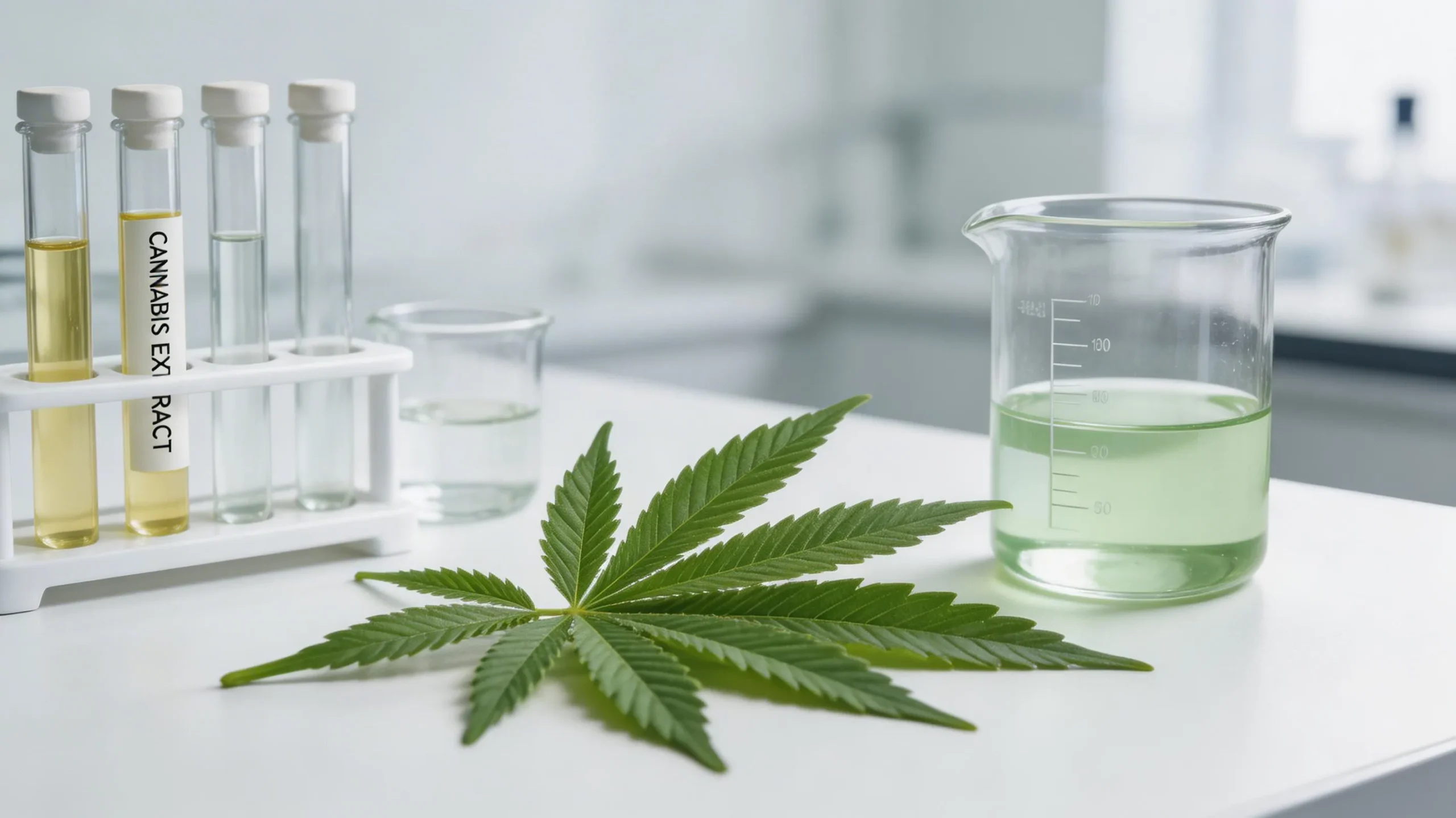
The UAE has taken a major step by creating a formal legal framework for industrial hemp. Federal Decree-Law No. 24 of 2025 is now in force, and it gives the country a structured system for licensing, cultivation, manufacturing, import, export, tracking, and enforcement.
But the law is only the first layer.
The practical rulebook, the hemp executive regulations UAE businesses are waiting for, is still the key missing piece. These regulations are expected to explain the operational details: which seed varieties are approved, how THC must be calculated, how licences should be filed, how inspections will work, how the National Tracking System will operate, and what exact technical standards businesses must follow.
The Short Answer
Federal Decree-Law No. 24 of 2025 is already in force in the UAE. Its main prohibitions, licensing requirements, THC threshold, and penalties are active. However, many practical details are still expected to be clarified through executive regulations, Cabinet resolutions, ministerial decisions, and emirate-level rules.
This means the UAE hemp framework exists, but the full compliance roadmap is not yet complete.
For businesses, the safest position is clear: do not treat the absence of executive regulations as permission to operate freely. The law already requires licences and approvals for regulated hemp activities, and serious penalties may apply for unauthorised activity.
What Are Executive Regulations?
Executive regulations are the detailed rules that explain how a law works in practice.
A decree-law usually sets the legal framework. It defines the sector, the prohibited acts, the licensing architecture, the penalties, and the government authorities involved. Executive regulations then fill in the operational detail.
For UAE hemp, this matters because the decree-law repeatedly refers to requirements that must be specified later by executive regulations, Cabinet resolutions, or decisions from the relevant authorities.
For example, the decree-law confirms that industrial hemp must not exceed 0.3% total THC on a dry-weight basis, and that THCa conversion must be considered when calculating total THC. But the exact analysis and calculation mechanism is left to the executive regulations. The decree defines the legal standard, while the executive regulations are expected to explain the testing method.
What Is Already Confirmed?
The primary law is not waiting for the executive regulations to become real. Several important parts are already active.
| Area | Current Status |
|---|---|
| Federal hemp law | In force from 1 January 2026 |
| Industrial hemp definition | Cannabis sativa with total THC not exceeding 0.3% on a dry-weight basis |
| THCa conversion | Must be considered when calculating total THC |
| Licensing requirement | Required for regulated hemp activities |
| Food products | Generally prohibited, except roasted or processed non-viable hemp seeds |
| Food supplements | Prohibited |
| Smoking products | Prohibited |
| Veterinary products | Prohibited |
| Hemp seed/stalk oil cosmetics | Permitted only within the law’s conditions |
| Unlicensed hemp activities | May attract criminal penalties |
| Administrative sanctions | Framework exists; detailed schedule still requires Cabinet action |
The decree applies to activities related to industrial hemp in the UAE, including free zones. These activities include seed import/export, cultivation, seedling transport, disposition of seeds and seedlings, manufacturing of hemp products, import/export of hemp products, and circulation of hemp products.
What Is Still Pending?
The biggest issue in 2026 is not whether the UAE has a hemp law. It does. The bigger issue is that many operational rules still depend on secondary legislation.
Here are the most important pending areas.
1. The Executive Regulations
The executive regulations are the most important missing piece. They are expected to specify the detailed controls, procedures, technical standards, documentation requirements, and implementation rules for licensed hemp activities.
Article 35 of the decree states that the executive regulations shall be issued by Cabinet resolution, upon the proposal of the Minister and after coordination with concerned federal and local authorities, within six months from the law’s entry into force. Since the decree entered into force on 1 January 2026, this makes the executive regulations one of the most important regulatory developments to watch in 2026.
Until they are published and reviewed, businesses should avoid assuming they know the full compliance requirements.
2. Approved Industrial Hemp Seed Varieties
The decree requires industrial hemp seeds used for import, export, and cultivation to be from approved varieties listed in the executive regulations.
This matters because cultivation cannot be planned with full certainty until businesses know exactly which seed varieties are accepted in the UAE.
For now, businesses can prepare by reviewing low-THC industrial hemp varieties used in regulated markets, but they should not assume that a variety approved in another country will automatically be approved in the UAE.
3. THC Testing and Calculation Methodology
The 0.3% THC threshold is clear, but the testing methodology is still a critical detail.
The decree refers to total THC and requires THCa conversion to be considered. This is important because different testing and conversion methods can produce different compliance outcomes, especially for borderline products.
Until the UAE’s exact calculation method is confirmed, businesses should be cautious with any product or raw material that tests close to the 0.3% threshold. A product that appears compliant under one foreign testing standard may not necessarily satisfy the UAE’s final testing requirements.
4. Licence Application Forms and Procedures
The law establishes the need for licences, but businesses still need the practical application process.
The executive regulations are expected to clarify:
- required forms
- required documents
- technical submissions
- review procedures
- renewal requirements
- revocation cases
- authority-specific process steps
The decree states that licence applications must be decided within 60 days after a complete application is submitted. However, what counts as a complete application depends on the forms, procedures, and supporting documents required by the relevant authority.
5. National Tracking System
The decree requires a National System for Tracking Industrial Hemp seeds, seedlings, and products. This is one of the most important compliance tools in the framework.
The system is expected to track hemp through the chain of activity, including cultivation, transport, manufacturing, circulation, import, and export.
However, the Cabinet resolution must still clarify key details such as:
- which authority will operate the system
- what data must be recorded
- who can access the system
- how businesses must connect to it
- how often records must be updated
- how the system links with other national tracking or customs systems
Until this is clarified, businesses should build flexible record-keeping systems that can later be adapted to the official tracking requirements.
6. Unified Electronic Register
The Ministry of Climate Change and Environment is required to establish a unified electronic register for licensee data and industrial hemp activity information.
The executive regulations are expected to explain what data the register will contain, who must update it, which authorities can access it, and how it will interact with the National Tracking System.
For businesses, this means documentation will not be optional. Record-keeping, batch tracking, transaction records, seed data, product movement, and destruction records are likely to become central compliance obligations.
7. Industrial Hemp Symbol
The decree creates an official Industrial Hemp Symbol for licensed hemp products. The symbol is intended to identify products obtained under the hemp law.
However, the design and detailed application rules are to be issued by the Minister of Industry and Advanced Technology.
Businesses should not finalise large-scale packaging until the symbol’s design, size, placement, and language requirements are confirmed.
8. Advertising and Promotion Rules
The law prohibits advertising and promotion of industrial hemp products without approval from the licensing authority.
The detailed advertising conditions are expected to be issued in coordination with the relevant media regulation authorities. Until those rules are clear, businesses should be extremely cautious with hemp-related marketing in the UAE.
This is especially important for consumer-facing categories, wellness claims, CBD-style language, and any content that could be interpreted as promoting prohibited products.
9. Administrative Penalty Schedule
The decree already creates an administrative sanctions framework. Sanctions may include warnings, administrative fines, suspension, and revocation of licences or permits.
However, the detailed list of violations and corresponding administrative penalties must be issued by Cabinet resolution.
This matters because businesses need to know which technical breaches trigger which penalties. Until the schedule is published, companies should treat every compliance obligation seriously rather than assuming smaller technical breaches carry limited risk.
10. Fees and Service Charges
The Cabinet is also expected to issue decisions determining fees for services provided by federal authorities under the hemp framework. Local authority fees will be determined according to each emirate’s applicable rules.
This is important for investors because licensing, inspection, testing, certification, tracking, and permit fees may all affect the cost of operating in the sector.
What the Cabinet Could Still Change
The Cabinet plays a major role in how the UAE hemp framework develops.
Some Cabinet decisions will be technical, such as the National Tracking System or administrative penalty schedule. Others may affect the market more directly.
Product Categories
The law currently prohibits several categories, including food products, food supplements, veterinary products, smoking products, and most cosmetic products outside the stated exceptions.
However, the Cabinet has authority to determine additional prohibited products and may also determine conditions for certain cosmetic exceptions. This means businesses should avoid building plans around grey-area products until the Cabinet and relevant authorities issue clearer rules.
Cosmetics
The law allows a narrow cosmetics pathway for products containing oils extracted from industrial hemp seeds or stems, provided the product meets the law’s strict conditions.
Any broader cosmetic permissions should not be assumed unless confirmed by Cabinet decision or relevant authority guidance.
Tracking, Penalties, and Implementation
The Cabinet will also shape how the framework works in practice through decisions on tracking systems, administrative penalties, federal fees, and delegated competences.
For businesses, these decisions may be just as important as the law itself because they determine day-to-day compliance requirements.
What This Means for Businesses
The UAE hemp opportunity is real, but it is not a free-entry market.
A serious hemp business should not ask only, “Is hemp legal in the UAE?” The better question is: “Which hemp activity is licensed, by which authority, under which technical rules, and with which product category restrictions?”
Right now, businesses should focus on preparation, not premature operation.
Practical steps include:
- monitoring the UAE Legislation portal and Official Gazette
- engaging relevant federal and local authorities
- preparing internal compliance systems
- building batch-level documentation processes
- using accredited laboratories where required
- avoiding products close to the 0.3% THC threshold
- avoiding prohibited food, supplement, smoking, and veterinary categories
- waiting for advertising rules before launching marketing campaigns
- seeking UAE-qualified legal advice before importing, manufacturing, or selling any hemp product
The absence of final executive regulations does not remove the licensing requirement. It simply means the detailed compliance path is still developing.
What This Means for Investors
Investors should treat UAE hemp as an emerging regulated sector, not a fully mature market.
The legal foundation exists, and that is important. But operational costs, licence timelines, approved product categories, reporting duties, testing standards, and packaging rules may still change as executive regulations and Cabinet decisions are issued.
Before investing, check whether the business:
- has UAE legal counsel
- understands the difference between industrial hemp, cannabis, CBD, food, cosmetics, and medical products
- has a realistic licensing pathway
- has not assumed that foreign hemp approvals apply in the UAE
- has a compliance budget
- can adapt if executive regulations narrow or expand the permitted framework
The best-positioned businesses will be those that prepare early but wait for official confirmation before making risky operational moves.
What This Means for Residents and Consumers
For residents and consumers, the key point is simple: the UAE hemp law does not mean all hemp or CBD products are now allowed.
Some industrial uses are being regulated under licence. Some narrow product categories may be permitted under strict conditions. But many consumer products remain prohibited or restricted.
Do not import hemp foods, hemp supplements, CBD oils, smoking products, or cannabinoid products into the UAE unless their legality has been clearly confirmed through official UAE channels and qualified legal guidance.
Hemp seed or stalk oil cosmetics may be treated differently from CBD or cannabis extract products, but labels alone are not enough. Product composition, THC status, cannabinoid content, classification, and approvals all matter.
What Should Be Updated When New Rules Are Published?
This article should be treated as a living regulatory tracker. It should be updated whenever any of the following are published:
- UAE hemp executive regulations
- approved industrial hemp seed variety list
- THC analysis and calculation methodology
- National Tracking System Cabinet resolution
- administrative penalty schedule
- Industrial Hemp Symbol requirements
- advertising and promotion rules
- federal or local licensing procedures
- emirate-level implementation rules
- Cabinet decisions affecting prohibited or permitted product categories
- official guidance from MOCCAE, MoIAT, EDE, Ministry of Foreign Trade, customs authorities, or local municipalities
Conclusion
The UAE hemp law is active, but the operational framework is still being completed.
Federal Decree-Law No. 24 of 2025 creates the foundation: a 0.3% total THC threshold, licensed activities, product restrictions, authority roles, tracking requirements, administrative sanctions, and criminal penalties.
The executive regulations and Cabinet decisions will determine how that foundation works in practice.
For businesses, the best approach is to prepare now, but act carefully. Build compliance systems, monitor official publications, speak to the relevant authorities, and get qualified legal advice before importing, cultivating, manufacturing, selling, advertising, or investing in hemp products in the UAE.
The UAE hemp sector may develop into a serious regulated industry. But in 2026, the safest and smartest position is to separate what is already law from what is still pending.
Legal Disclaimer
This article is for informational purposes only and does not constitute legal advice. UAE hemp regulation is still developing, and executive regulations, Cabinet decisions, ministerial resolutions, local authority rules, and enforcement practices may change after publication.
Before making any personal, commercial, investment, import, manufacturing, or product decision, seek advice from a qualified UAE lawyer or the relevant UAE authority.
What are the UAE hemp executive regulations?
The UAE hemp executive regulations are the detailed rules expected to explain how Federal Decree-Law No. 24 of 2025 works in practice. They are expected to cover licensing procedures, approved seed varieties, THC testing methodology, cultivation standards, manufacturing controls, record-keeping, inspections, and other operational requirements.
Are the UAE hemp executive regulations published?
As of the latest official sources checked, the primary decree-law is published and in force, but the separate executive regulations should be verified through the UAE Legislation portal, UAE Official Gazette, Cabinet announcements, and relevant ministries before making any decision.
Is the UAE hemp law already in force?
Yes. Federal Decree-Law No. 24 of 2025 entered into force on 1 January 2026. The UAE Legislation portal lists the law as effective from that date.
Can a business start a hemp company in the UAE now?
A business can begin preparation and engage with relevant authorities, but regulated hemp activities require licences and approvals. Businesses should not import, cultivate, manufacture, circulate, or advertise hemp products unless they have the required authorisation.
What is still pending under the UAE hemp law?
Key pending areas include executive regulations, approved seed varieties, THC calculation methodology, National Tracking System details, Industrial Hemp Symbol rules, advertising controls, fee decisions, and the full administrative penalty schedule.
What is the THC limit for industrial hemp in the UAE?
The law defines industrial hemp around a total THC concentration not exceeding 0.3% on a dry-weight basis, with THCa conversion considered in the calculation. The exact analysis and calculation mechanism is to be specified in the executive regulations.
Are hemp foods legal in the UAE?
Hemp food products are generally prohibited under the law, except for roasted or processed non-viable hemp seeds under the stated exception. Businesses and consumers should not assume broader hemp foods are allowed unless a future official decision confirms it.
Are hemp supplements legal in the UAE?
Food supplements containing industrial hemp are listed as prohibited. This should be stated clearly and supported with the decree text.
Are hemp cosmetics legal in the UAE?
The law provides a narrow exception for cosmetics containing oils extracted from industrial hemp seeds or stems, subject to strict conditions. CBD, cannabis extract, or cannabinoid-style cosmetics should not be treated as automatically legal.
When should this article be updated?
This article should be updated whenever the executive regulations, Cabinet decisions, National Tracking System rules, Industrial Hemp Symbol requirements, administrative penalty schedule, or emirate-level implementation rules are published.
External Source
https://uaelegislation.gov.ae/en/legislations/3886/download
Leave a Reply