
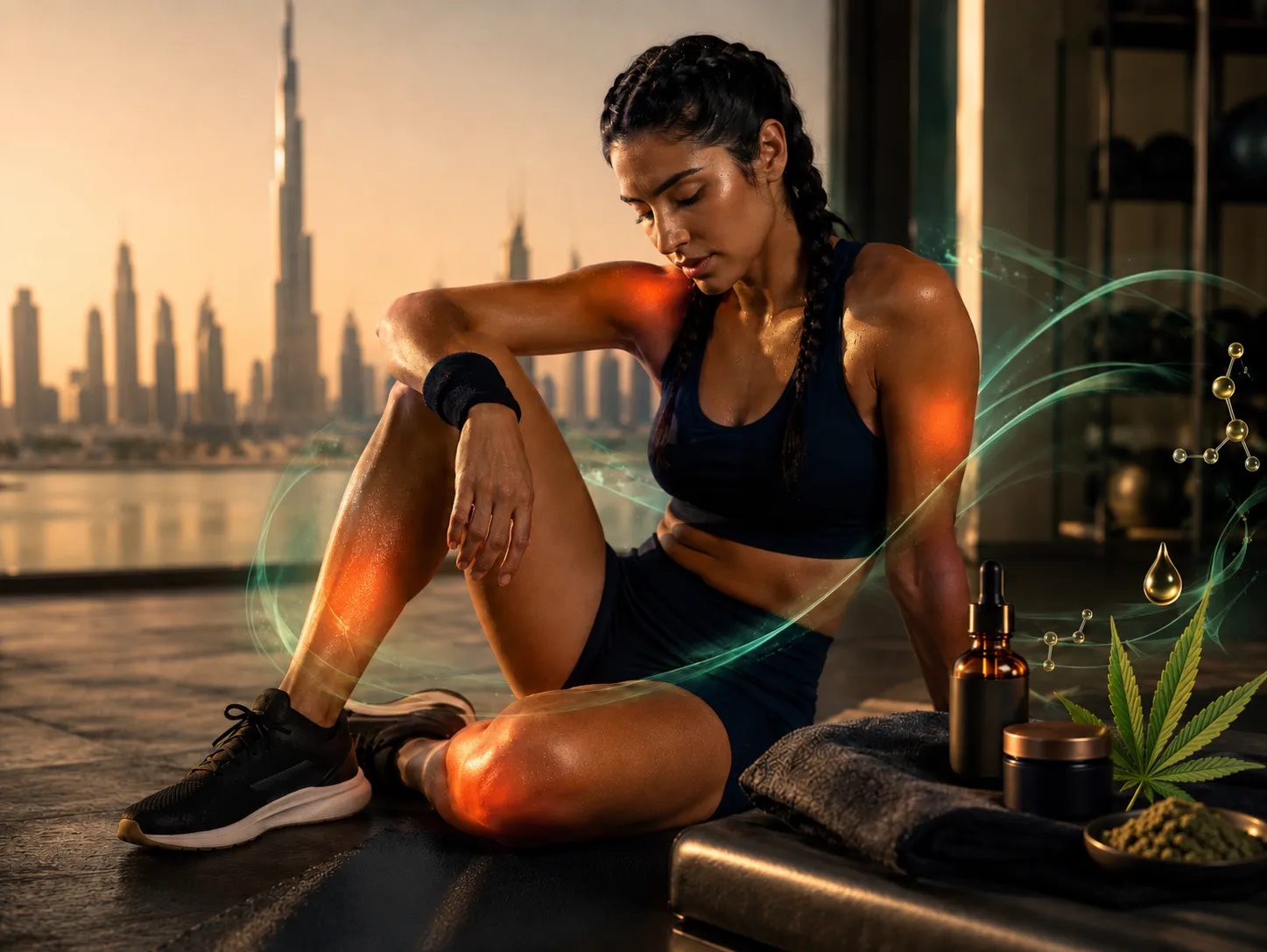
Short Answer
CBD sports recovery UAE athletes is a growing topic because CBD may support relaxation, sleep quality, inflammation balance, and post-training recovery. CBD itself is permitted under WADA rules, but THC remains prohibited in competition. UAE athletes should understand local laws, product quality, and medical guidance before using CBD.
CBD has become one of the most talked-about wellness ingredients in modern sport. From runners and cyclists to gym-goers, CrossFit athletes, footballers, and triathletes, many people are exploring CBD as part of a smarter recovery routine.
For athletes in the UAE, the topic is especially relevant. Dubai has an active fitness culture, with events and communities built around the Dubai Marathon, Ironman 70.3 Dubai, Hyrox-style training, CrossFit boxes, cycling groups, combat sports, and premium gym culture. In this environment, recovery is not just about rest — it is part of performance.
CBD is commonly explored by athletes for recovery support, relaxation, sleep quality, inflammation management, and stress reduction. At the same time, UAE athletes need to understand the rules clearly: CBD is treated differently from THC under WADA, and UAE laws around CBD and hemp-derived products can be strict.
This guide gives athletes a balanced view of CBD sports recovery in the UAE — what CBD may support, what the research suggests, what WADA allows, what THC restrictions mean, and how UAE athletes can make more informed choices.
What Is CBD and Why Are Athletes Interested in It?
CBD, short for cannabidiol, is a naturally occurring compound found in hemp and cannabis plants. Unlike THC, CBD is non-intoxicating, which means it does not create the “high” associated with cannabis.
Athletes are interested in CBD because recovery involves many systems in the body: muscles, joints, sleep, nervous system balance, inflammation response, stress hormones, and mental relaxation. CBD is being studied because it may interact with some of these pathways.
Athletes commonly explore CBD for:
- post-training recovery support
- relaxation after intense sessions
- better sleep routines
- stress and competition pressure
- soreness and discomfort after training
- inflammation balance
- general wellness support
This does not mean CBD is a guaranteed performance tool. It means CBD has become part of a wider conversation about recovery, rest, and sustainable training.
CBD Sports Recovery UAE Athletes: Why the Topic Matters
For UAE athletes, recovery can be affected by more than training load alone. Heat, humidity, work stress, travel, late-night training, dehydration, and high-performance lifestyles can all influence how the body recovers.
Someone training for the Dubai Marathon may be managing long runs, joint stress, sleep pressure, and hydration. A CrossFit athlete in Dubai may be dealing with muscle soreness, nervous system fatigue, and intense weekly volume. A triathlete preparing for Ironman Dubai may need to recover from swimming, cycling, and running sessions while balancing work and family life.
This is why CBD sports recovery UAE athletes has become a meaningful wellness topic. Many athletes are not looking for shortcuts. They are looking for recovery tools that may help them sleep better, feel calmer, and support consistency.
Is CBD Allowed in Sport Under WADA Rules?
Yes. CBD itself has been permitted under the World Anti-Doping Agency, WADA, rules since 2018. This was an important moment for athletes because it separated cannabidiol from other cannabis-related substances in anti-doping policy.
However, the distinction is important:
CBD is permitted.
THC is still prohibited in competition.
Other cannabinoids may also be prohibited.
This means an athlete is not automatically breaking WADA rules by using pure CBD, but the product must not contain THC or other banned cannabinoids.
CBD vs THC: What Athletes Need to Understand
CBD and THC are different compounds with different effects and different rules.
CBD is non-intoxicating and is the only cannabinoid specifically permitted by WADA. THC is intoxicating and remains prohibited in competition because it may affect coordination, awareness, reaction time, and fairness in sport.
For athletes, the most important point is product quality. A CBD product may be marketed as “THC-free,” but unless it is properly tested, it may still contain trace THC or other cannabinoids. This matters for competitive athletes because anti-doping tests look at what is in the body, not what the front label claims.
That does not mean athletes should fear CBD. It means athletes should treat CBD the same way they treat any serious supplement: check the source, check the testing, understand the rules, and speak with the right professionals.
How CBD May Support Athletic Recovery
CBD is not a magic recovery solution, but it may support several areas that matter to athletes. The most discussed areas are sleep, relaxation, inflammation response, stress regulation, and perceived soreness.
1. CBD May Support Relaxation After Training
Intense training activates the body. After a hard session, some athletes struggle to fully switch off. The nervous system can remain alert, especially after evening workouts, competitions, or high-adrenaline sessions.
CBD is commonly explored for relaxation because it may interact with systems involved in mood, stress response, and calmness. Some athletes use CBD as part of a wind-down routine, along with stretching, hydration, breathwork, and sleep hygiene.
This is especially relevant for athletes in Dubai who train after work, finish late sessions, or compete in high-pressure environments.
2. CBD May Support Better Sleep Quality
Sleep is one of the most important recovery tools for athletes. During sleep, the body supports muscle repair, hormonal rhythm, immune function, memory, and nervous system recovery.
CBD is often explored by people who want to improve sleep indirectly. The key word is indirectly. CBD does not work like a standard sedative, and it should not be described as a sleeping pill. Instead, early research suggests CBD may help some people relax or manage stress, which may support better sleep routines.
For UAE athletes balancing training, work, travel, and heat exposure, sleep quality can have a major impact on performance consistency.
3. CBD May Support Inflammation Balance
Exercise naturally creates inflammation. This is not always bad. Inflammation is part of the body’s repair and adaptation process. However, when training volume is high, athletes may experience soreness, stiffness, and recovery pressure.
CBD is being studied for its potential role in inflammation-related pathways. Some research suggests CBD may influence inflammatory signaling, oxidative stress, and immune response. This is one reason athletes are interested in CBD for recovery support.
However, more athlete-specific studies are needed. CBD should not be described as a proven anti-inflammatory treatment or a replacement for physiotherapy, nutrition, rest, or medical care.
4. CBD May Help With Stress and Competition Pressure
Athletes often deal with stress that is both physical and mental. Race-day nerves, performance expectations, work-life pressure, and training discipline can all affect recovery.
CBD has been studied in relation to stress response and anxiety-related symptoms. Some research suggests CBD may have calming effects for certain people, although results can vary depending on dose, individual biology, and context.
For Dubai-based professionals who train seriously while managing demanding careers, this is one reason CBD has become part of the wider wellness conversation.
5. CBD May Support Consistency by Helping Recovery Routines Feel Easier
For many athletes, the biggest performance advantage is not one supplement. It is consistency. If an athlete sleeps better, feels calmer, manages soreness responsibly, and recovers more intentionally, they may be able to train more sustainably.
CBD may fit into this wider recovery routine for some people. It should be seen as one possible wellness support tool, not a substitute for the basics.
What CBD Does Not Prove Yet
A balanced view is important. CBD may support recovery-related areas, but current research does not prove that CBD:
- directly improves speed, strength, or endurance
- guarantees faster muscle repair
- prevents injury
- replaces sleep, hydration, nutrition, or training planning
- works the same way for every athlete
- removes the need for medical care
- is automatically legal in every country
- is automatically safe for anti-doping tests
CBD should be viewed as a potential recovery support, not a guaranteed performance enhancer.
CBD for Dubai Marathon Runners
Dubai Marathon runners often deal with long training blocks, joint loading, muscle soreness, heat management, and sleep pressure. CBD may interest runners because of its possible role in relaxation, sleep support, and post-run recovery routines.
For runners, CBD should never replace:
- proper warm-up and cool-down
- running shoes suited to gait and distance
- hydration and electrolytes
- gradual mileage progression
- strength training
- rest days
- physiotherapy for recurring pain
If CBD is considered, it should be part of a broader recovery plan.
CBD for Ironman Dubai and Endurance Athletes
Triathletes and endurance athletes have complex recovery demands. Swim, bike, and run training can create cumulative fatigue, especially when combined with UAE heat and work schedules.
CBD may be explored for:
- evening relaxation
- recovery between sessions
- sleep quality
- stress management
- general soreness support
However, endurance athletes should be especially careful with hydration, liver health, supplement stacking, and anti-doping compliance. Any CBD product should be discussed with a sports physician or qualified professional before use.
CBD for CrossFit and Functional Fitness Athletes
CrossFit and functional fitness training often combine strength, conditioning, mobility, and high-intensity intervals. Recovery can involve muscle soreness, nervous system fatigue, grip fatigue, joint stress, and sleep challenges.
CBD may appeal to CrossFit athletes because it fits into the larger recovery culture around mobility, massage, breathwork, cold exposure, sauna use, and sleep optimization.
Still, CBD is not a replacement for:
- proper programming
- deload weeks
- technique correction
- mobility work
- protein intake
- injury assessment
- rest and sleep
Used responsibly, CBD may be considered one part of a thoughtful recovery lifestyle.
UAE Legal Context for CBD and Athletes
This is the section UAE athletes must understand clearly.
CBD being permitted by WADA does not automatically make CBD legal in the UAE. Sports rules and national laws are separate systems.
The UAE has introduced a regulated framework around industrial and medical hemp, but this does not mean general consumer CBD products are freely allowed. Personal use, recreational use, hemp food supplements, ingestible products, and imported CBD products may still create legal issues depending on the product category and current regulations.
Athletes in Dubai, Abu Dhabi, Sharjah, or elsewhere in the UAE should be careful before buying, carrying, ordering, importing, or traveling with CBD products.
Important UAE distinctions
Legal status may differ between:
- hemp seed oil
- CBD oil
- medical cannabis-derived products
- industrial hemp products
- hemp cosmetics
- ingestible CBD supplements
- CBD gummies or capsules
- topical recovery balms
- products containing THC
This distinction matters because “hemp” does not always mean “CBD,” and “CBD” does not always mean legally approved.
A practical UAE athlete rule
For UAE athletes, the best approach is simple:
Understand the product.
Check the law.
Check the lab report.
Check anti-doping rules.
Speak to a qualified professional.
This allows athletes to stay informed without confusion or unnecessary fear.
Product Quality: What Athletes Should Look For
For athletes in countries where CBD use is legally permitted, product quality is extremely important. A high-quality CBD product should ideally provide:
- third-party lab testing
- batch-specific certificate of analysis
- THC result clearly listed
- cannabinoid profile
- contaminant testing
- heavy metal testing
- pesticide testing
- residual solvent testing
- clear ingredient list
- responsible dosage information
- reputable manufacturer details
Competitive athletes should also look for sport-specific supplement testing where available, although even third-party testing cannot remove all risk.
For UAE athletes, lab quality is only one part of the decision. Legal status must also be verified before possession or use.
Possible Side Effects of CBD
CBD is generally discussed as well-tolerated by many users, but it can still cause side effects in some people.
Possible side effects may include:
- sleepiness
- digestive discomfort
- appetite changes
- dry mouth
- tiredness
- changes in mood or alertness
- interaction with medicines
- liver-related concerns at higher doses or in sensitive individuals
Athletes should be cautious when using CBD before training, driving, competing, or doing technical sports until they know how their body responds.
CBD may also interact with certain medications, including medicines processed by the liver. This is one of the main reasons medical guidance matters.
CBD and Medication Interaction Concerns
Athletes should speak with a doctor before using CBD if they take:
- blood thinners
- anti-seizure medicines
- antidepressants
- anti-anxiety medicines
- sleep medicines
- pain medicines
- liver-metabolized medicines
- hormone-related medicines
- multiple supplements
This does not mean CBD is unsafe for everyone. It means athletes should treat CBD like a serious wellness product, not a casual trend.
How to Speak to a Doctor or Sports Physician About CBD
Athletes can ask practical questions such as:
- Is CBD appropriate for my recovery goals?
- Could CBD interact with any medication I take?
- Is there any concern with my liver health?
- Could CBD affect alertness or training performance?
- Is this product legal where I live or compete?
- Could this product create an anti-doping issue?
- Should I check with my federation or anti-doping officer?
- Are there safer recovery options I should try first?
This kind of conversation helps athletes make informed, confident decisions.
Practical Non-Medical Recovery Tips for UAE Athletes
CBD may support recovery for some people, but the foundation still matters most.
Athletes in the UAE should prioritize:
Sleep
Keep a consistent sleep schedule, reduce late caffeine, cool the room, and create a wind-down routine after evening training.
Hydration
UAE heat makes hydration and electrolytes especially important. Dehydration can increase fatigue, soreness, and perceived effort.
Nutrition
Protein supports muscle repair, while carbohydrates help restore training energy. Recovery nutrition should match training volume.
Mobility and Active Recovery
Stretching, light movement, walking, swimming, and mobility work may help the body recover without adding training stress.
Training Load Management
Overtraining is not solved by supplements. Smart programming, rest days, and deload weeks are essential.
Stress Reduction
Breathwork, meditation, journaling, massage, time outdoors, and screen-free evenings can all support recovery.
CBD may be considered alongside these habits where legal and medically appropriate.
Final Balanced Takeaway
CBD sports recovery UAE athletes is an important and growing topic because athletes are increasingly interested in smarter, more sustainable recovery. CBD may support relaxation, sleep quality, inflammation balance, stress reduction, and overall recovery routines for some people.
At the same time, athletes need to understand the rules. CBD itself is permitted under WADA, but THC remains prohibited in competition. Product quality matters because contaminated CBD products may contain banned cannabinoids. In the UAE, athletes must also pay close attention to local law, because WADA permission does not automatically mean legal permission.
The best view is balanced: CBD is not something athletes need to fear, and it should not be exaggerated as a guaranteed performance solution. It is a promising wellness ingredient that should be approached with education, product awareness, medical guidance, and legal clarity.
Key Points at a Glance
- CBD is a non-intoxicating compound that many athletes explore for recovery, relaxation, sleep, and stress support.
- CBD itself has been permitted under WADA rules since 2018, but THC remains prohibited in competition.
- CBD may support recovery indirectly by helping with sleep quality, relaxation, inflammation balance, and stress response.
- Current research is promising but still developing; CBD is not proven to directly improve speed, strength, endurance, or performance.
- UAE athletes should understand that CBD’s WADA status and UAE legal status are separate issues.
- Product quality matters because some CBD products may contain THC or other cannabinoids.
- Athletes should speak with a qualified doctor, sports physician, or anti-doping professional before using CBD.
Is CBD allowed for athletes?
Yes, CBD itself is permitted under WADA rules. However, THC and most other cannabinoids remain prohibited in competition.
Can CBD help athletes recover?
CBD may support recovery indirectly through relaxation, sleep quality, stress management, and inflammation-related pathways. However, it is not a guaranteed recovery solution.
Is CBD legal for athletes in the UAE?
CBD laws in the UAE can be strict. WADA-permitted status does not automatically make CBD legal to buy, carry, import, or use in the UAE. Athletes should verify current regulations.
Can CBD improve sports performance?
Current research does not prove that CBD directly improves performance. It is more commonly explored for recovery support, sleep, relaxation, and soreness management.
Why is THC a concern for athletes?
THC is prohibited in competition under WADA rules. Some CBD products may contain trace THC, which can create anti-doping concerns.
Is CBD useful after gym workouts?
Some gym-goers explore CBD after workouts for relaxation, soreness support, and sleep routines. It should be used responsibly and only where legally allowed.
Can marathon runners use CBD?
Marathon runners may explore CBD for recovery, sleep, and post-run relaxation. However, UAE runners should check legal rules and anti-doping requirements first.
Should athletes choose THC-free CBD?
Athletes generally look for THC-free products where CBD is legal, but label claims are not enough. Lab testing and anti-doping awareness are essential.
Medical Disclaimer
This article is for educational purposes only and does not provide medical advice. CBD should not be used to diagnose, treat, cure, or prevent any disease.
Athletes should speak with a qualified healthcare professional, sports physician, or anti-doping officer before using CBD or hemp-derived products, especially if they are pregnant, breastfeeding, taking prescription medicines, have liver conditions, or have ongoing health concerns.
UAE readers should also check current local laws before buying, carrying, importing, or using CBD products. WADA-permitted status does not automatically mean a product is legal to possess, use, or import in the UAE.
External Source
https://uaelegislation.gov.ae/en/legislations/3886/download
https://www.wada-ama.org/en/prohibited-list
https://www.tandfonline.com/doi/full/10.1080/15502783.2024.2337252
Leave a Reply