
Short Answer
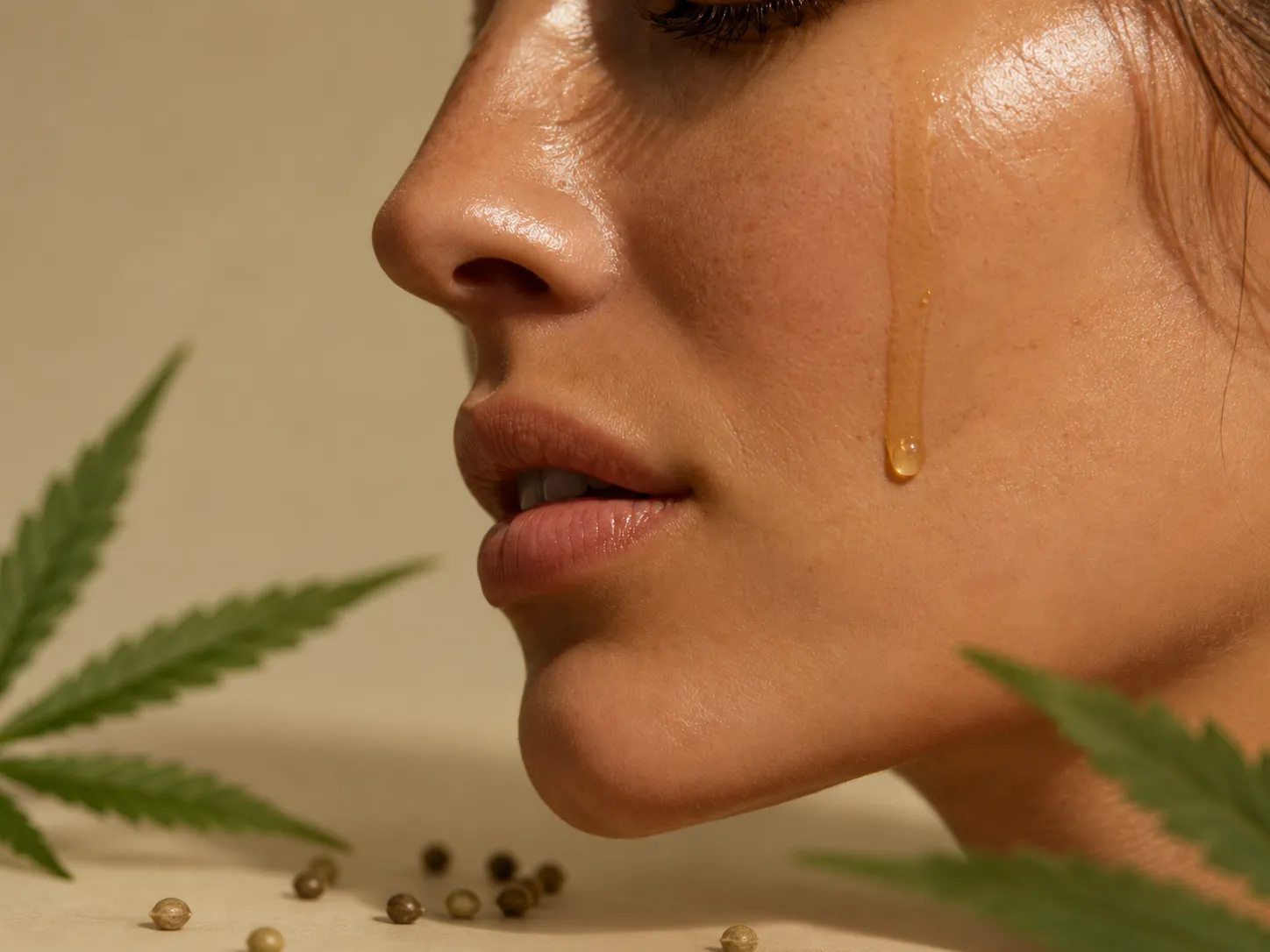
Yes, you can put hemp seed oil on your face if your skin tolerates it. Hemp seed oil is a lightweight carrier oil rich in linoleic acid and vitamin E compounds, and it is commonly considered low-clogging. It may support skin barrier comfort, but it is not medical advice or a guaranteed treatment.
Hemp seed oil has moved from niche natural skincare shelves to mainstream face oils, moisturisers, serums, and barrier-care routines. People are searching for hemp seed oil skin face benefits because they want a facial oil that feels light, supports dry or stressed skin, and does not leave the heavy, pore-clogging feel that some oils can.
The short answer is yes, many people can use hemp seed oil on the face. But the more useful answer is this: hemp seed oil is best understood as a carrier oil, not a miracle active ingredient. It may help support softness, comfort, and barrier care, but it should not be treated as a cure for acne, eczema, pigmentation, ageing, or any medical skin condition.
This guide explains what hemp seed oil is, how it compares with rosehip, jojoba, and argan oil, what research suggests, what is still unproven, and what UAE readers should know before choosing hemp-based skincare.
What Is Hemp Seed Oil?
Hemp seed oil is an oil pressed from the seeds of the Cannabis sativa plant. It is different from CBD oil, hemp extract, or cannabis oil.
The key distinction is simple:
- Hemp seed oil comes mainly from the seeds.
- CBD oil contains cannabidiol extracted from hemp plant material such as leaves, flowers, or aerial parts.
- Hemp extract may contain cannabinoids and requires much stricter legal and product-quality checks.
Hemp seed oil is valued in skincare because it contains fatty acids, including linoleic acid and alpha-linolenic acid, and antioxidant compounds such as tocopherols, a form of vitamin E. A 2024 review of hemp seeds noted that hemp oil contains tocopherols, with gamma-tocopherol being a major component.
For face care, this matters because fatty acids and antioxidant-rich oils may help improve how skin feels, especially when the skin barrier is dry, tight, or exposed to harsh weather.
Is Hemp Seed Oil Good for the Face?
Hemp seed oil can be a good facial oil for many skin types because it is lightweight, rich in polyunsaturated fatty acids, and commonly used as a non-greasy carrier oil.
A major review on topical plant oils found that different oils can influence the skin barrier, inflammation, wound repair, and antioxidant activity, depending on their fatty acid composition and how they are used. The same review notes that oils high in linoleic acid may be more barrier-supportive than oils dominated by oleic acid, which can be more disruptive with repeated use in some contexts.
This does not mean hemp seed oil “repairs” every skin issue. It means its fatty acid profile makes it a reasonable option for people looking for a light facial oil that supports comfort and moisturisation.
Hemp Seed Oil for Skin Face Benefits: What It May Support
1. Lightweight Moisturising Support
Hemp seed oil helps soften the skin by acting as an emollient. Emollients fill tiny gaps between dry skin cells and help the skin feel smoother.
It does not hydrate the skin in the same way as humectants like glycerin or hyaluronic acid. Instead, it works best when layered over a water-based serum or moisturiser to help reduce dryness and improve skin feel.
For UAE readers dealing with air conditioning, sun exposure, heat, and humidity, this makes hemp seed oil useful as a light finishing oil rather than a heavy cream replacement.
2. Linoleic Acid for Skin Barrier Comfort
Linoleic acid is an essential omega-6 fatty acid found in several plant oils, including hemp seed oil. A 2024 review on linoleic acid discussed its role in skin health, barrier function, and hair health, while also noting that more targeted human research is still needed for specific claims.
In skincare, linoleic-rich oils are often preferred by people with oily, combination, or congestion-prone skin because they usually feel lighter than oils high in oleic acid.
This is one reason hemp seed oil has become popular as a facial oil: it offers nourishment without the very rich feel of heavier oils.
3. Vitamin E Compounds and Antioxidant Support
Hemp seed oil contains tocopherols, which are vitamin E-related antioxidant compounds. Antioxidants in skincare may help support the skin against oxidative stress from environmental exposure, although hemp seed oil should not replace sunscreen, medical skincare, or dermatologist-prescribed treatment.
Apetroaei and colleagues’ 2024 review describes hemp seed oil as a source of tocopherols, especially gamma-tocopherol.
For practical skincare, this means hemp seed oil can be positioned as a supportive botanical oil, not a standalone anti-ageing solution.
4. A Low-Clogging Carrier Oil for Many People
Hemp seed oil is widely described in cosmetic and skincare references as having a comedogenic rating of 0, which means it is considered among the lowest-risk oils for pore-clogging on the traditional comedogenic scale. Recent skincare references also list hemp seed oil as a 0-rated oil and suitable for many oily or acne-prone users.
However, the comedogenic scale is not perfect. It is a guide, not a guarantee. Real skin reactions depend on formula quality, other ingredients, fragrance, essential oils, climate, cleansing habits, and individual sensitivity.
So while hemp seed oil is often one of the better facial oil choices for people worried about clogged pores, patch testing is still important.
Hemp Seed Oil vs CBD Oil for Face
This is where many skincare buyers get confused.
| Feature | Hemp Seed Oil | CBD Oil / Hemp Extract Skincare |
|---|---|---|
| Source | Pressed from hemp seeds | Extracted from hemp plant material |
| Main skincare role | Carrier oil, emollient, fatty-acid support | Cannabinoid-focused ingredient |
| Intoxicating? | No | CBD is non-intoxicating, but product legality varies |
| UAE context | Hemp seed/stalk oils may be treated differently in cosmetics | CBD cosmetics and consumer CBD products require strict legal caution |
| Best for | Lightweight moisturising and barrier comfort | Not recommended without checking local laws and product legality |
UAE government information on the industrial hemp framework says cosmetic products containing industrial hemp are prohibited except for those containing oils extracted from industrial hemp seeds or stalks, with any other exceptions subject to Cabinet decision. It also states that compounds that may directly or indirectly produce a narcotic or psychoactive effect remain subject to narcotics and related laws.
This makes the distinction between hemp seed oil and CBD oil especially important for Dubai and UAE readers.
Hemp Seed Oil vs Rosehip, Jojoba, and Argan Oil
Hemp Seed Oil vs Rosehip Oil
Rosehip oil is usually chosen for glow, uneven texture, and mature-skin routines. It contains polyunsaturated fatty acids and naturally occurring compounds associated with vitamin A activity, depending on the oil type and extraction quality. A 2025 study on topical rosehip oil suggested it may improve facial skin quality and visible age-related markers, but responses varied and the study context matters.
Choose hemp seed oil if: you want a lighter, low-clogging, barrier-friendly carrier oil.
Choose rosehip oil if: you want a richer glow oil and your skin tolerates vitamin-A-associated botanicals.
Rosehip may be more active-feeling for some users, while hemp seed oil is often simpler and gentler as a daily carrier oil.
Hemp Seed Oil vs Jojoba Oil
Jojoba is technically a liquid wax, not a true oil. It is popular because it feels similar to skin’s natural sebum and has a smooth, non-greasy finish. A 2024 dermatology review described jojoba oil as an emollient that can improve skin surface suppleness and texture.
Choose hemp seed oil if: you want linoleic-acid-rich plant oil support.
Choose jojoba oil if: your skin likes a wax-ester texture and you want a simple, stable oil.
Jojoba is often more shelf-stable. Hemp seed oil can oxidise faster and should be stored carefully.
Hemp Seed Oil vs Argan Oil
Argan oil is richer and often used for dry skin, hair, and mature-skin routines. A 2024 review discussed argan oil’s use in medicine and cosmetology and noted potential benefits for skin firmness, elasticity, and cosmetic support, though broad claims still need careful interpretation.
Choose hemp seed oil if: your face gets oily, humid, or easily congested.
Choose argan oil if: your skin is dry, mature, or needs a richer oil.
In a hot UAE climate, hemp seed oil may feel lighter during the day, while argan oil may suit nighttime or dry-skin routines better.
Best Skin Types for Hemp Seed Oil
Hemp seed oil may suit:
- Normal skin that needs a light facial oil
- Combination skin that feels dry in some areas
- Oily skin that dislikes heavy oils
- Dry skin when layered over a moisturiser
- Skin exposed to air conditioning or dry indoor environments
- People looking for a simple carrier oil for facial massage
It may not suit everyone. People with very reactive skin, active acne flares, eczema, rosacea, allergies, or broken skin should speak with a dermatologist before using new oils.
A small 2005 clinical study looked at dietary hempseed oil in people with atopic dermatitis and found changes in fatty acid profiles and improvement in clinical symptoms, but this was dietary use, not proof that applying hemp seed oil to the face treats eczema.
That distinction matters: oral hempseed oil research should not be overstated as direct evidence for topical facial use.
How to Use Hemp Seed Oil on Your Face
Step 1: Patch Test First
Apply a small amount behind the ear or along the jawline for 24–48 hours. Stop if you notice burning, itching, rash, swelling, or new breakouts.
Step 2: Apply on Slightly Damp Skin
Use hemp seed oil after cleansing and after a water-based serum or moisturiser. Oils work better when they help seal in existing moisture rather than being applied to completely dry skin.
Step 3: Use Only 1–3 Drops
For the face, more is not better. Start with one drop for oily skin, two drops for combination skin, and three drops for dry skin.
Step 4: Use at Night First
If you are new to facial oils, start at night. This helps you see how your skin responds without adding sunscreen, makeup, heat, sweat, or outdoor pollution into the mix.
Step 5: Avoid Mixing with Too Many Actives
Do not introduce hemp seed oil on the same day as a new retinoid, exfoliating acid, vitamin C serum, or acne treatment. If irritation occurs, you will not know which product caused it.
Possible Side Effects and Safety Considerations
Hemp seed oil is generally well tolerated as a cosmetic oil, but side effects can happen.
Possible reactions include:
- Breakouts
- Contact irritation
- Itching
- Redness
- Rash
- Greasy feel if overused
- Sensitivity to added fragrance or essential oils
Many reactions come not from hemp seed oil itself, but from the full formula. Essential oils, perfume, preservatives, colourants, and oxidised oils can irritate sensitive skin.
Choose cold-pressed, fresh, well-packaged hemp seed oil from a reputable skincare supplier. Avoid products that smell rancid, feel sticky, or come in clear bottles exposed to heat and sunlight.
Product Quality: What to Look For
When buying hemp seed oil for the face, look for:
- “Cannabis sativa seed oil” on the ingredient list
- Cold-pressed or expeller-pressed oil
- Dark glass packaging
- No CBD claims unless legally verified
- No THC claims unless legally verified and relevant
- Fragrance-free formula if your skin is sensitive
- Batch testing or quality documentation where available
- Clear distinction between hemp seed oil and hemp extract
For UAE shoppers, this label check is not just cosmetic. It is also a legal-awareness step.
Dubai and UAE Reader Context
Hemp seed oil skincare is not the same as CBD skincare.
In the UAE, hemp and cannabis-related products can fall under strict rules. The UAE’s industrial hemp framework allows tightly regulated medical and industrial uses, but it does not create an open consumer CBD market. The UAE government’s published information states that cosmetics containing industrial hemp are generally prohibited except for products containing oils extracted from industrial hemp seeds or stalks, subject to any further Cabinet exceptions.
Khaleej Times also reported that the law prohibits personal or recreational use of industrial hemp and restricts cosmetic products containing industrial hemp except those with oils extracted from seeds or stalks.
For Dubai and UAE readers, the safest approach is:
- Do not assume “hemp” and “CBD” are legally the same.
- Do not import CBD skincare casually.
- Do not travel with CBD oil, hemp extract, or cannabinoid products without checking current regulations.
- Check whether a product is hemp seed oil only or contains CBD, THC, hemp extract, or cannabinoids.
- Buy only from reputable, compliant sellers.
Wellness interest does not automatically mean a product is legal to buy, carry, import, or use.
What Hemp Seed Oil Does Not Prove Yet
Hemp seed oil has good cosmetic potential, but the evidence should be kept realistic.
Current evidence does not prove that hemp seed oil:
- Cures acne
- Treats eczema
- Removes scars
- Reverses ageing
- Clears pigmentation
- Replaces sunscreen
- Replaces prescription skincare
- Works for every skin type
Many claims around hemp seed oil are based on ingredient composition, traditional cosmetic use, user experience, and broader plant-oil research rather than large clinical trials on hemp seed oil applied directly to facial skin.
That does not make it useless. It simply means it should be marketed as a supportive skincare oil, not a medical solution.
Practical Wellness Tips for Better Facial Oil Results
Hemp seed oil works best as part of a simple routine.
For most people, a balanced routine looks like this:
Morning:
- Gentle cleanser or water rinse
- Lightweight moisturiser
- Sunscreen
- Optional one drop of hemp seed oil only if it does not make sunscreen pill
Night:
- Cleanser
- Hydrating serum or moisturiser
- 1–3 drops of hemp seed oil
In hot, humid weather, use less oil. In dry air-conditioned rooms, you may tolerate slightly more.
For acne-prone skin, avoid layering hemp seed oil over heavy creams, thick balms, or pore-clogging makeup. Even a low-comedogenic oil can feel too heavy when combined with the wrong products.
How to Speak to a Dermatologist About Hemp Seed Oil
If you have active acne, eczema, rosacea, dermatitis, or unexplained irritation, ask your dermatologist:
- Is hemp seed oil suitable for my skin type?
- Could it interfere with my current acne or eczema treatment?
- Should I avoid facial oils while using retinoids or acids?
- Are there ingredients in this product that may irritate my skin?
- Is this product hemp seed oil only, or does it contain CBD or hemp extract?
This is especially important if you are using prescription creams, have a compromised skin barrier, or experience frequent allergic reactions.
Final Balanced Takeaway
Yes, hemp seed oil can be used on the face, and it is one of the better carrier oils for people who want something lightweight, low-clogging, and rich in linoleic acid. It may support skin softness, comfort, and barrier care, especially when used correctly in small amounts.
But it is not a cure, not a treatment, and not a guaranteed solution for acne, eczema, pigmentation, or ageing. The best results come from choosing a clean formula, patch testing, using only a few drops, and keeping the rest of your skincare routine simple.
For UAE readers, the most important point is to check the label and the law: hemp seed oil is different from CBD oil, and CBD or cannabinoid-containing skincare requires much stricter caution.
Key Points at a Glance
- Hemp seed oil can be used on the face if your skin tolerates it.
- It is a carrier oil pressed from hemp seeds, not the same as CBD oil or hemp extract.
- Hemp seed oil is rich in linoleic acid and vitamin E-related tocopherols.
- It is commonly listed as comedogenic rating 0, but no oil is guaranteed to be breakout-free.
- Hemp seed oil may support skin softness and barrier comfort, but it does not treat or cure skin conditions.
- Rosehip, jojoba, argan, and hemp seed oil each suit different skincare needs.
- UAE readers should carefully distinguish hemp seed oil cosmetics from CBD or cannabinoid products.
Can I put hemp seed oil directly on my face?
Yes, many people can apply hemp seed oil directly to the face. Start with 1–2 drops on clean, slightly damp skin and patch test first.
Is hemp seed oil good for oily skin?
It may suit oily or combination skin because it is lightweight and rich in linoleic acid. However, individual reactions vary, so start slowly.
Does hemp seed oil clog pores?
Hemp seed oil is commonly rated 0 on the comedogenic scale, meaning it is considered low risk for clogging pores. Still, formulas and individual skin reactions matter.
Is hemp seed oil the same as CBD oil?
No. Hemp seed oil is pressed from seeds. CBD oil contains cannabidiol extracted from hemp plant material. This distinction is especially important in the UAE.
Can hemp seed oil help acne?
Hemp seed oil may be a low-clogging moisturising oil for some acne-prone users, but it should not be described as an acne treatment. Speak with a dermatologist for active acne.
Can I use hemp seed oil every day?
Yes, if your skin tolerates it. Use a few drops once daily at night first, then adjust based on your skin’s response.
Is hemp seed oil legal in UAE skincare?
UAE rules distinguish hemp seed or stalk oils from CBD and hemp extract products. Regulations can change, so check current local guidance before buying, importing, or carrying hemp-related products.
Which is better for the face: hemp seed oil or jojoba oil?
Neither is universally better. Hemp seed oil is rich in linoleic acid and feels light. Jojoba is a stable liquid wax that mimics sebum-like texture. Choose based on your skin type and tolerance.
Medical Disclaimer
This article is for educational purposes only and does not provide medical advice. Hemp seed oil, CBD, or hemp-derived products should not be used to diagnose, treat, cure, or prevent any disease.
Speak with a qualified healthcare professional or dermatologist before using hemp seed oil or hemp-derived skincare products, especially if you have sensitive skin, eczema, acne, allergies, a chronic skin condition, are pregnant or breastfeeding, or use prescription skin medication.
UAE readers should also check current local laws before buying, carrying, importing, or using CBD or hemp-derived products. Legal status may differ between hemp seed oil, CBD oil, hemp extract, medical cannabis products, and industrial hemp products.
External Source
https://www.khaleejtimes.com/uae/uae-law-hemp-medical-industrial-uses
Leave a Reply