
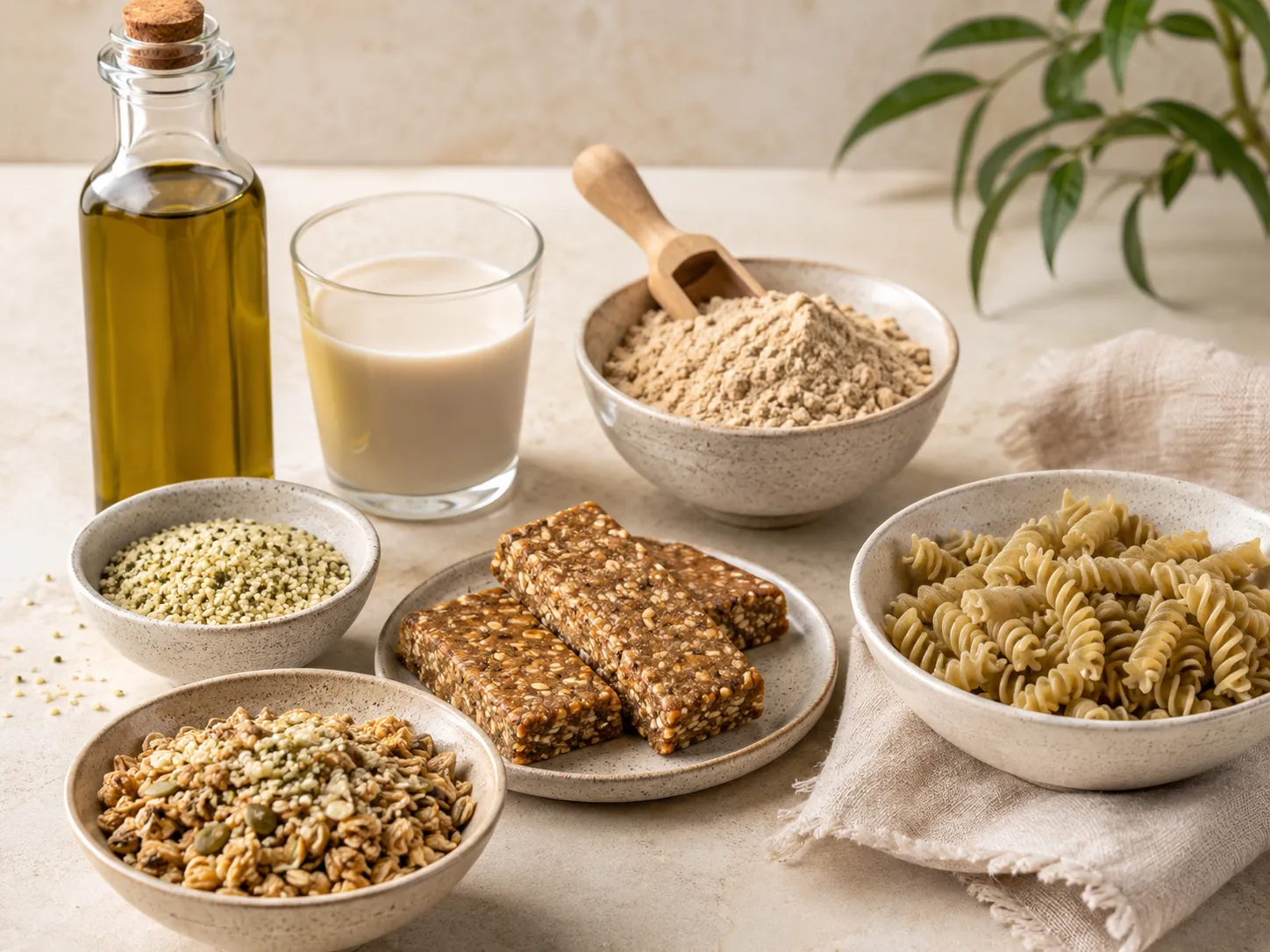
Hemp foods are common in many countries. You may see hemp seeds in smoothies, hemp milk in cafés, hemp protein in fitness products, and hemp snacks in health stores.
But in the UAE, the question is not whether hemp food is natural, nutritious, or non-intoxicating. The real question is simple: is hemp food legal in the UAE?
Quick Answer
Most hemp food products are currently not legal for general import, manufacture, or sale in the UAE.
Federal Decree-Law No. 24 of 2025 created a regulated framework for industrial and medical uses of industrial hemp, but it did not open the market for consumer hemp foods. The law specifically prohibits industrial hemp products related to food products, food supplements, veterinary products, and smoking products. The official law includes one narrow exception for roasted or processed hemp plant seeds rendered non-viable, as referenced under Schedule No. (4) of Federal Decree-Law No. 30 of 2021.
That means products such as hemp milk, hemp protein powder, hemp granola, hemp chocolate, hemp pasta, hemp tea, and hemp seed oil for cooking should not be treated as freely legal hemp foods in the UAE.
What Counts as Hemp Food?
Hemp food means any edible product made with hemp-derived ingredients. This can include:
- Hemp seeds
- Hemp hearts
- Hemp seed oil for cooking
- Hemp protein powder
- Hemp flour
- Hemp milk
- Hemp chocolate
- Hemp snacks, bars, and granola
- Hemp tea or beverages
- Any food product containing hemp as an ingredient
This is where confusion begins. In many countries, hemp seed foods are sold as normal nutrition products. In the UAE, however, product category matters. A product can be non-intoxicating and still fall within a restricted hemp food category.
What UAE Law Says About Hemp Food Products
Federal Decree-Law No. 24 of 2025 regulates industrial and medical uses of industrial hemp in the UAE. It defines industrial hemp as Cannabis sativa, or any part or derivative of it, with total THC not exceeding 0.3% on a dry-weight basis. The law also requires THCa conversion to be considered when calculating total THC.
However, the law does not automatically allow all hemp-derived consumer products.
Article 2 of the law prohibits the import or manufacture of several industrial hemp product categories. Food products are listed first, with one narrow exception for roasted or processed hemp plant seeds rendered non-viable. Food supplements, veterinary products, smoking products, and most cosmetic products are also restricted unless a specific exception applies.
The UAE government’s public statement on the law also confirms that personal or recreational use of industrial hemp is prohibited, including industrial hemp products related to food products, dietary supplements, veterinary products, and smoking products.
The Only Current Food-Related Exception
The main exception is for roasted or processed hemp plant seeds rendered non-viable.
In simple terms, this means hemp seeds that have been processed so they cannot germinate or grow into a plant. This may include roasted or otherwise processed seeds, depending on the final regulatory conditions and documentation requirements.
This exception should not be stretched too far. It does not automatically mean all hemp foods are allowed. It does not clearly allow every product made with hemp seeds as an ingredient.
For example, standalone roasted or processed non-viable hemp seeds may fall within the exception. But hemp granola, hemp seed bread, hemp energy bars, hemp milk, or hemp pasta are different product categories and should not be assumed legal simply because they contain hemp seeds.
Hemp Food Products: What Is Allowed and What Is Not?
| Product Type | Current UAE Position | Notes |
|---|---|---|
| Roasted or processed non-viable hemp seeds | Narrow exception may apply | Must meet the specific legal and regulatory conditions |
| Hemp hearts or hulled hemp seeds | Needs careful verification | May fall within the processed seed exception if non-viable and compliant |
| Hemp milk | Not freely legal | Treated as a hemp food product |
| Hemp protein powder | Not freely legal | Likely treated as food supplement or food-related hemp product |
| Hemp granola or cereal | Not freely legal | Uses hemp as a food ingredient |
| Hemp chocolate or confectionery | Not freely legal | Food category remains restricted |
| Hemp seed oil for cooking | Not freely legal | Cosmetic hemp seed/stem oil rules do not automatically apply to food use |
| Hemp tea or beverages | Not freely legal | Beverage and food categories remain restricted |
| Hemp pasta, bread, or baked goods | Not freely legal | Food products containing hemp ingredients remain restricted |
Is Hemp Seed Oil for Cooking Legal in the UAE?
Hemp seed oil in UAE creates one of the biggest misunderstandings.
Hemp seed oil may be used in some cosmetic contexts when it meets the legal conditions for cosmetic products. But that does not mean hemp seed oil is automatically legal as a cooking oil, salad oil, or dietary product.
A bottle of hemp seed oil sold for skin use and a bottle of hemp seed oil sold for food use are regulated differently. For now, hemp seed oil marketed for eating or cooking should be treated as a restricted hemp food product unless official guidance says otherwise.
Can You Bring Hemp Food Products Into the UAE?
You should not bring hemp food products into the UAE unless you have verified their current legal status with qualified UAE legal or customs guidance.
This includes hemp protein bars, hemp granola, hemp milk, hemp seed oil for cooking, hemp snacks, hemp tea, and hemp supplements in UAE. The fact that a product is legal in another country does not make it legal at UAE customs.
This matters especially for travellers. A hemp food product may look harmless abroad, but the UAE’s hemp framework is category-based and tightly controlled.
Can You Buy Hemp Food Online in the UAE?
Do not rely only on online marketplace listings to decide whether a hemp food product is legal.
Some products may appear online because of older listings, third-party sellers, cross-border platforms, or unclear product categorisation. A product appearing on a website does not automatically mean it is permitted under UAE law.
For consumers, the safest position is to avoid hemp food products unless they clearly fall within the narrow processed non-viable seed exception and are sold through a compliant UAE retail channel.
For businesses, legal review is essential before importing, manufacturing, marketing, or distributing any hemp food product.
Why Are Hemp Foods Restricted If Industrial Hemp Is Now Regulated?
The UAE’s 2025 hemp law is not a consumer wellness legalisation law. It is mainly an industrial and medical hemp framework.
The law creates controlled pathways for activities such as cultivation, seed import/export, manufacturing, import/export of industrial hemp products, and circulation of authorised products. These activities require licences, approvals, testing, traceability, and oversight.
Consumer food is a different regulatory category. It involves food safety standards, import controls, labelling rules, retail monitoring, consumer protection, and potentially halal certification considerations.
So, the UAE’s current approach appears to be cautious and phased: allow tightly controlled industrial and medical hemp activity first, while keeping consumer hemp foods restricted unless and until specific permissions are introduced.
What Changed in 2026?
Before Federal Decree-Law No. 24 of 2025 came into force, the UAE did not have a dedicated industrial hemp framework. Cannabis-related matters were generally handled under the narcotics framework.
The 2025 law, effective from 1 January 2026, created a specific regulatory path for industrial and medical uses of industrial hemp. It also made the restrictions around food products clearer by naming food products directly as a prohibited category, except for the narrow non-viable seed exception.
So, the key change is not that hemp foods became broadly legal. The key change is that industrial and medical hemp now have a defined legal framework, while food products remain restricted.
Could Hemp Foods Become Legal in the UAE Later?
Possibly, but there is no confirmed timeline.
The law allows the UAE Cabinet and relevant authorities to issue executive regulations and decisions that shape how the hemp framework works in practice. The official framework is still dependent on detailed rules, permitted product lists, licences, standards, and authority-level implementation.
Future changes could create more clarity for hemp food products. But as of now, there is no public official roadmap confirming when hemp milk, hemp protein, hemp seed oil for cooking, or hemp snacks may become legally available in the UAE.
Any future legalisation would likely require clear standards for:
- Permitted hemp ingredients
- THC limits and testing
- Import documentation
- Food safety approvals
- Labelling rules
- Retail compliance
- Consumer-facing claims
- Halal and product certification, where applicable
Until those rules are formally introduced, hemp foods should be treated as restricted.
Practical Guidance for UAE Residents
Standalone roasted or processed non-viable hemp seeds may be the only narrow food-related exception currently recognised under the framework. Even then, consumers should buy only from compliant UAE retailers and avoid products with unclear origin, unclear labels, or cannabinoid claims.
Avoid hemp food products that are marketed as milk, protein, supplements, snacks, bars, granola, tea, cooking oil, or wellness edibles unless there is clear official permission.
Do not assume “THC-free” means legal. UAE hemp law does not only look at intoxication. It also looks at product category, licensing, import status, and permitted use.
Practical Guidance for Businesses
Food brands, distributors, cafés, supplement companies, and retailers should not treat the 2025 hemp law as permission to enter the UAE hemp food market.
Before any commercial activity, businesses should review:
- Whether the product category is permitted
- Whether the product falls under the narrow non-viable seed exception
- Whether import or manufacturing is allowed
- Whether a licence or permit is required
- Whether testing by accredited laboratories is required
- Whether the product label and claims are compliant
- Whether emirate-level restrictions apply
The decree allows each emirate to restrict or prohibit certain industrial hemp activities within its territory, so local rules may also matter.
For any commercial hemp food plan, qualified UAE legal advice is essential.
Conclusion
Hemp food is not broadly legal in the UAE right now.
Federal Decree-Law No. 24 of 2025 opened a controlled framework for industrial and medical hemp, but hemp food products remain restricted. The main food-related exception is limited to roasted or processed hemp plant seeds rendered non-viable under the referenced legal conditions.
For consumers, the safest approach is simple: avoid hemp milk, hemp protein, hemp snacks, hemp seed oil for cooking, hemp tea, and hemp supplements unless there is clear UAE-specific legal permission.
For businesses, the opportunity may become real in the future, but the current market is not open for general hemp food import, manufacture, or sale.
Legal disclaimer: This article is for informational purposes only and is not legal advice. UAE hemp regulation is developing through executive regulations, Cabinet decisions, and authority-level implementation. Always verify current requirements with qualified UAE legal and regulatory professionals before importing, buying, selling, manufacturing, or travelling with hemp-related products.
Is hemp food legal in the UAE?
Mostly no. Hemp food products are not broadly legal for general import, manufacture, or sale in the UAE. The main narrow exception is for roasted or processed hemp plant seeds rendered non-viable under the referenced legal conditions.
Are hemp seeds legal in the UAE?
Roasted or processed non-viable hemp seeds may fall within the narrow exception. Raw viable hemp seeds or hemp seeds used in manufactured food products should not be assumed legal without proper verification.
Is hemp milk legal in the UAE?
No, hemp milk should not be treated as freely legal in the UAE. It is a hemp food product, and hemp food products remain restricted under the current framework.
Is hemp protein powder legal in the UAE?
Hemp protein powder is not freely legal in the UAE. It may fall under food supplement or hemp food restrictions.
Can I bring hemp food into Dubai Airport?
You should not bring hemp food products into Dubai Airport or the UAE unless you have verified their current legal status with qualified UAE customs or legal guidance.
Is hemp seed oil for cooking legal in the UAE?
Hemp seed oil for cooking should not be treated as legal. Cosmetic-use hemp seed oil and edible hemp seed oil are different categories.
External Source
Leave a Reply