
Short Answer
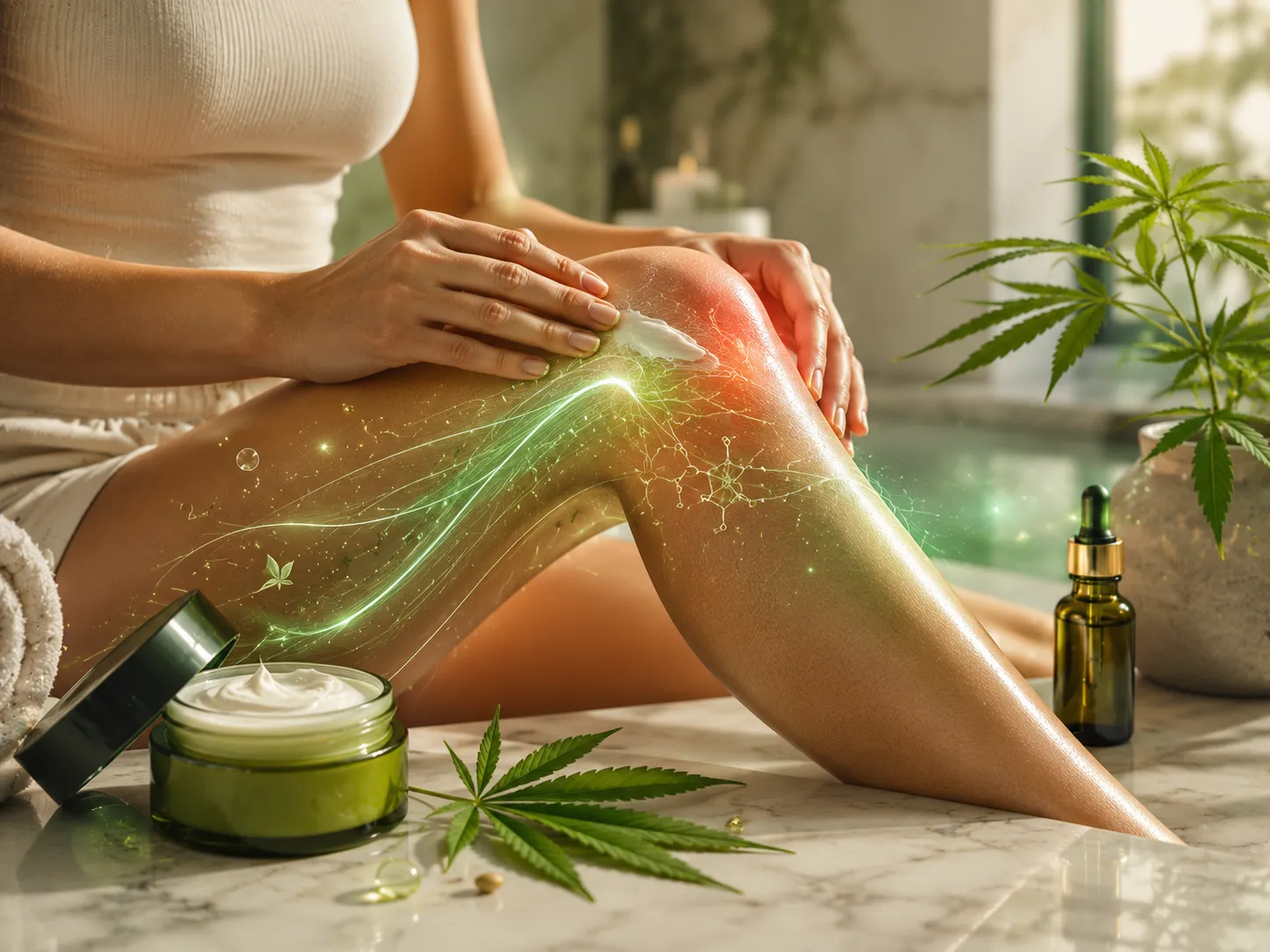
CBD topical pain cream UAE searches usually focus on whether CBD absorbs through the skin. Research suggests topical and transdermal CBD may interact with skin-level endocannabinoid pathways, but absorption depends heavily on formulation. CBD is not medical advice, not a guaranteed pain treatment, and UAE readers should check current laws first.
CBD creams, balms, roll-ons, and massage oils have become popular in global wellness markets because they feel familiar. People already use topical products for sore muscles, stiff joints, post-workout recovery, and everyday discomfort. So it is natural to ask whether a CBD topical pain cream UAE product actually absorbs through the skin or simply sits on the surface.
The honest answer is: some CBD can interact with the skin, but not every topical product works the same way. Skin delivery depends on the CBD concentration, the base formula, the use of penetration-enhancing ingredients, the condition of the skin barrier, and whether the product is designed as a simple topical or a true transdermal system.
The science is promising in some areas, but still early. Small clinical studies and laboratory research suggest that cannabinoids may interact with skin-level pathways, including receptors and ion channels involved in inflammation, sensation, and barrier function. However, current evidence does not prove that CBD creams reliably relieve pain for everyone, and stronger human trials are still needed. A 2024 review in The Journal of Pain took a cautious view, noting that many CBD pain trials have not shown clear benefit over placebo and that quality, purity, and safety questions remain important.
What Is a CBD Topical Pain Cream?
A CBD topical pain cream is a skin-applied product that contains cannabidiol, usually blended into a cream, balm, gel, lotion, roll-on, or oil base. Unlike oral CBD oils or capsules, topical CBD is applied directly to the area of concern, such as the shoulder, knee, lower back, neck, wrist, or feet.
The goal of a topical formula is usually local skin-level support, not a whole-body effect. This is why topical CBD is often discussed separately from oral CBD.
Common CBD topical formats include:
- Creams and lotions: Lightweight, easier to spread, often used for larger areas.
- Balms and salves: Thicker, oil-based, often used for targeted massage.
- Roll-ons: Convenient for gym bags, travel, or precise application.
- Gels: Fast-feeling formulas, often paired with cooling ingredients.
- Massage oils: Designed for longer application and bodywork.
The format matters because CBD is highly lipophilic, meaning it prefers oily environments. This can help it mix into balms and oils, but it can also make controlled skin penetration challenging without the right delivery system.
Topical vs Transdermal CBD: The Key Difference
Many people use “topical” and “transdermal” interchangeably, but scientifically they are not the same.
Topical CBD
A topical product is designed mainly to act on or near the skin surface. It may interact with skin cells, local nerve endings, sebaceous glands, or superficial tissues. The goal is usually localised support.
Transdermal CBD
A transdermal product is designed to cross the skin barrier and reach deeper tissues or the bloodstream. Transdermal delivery is more complex and usually requires specialised technology, such as permeation enhancers, patches, nanoformulations, or carefully engineered carriers.
This difference is important because many consumer CBD creams are marketed as if they deeply penetrate, but not all are formulated to do that. A 2023 systematic review on topical and transdermal CBD noted that skin delivery is scientifically plausible, but formulation design is central to how much CBD can penetrate or become systemically available.
Does CBD Actually Absorb Through Skin?
CBD can be delivered through the skin under certain conditions, but absorption is not automatic.
The skin’s outermost layer, the stratum corneum, acts like a protective wall. It helps keep irritants out and moisture in. That same protective function makes it difficult for many active compounds to pass through. CBD’s oil-loving nature creates an added formulation challenge because very lipophilic compounds can remain in the outer skin layers rather than moving efficiently into deeper tissue.
A 2022 study evaluating CBD skin permeability found that CBD movement through skin-like membranes depends strongly on the formulation used, reinforcing that “CBD in a cream” is not enough by itself to guarantee meaningful delivery.
A 2022 open-label study of a novel topical transdermal CBD and THC system also investigated systemic cannabinoid bioavailability in healthy adults, showing that specialised transdermal designs can produce measurable cannabinoid exposure. However, this does not mean ordinary CBD creams behave the same way.
Why the Skin Has Its Own Endocannabinoid System
One reason CBD topicals are being studied is that the skin has its own endocannabinoid system. This includes endocannabinoids, enzymes, and receptor pathways that help regulate skin balance, barrier function, inflammation, cell growth, and sensory signalling.
A review by Bíró and colleagues in 2009 described the skin endocannabinoid system and noted that cannabinoid signalling is involved in multiple skin functions, including keratinocyte behaviour and immune-related processes.
A 2023 review in Pharmaceuticals also reported that cannabinoids may influence skin inflammation and itch through several pathways, including CB1/CB2 receptors, chemokines, and other molecular targets. The same review makes clear that much of the evidence remains preclinical or early-stage.
Peripheral vs Central Mechanism: Why Topicals Are Different
CBD pain creams are usually discussed as a peripheral approach, not a central nervous system approach.
A central mechanism would involve effects in the brain or spinal cord. Oral or inhaled cannabinoids are more likely to raise questions about systemic exposure, sedation, cognition, or whole-body effects.
A peripheral mechanism focuses on local tissues, such as skin, joints, muscles, nerve endings, and inflammatory signalling near the application site. Research on cannabinoids and pain suggests that peripheral cannabinoid pathways may influence inflammatory and neuropathic pain signalling in animal and mechanistic studies, including via CB1 and CB2 receptor-related pathways.
For CBD creams, this distinction matters because a good topical product is usually not trying to “make you feel CBD” throughout the body. It is more likely aimed at local comfort, cooling, massage support, or skin-level interaction.
What Current Research Suggests About CBD Topicals for Pain
The evidence is mixed. Some small studies suggest potential, while broader reviews urge caution.
Peripheral nerve discomfort
A 2020 study by Xu, Cullen, Tang, and colleagues looked at topical CBD oil for symptomatic lower-extremity peripheral neuropathy. The study reported improvements in pain and unpleasant sensations compared with placebo, but it was small, with 29 participants, so it should be interpreted as early evidence rather than proof.
Jaw and muscle tension
A 2019 randomized, double-blind trial in Journal of Clinical Medicine studied transdermal CBD application in patients with temporomandibular disorder-related myofascial pain. The study enrolled 60 patients and found reduced masseter muscle activity and lower pain scores over 14 days in the CBD group compared with placebo. The limitation is that it was short-term and focused on a specific condition and application area.
Pain evidence overall
A 2024 review in The Journal of Pain reviewed CBD products for pain and concluded that most verified CBD trials did not show benefit over placebo. The authors also raised concerns about cost, product purity, safety, and overconfident marketing.
So the balanced takeaway is this: CBD topicals may be worth studying, and some early trials are interesting, but the evidence is not strong enough to call CBD pain creams a proven pain treatment.
What the Evidence Does Not Prove Yet
CBD topical research does not yet prove that:
- CBD creams work for every type of pain.
- Higher CBD strength always means better results.
- All CBD creams absorb deeply.
- CBD topicals can replace prescribed pain treatment.
- A product with menthol or camphor works because of CBD alone.
- Imported CBD creams are legal or safe for UAE use.
- “Lab-tested” automatically means medically effective.
This is where many wellness brands overstate the science. A cream may feel helpful because of massage, cooling ingredients, moisturising oils, placebo response, menthol, camphor, or actual CBD activity. In real-world use, these effects can overlap.
Ingredients That May Improve Absorption or Sensation
CBD is only one part of a topical formula. The base and supporting ingredients can strongly influence user experience.
Menthol
Menthol is commonly used in topical products because it creates a cooling sensation. It can also act as a penetration enhancer in certain formulations. A 2023 Frontiers in Pharmacology study discussing topical permeation noted that menthol is commonly used in medicine as a penetration enhancer and may provide cooling, desensitising, and counter-irritant effects.
Camphor
Camphor produces a warming or cooling sensation depending on concentration and formulation. The same Frontiers in Pharmacology paper notes that camphor may cause local skin hyperemia and warming sensations, while also being discussed as an absorption-related ingredient in topical systems.
Carrier oils
Oils such as coconut oil, olive oil, hemp seed oil, or emu oil are often used to carry lipophilic ingredients. These may improve spreadability and skin feel, but they do not automatically guarantee deep CBD penetration.
Emulsifiers and delivery systems
Creams and lotions often use emulsifiers to blend oil and water phases. More advanced products may use liposomes, nanoemulsions, patches, gels, or other delivery systems to improve consistency and penetration. A 2025 review on nanoformulated CBD reported that nanoformulation approaches may improve skin penetration and controlled delivery, but this is still a specialised formulation area rather than a guarantee for ordinary creams.
CBD Cream vs Roll-On vs Balm: Which Format Absorbs Better?
There is no universal answer. The best format depends on the formula.
| Format | Best For | Absorption Notes |
|---|---|---|
| Cream | Larger areas, daily use | Spreads easily; absorption depends on emulsion quality |
| Balm | Targeted massage, dry areas | Oil-rich base may suit CBD, but can stay surface-level |
| Roll-on | Convenience, neck/shoulder use | Often includes menthol; good for precise application |
| Gel | Fast-feeling cooling effect | May feel lighter; delivery depends on solvents and enhancers |
| Patch | Longer contact time | More likely to be designed for transdermal delivery |
For a CBD topical pain cream UAE reader, the bigger question is not only “Which format is strongest?” but “Is this product legally allowed, properly tested, and realistically formulated?”
Safety Considerations for CBD Topicals
Topical CBD may have a different safety profile from oral CBD, but it is not automatically risk-free.
Possible concerns include:
- Skin irritation
- Rash or allergic reaction
- Sensitivity to menthol, camphor, essential oils, or fragrance
- Unknown CBD absorption from repeated use
- Contamination or inaccurate labelling
- Accidental exposure to children or pets
- Use on broken, inflamed, or damaged skin
- Combining topical CBD with oral CBD or other cannabinoid products
The FDA has warned that CBD products can carry risks including liver injury, drug interactions, sedation, digestive symptoms, mood changes, and uncertainty around cumulative exposure, including scenarios where someone uses CBD skin cream alongside other CBD products.
Even though topical CBD may produce less systemic exposure than oral CBD in many cases, a well-formulated transdermal product could be designed to increase absorption. That is why people taking prescription medicines or managing liver-related concerns should speak with a qualified clinician first.
Medication Interaction Concerns
Medication interaction concerns are better established for oral CBD than for ordinary topical CBD, but caution is still sensible.
A 2019 review in Journal of Clinical Medicine noted that CBD-related adverse effects and interactions may involve liver enzyme changes, sedative effects, and interactions with medicines that affect the liver or central nervous system.
People should be especially cautious if they take:
- Anti-seizure medicines
- Sedatives or sleep medicines
- Antidepressants or anti-anxiety medicines
- Blood thinners
- Medicines with liver warnings
- Multiple prescription medicines
- High-dose pain medicines
- Products containing alcohol, sedating herbs, or other cannabinoids
This does not mean every topical CBD product will cause interactions. It means the safest route is to ask a qualified doctor or pharmacist, especially if the product is designed for transdermal delivery or used frequently.
Product Quality: What to Check Before Trusting a CBD Topical
CBD product quality varies widely in global markets. A topical product should not be trusted just because the label looks premium.
Look for:
- Third-party lab testing
- Batch-specific certificate of analysis
- Clear CBD amount per container
- THC result clearly stated
- Contaminant testing for heavy metals, pesticides, solvents, and microbes
- Full ingredient list
- Clear distinction between hemp seed oil and CBD extract
- No disease-treatment claims
- Clear manufacturer or distributor details
- Legal compliance for the country where it is sold
For UAE readers, this quality checklist is not enough by itself. A product can be lab-tested and still not be legal to import, carry, sell, or use locally.
Dubai and UAE Reader Context: Be Very Careful
CBD laws in the UAE require careful attention. The UAE’s official legislation portal lists Federal Decree-Law No. 24 of 2025 on the industrial and medical uses of industrial hemp as active, with an effective date of January 1, 2026.
This legal framework does not mean consumer CBD creams are freely allowed. The law concerns regulated industrial and medical uses of hemp, and UAE implementation can involve licensing, product-category restrictions, and federal or emirate-level controls. The Emirates Drug Establishment states that it is the federal authority responsible for regulating medical and pharmaceutical products, including medicated cosmetics and related health products.
UAE readers should understand these distinctions:
- Hemp seed oil cosmetics are not the same as CBD creams.
- CBD oil is not the same as hemp seed oil.
- Medical CBD is not the same as imported wellness CBD.
- Industrial hemp licensing is not permission for personal CBD use.
- A CBD topical sold abroad may not be legal to bring into Dubai or the UAE.
For Dubai-based readers, the safest assumption is: do not import, carry, or use CBD creams unless you have verified current UAE rules through official channels and, where relevant, medical or legal professionals.
How to Speak to a Doctor About CBD Topicals
A practical conversation with a doctor can be simple and direct.
You can ask:
- Is a topical product appropriate for my type of discomfort?
- Could this interact with my current medicines?
- Should I avoid CBD because of liver concerns or pregnancy/breastfeeding?
- Are there approved topical options with better evidence?
- Is menthol, camphor, capsaicin, or another non-CBD topical more suitable?
- Is the product I am considering actually legal where I live?
- Should I avoid applying it over broken or irritated skin?
Bring the full product label, ingredient list, and lab report if available. A doctor or pharmacist can only assess risk properly when they know what is actually in the product.
Practical Non-Medical Wellness Tips for Local Comfort
For everyday muscle stiffness or post-workout soreness, non-medical wellness habits may be more reliable than relying on CBD alone.
Consider:
- Gentle stretching after long desk hours
- Warm showers or heat packs for stiffness
- Cold packs after acute strain or swelling
- Proper hydration in hot UAE weather
- Ergonomic chair and screen setup
- Gradual strength training
- Rest days after intense gym sessions
- Supportive footwear
- Massage from a qualified professional
- Seeing a clinician for persistent, severe, or worsening pain
These steps do not replace medical care, but they can support general wellbeing and reduce overdependence on wellness products.
Final Balanced Takeaway
CBD topicals are scientifically interesting because the skin has cannabinoid-related pathways and some formulas can deliver CBD into or through the skin. Early studies suggest possible local benefits in certain pain-related contexts, but the overall human evidence remains limited and mixed.
The most important point is formulation. A well-designed transdermal CBD product is very different from a basic cream with CBD added to it. Menthol, camphor, oils, emulsifiers, and delivery systems can all change how a product feels and possibly how it absorbs.
For UAE readers, the legal side is just as important as the science. A CBD topical pain cream may be common in other countries, but that does not automatically make it legal or safe to buy, carry, import, or use in Dubai or the wider UAE.
Key Points at a Glance
- CBD topicals may interact with skin-level endocannabinoid pathways, but absorption depends heavily on formulation.
- Topical CBD and transdermal CBD are not the same; transdermal products are designed to penetrate more deeply.
- Early human studies on topical or transdermal CBD for pain are interesting but still limited.
- Menthol and camphor may improve the sensory effect of a product and can influence topical delivery.
- CBD creams should not be treated as proven pain treatments or replacements for medical care.
- People taking prescription medicines, pregnant or breastfeeding readers, and those with liver concerns should consult a qualified clinician first.
- UAE readers should verify current CBD laws before buying, carrying, importing, or using any CBD topical product.
Medical Disclaimer
This article is for educational purposes only and does not provide medical advice. CBD should not be used to diagnose, treat, cure, or prevent any disease. Speak with a qualified healthcare professional before using CBD or hemp-derived products, especially if you are pregnant, breastfeeding, taking prescription medicines, have liver concerns, or live with a chronic health condition.
For UAE readers, CBD laws and hemp-product rules can be strict. Always verify current UAE and emirate-level regulations before buying, carrying, importing, or using any CBD product, including topical creams, balms, roll-ons, or oils.
External Source
Leave a Reply