
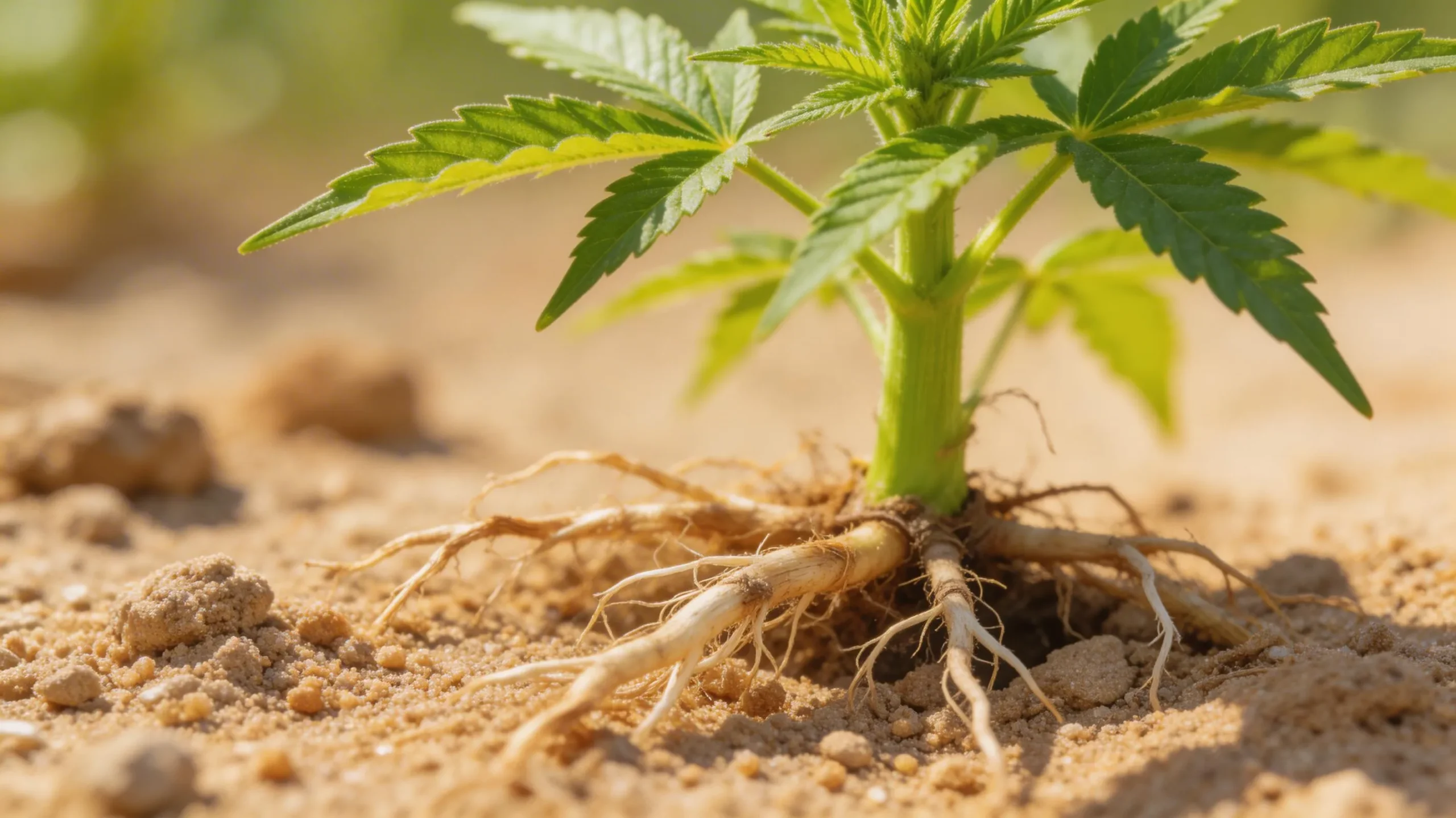
The UAE now recognises industrial hemp as a legal category, but that does not mean cannabis or marijuana has become legal for general use.
That is the key point behind hemp vs marijuana in UAE law searches in 2026. Hemp and marijuana can come from the same Cannabis sativa plant family, but UAE law treats them very differently. The legal difference is not based on how the plant looks. It is based on total THC concentration, licensing, testing, and approved use.
Under Federal Decree-Law No. 24 of 2025, industrial hemp is defined as Cannabis sativa, including its parts, derivatives, or extracts, where the total THC concentration in the flowering heads and leaves does not exceed 0.3% on a dry-weight basis. The law also requires THCa conversion to be considered when calculating total THC.
In simple terms: hemp is a tightly regulated industrial and medical category in the UAE. Marijuana remains a controlled narcotic when it falls outside that narrow legal framework.
The Short Answer
Hemp and marijuana may come from the same plant family, but they are not treated the same under UAE law.
In the UAE, industrial hemp is only legally recognised when it meets the 0.3% total THC limit, falls within permitted activities, and is handled through licensed, tested, and documented channels. Cannabis with THC above 0.3% remains subject to the UAE narcotics framework. The decree specifically states that cannabis exceeding the 0.3% THC concentration is regulated under Federal Decree-Law No. 30 of 2021 on narcotics and psychotropic substances.
This distinction matters for everyone: residents, travellers, importers, cosmetics businesses, textile companies, manufacturers, farmers, and investors.
Hemp vs Marijuana in UAE Law: Quick Comparison
| Point of Difference | Industrial Hemp in UAE | Marijuana / Cannabis Outside Hemp Framework |
|---|---|---|
| Plant source | Cannabis sativa | Cannabis plant |
| Legal test | Total THC must not exceed 0.3% on a dry-weight basis | THC above 0.3%, or cannabis outside the licensed hemp framework |
| THCa included? | Yes, THCa conversion is considered in total THC calculation | Not applicable for hemp classification once outside the threshold |
| Legal status | Permitted only for licensed industrial and medical uses | Controlled under UAE narcotics law |
| Consumer freedom | Not a free consumer market | Prohibited outside lawful medical/narcotics framework |
| Import/export | Requires licences, permits, approvals, and lab certificates | Treated under narcotics restrictions |
| Business use | Possible only through approved sectors and licences | Not permitted as an ordinary commercial product |
| Risk point | Non-compliance, wrong product category, missing testing, unlicensed possession | Criminal narcotics exposure |
Same Plant Family, Different Legal Reality
One of the most confusing things about hemp and marijuana is that they are not completely separate plants in the way most people imagine.
Both are commonly associated with Cannabis sativa. The difference is mainly chemical and legal. Hemp is cultivated and regulated for low THC industrial, agricultural, cosmetic, medical, or manufacturing uses. Marijuana is generally associated with higher THC cannabis and intoxicating use.
In countries where hemp is widely used, this distinction is often familiar. In the UAE, it has become especially important because the country has created a controlled legal pathway for industrial hemp while keeping cannabis enforcement strict.
So the question is not simply: “Is this from cannabis?”
The better question is: Does this product meet the UAE’s industrial hemp definition, and is it handled through the correct licensed pathway?
What Legally Counts as Industrial Hemp in the UAE?
Federal Decree-Law No. 24 of 2025 defines industrial hemp by several important elements:
- It must come from Cannabis sativa.
- It may include the plant, flowers, seeds, derivatives, or extracts.
- The total THC concentration in flowering heads and leaves must not exceed 0.3%.
- The measurement is made on a dry-weight basis.
- THCa conversion into delta-9 THC must be considered when calculating total THC.
This is important because the UAE does not rely only on a simple “delta-9 THC” reading. It uses a stricter total THC approach. A product may appear compliant in another country but still need UAE-specific testing and documentation before it can be treated as industrial hemp.
Why the 0.3% THC Line Matters
The 0.3% threshold is the line that separates industrial hemp from cannabis controlled under the narcotics framework.
This does not mean every product under 0.3% THC is automatically legal for consumers. It means the product may fall within the industrial hemp framework if it also meets licensing, product-category, testing, import, manufacturing, and circulation rules.
That point is crucial.
A hemp product is not legal in the UAE simply because a foreign label says “hemp,” “CBD,” “THC-free,” or “less than 0.3% THC.” UAE law looks at the actual regulatory pathway.
For businesses, this means lab certificates, licences, import permits, manufacturing approvals, approved product categories, and traceability can matter just as much as the THC percentage itself.
Why Total THC Is Stricter Than Delta-9 THC Alone
Many people know THC as delta-9 THC. But the UAE definition of industrial hemp refers to total THC.
Total THC can include the potential conversion of THCa into delta-9 THC. THCa is a precursor compound that can convert into delta-9 THC when heated or processed. Because of this, a material that looks acceptable under a delta-9-only test may not necessarily pass a total THC test.
For importers, cultivators, and manufacturers, this is not a minor lab detail. It affects compliance from seed selection to finished-product testing.
A UAE-facing hemp business should ensure that its testing protocol is designed around the UAE’s total THC definition, not only around standards used in another country.
The UAE Hemp Law Is a Licensed Framework, Not a Free Market
A common misunderstanding is that the UAE has “legalised hemp” in the same way some countries allow broad consumer access to hemp foods, CBD oils, or supplements.
That is not the case.
Federal Decree-Law No. 24 of 2025 creates a regulated framework for specific industrial and medical uses of industrial hemp. It covers activities such as importing and exporting hemp seeds, cultivation, transportation, manufacturing, import and export of industrial hemp products, and circulation of industrial hemp products. These activities are subject to licensing and approvals.
The law also makes clear that licences do not replace other approvals required from federal or local authorities. In other words, a business may need multiple approvals depending on the activity, emirate, product category, and supply chain.
Product Categories: What the Law Does Not Freely Allow
This is where the hemp vs marijuana distinction becomes even more practical.
Even if something is made from industrial hemp, the UAE law does not automatically allow every hemp-derived product.
The decree prohibits the import or manufacture of several industrial hemp product categories, including food products, with a limited exception for roasted or processed non-viable hemp seeds; food supplements; veterinary products; smoking products; and other products that may be determined by Cabinet decision. It also restricts cosmetic products except for specific categories containing oils extracted from seeds or stems and subject to THC and narcotic-effect compound conditions.
That means a hemp T-shirt, hemp insulation material, hemp seed oil cosmetic, hemp supplement, CBD oil, and hemp food product should not be treated as the same legal category.
Each product needs to be assessed separately.
Why Marijuana Still Falls Under UAE Narcotics Law
The UAE hemp law does not remove cannabis from the narcotics framework.
It creates a specific exception for industrial hemp that meets the legal definition and is handled through licensed channels. Outside that exception, the existing narcotics framework continues to apply.
This is why the same plant family can have two different legal outcomes:
A licensed industrial hemp material that meets the 0.3% total THC threshold may be regulated under the hemp law.
Cannabis above 0.3% THC, or cannabis handled outside the permitted framework, may be treated under the narcotics law.
This is the most important practical lesson: the UAE distinction is not just plant-based. It is threshold-based, licence-based, and documentation-based.
Why Labelling Matters in the UAE
In many markets, brands freely use terms like “cannabis skincare,” “cannabis oil,” or “cannabis sativa seed oil.” In the UAE, that wording can create confusion and risk.
This does not mean every use of the word “cannabis” is automatically illegal. For example, “Cannabis sativa seed oil” is an international cosmetic ingredient name. But in a UAE customs, retail, or regulatory setting, the word “cannabis” can invite closer review because cannabis remains a controlled legal term.
For UAE-facing businesses, the safer approach is to use clear, accurate hemp terminology wherever possible:
- “Hemp seed oil” instead of casual “cannabis oil”
- “Industrial hemp fibre” instead of “cannabis fibre”
- “Hemp-derived cosmetic ingredient” only where legally accurate
- Avoid “CBD,” “cannabis extract,” or “full-spectrum hemp” unless the product has been reviewed under the correct UAE framework
The goal is not to hide what the product is. The goal is to describe it accurately in a way that aligns with UAE law and avoids unnecessary confusion.
What This Means for UAE Residents and Expats
For residents and expats, the new hemp law should not be read as permission to buy, import, or carry cannabis-derived products freely.
The UAE distinction is narrow. Industrial hemp is recognised under law, but possession and acquisition of industrial hemp seeds, seedlings, or products is restricted except through valid licences for regulated activities.
A normal consumer should be especially careful with:
- CBD oils bought abroad
- Hemp supplements
- Hemp edibles
- Cannabis-labelled cosmetics
- Vape or smoking products
- Products claiming “full-spectrum hemp extract”
- Products with unclear THC testing
A product that is legal in Europe, the UK, Canada, or the United States is not automatically legal in the UAE.
What This Means for Travellers
Travellers should be even more cautious.
The UAE hemp law does not create a general traveller exemption for hemp or CBD products purchased abroad. A product bought legally in another country may still create problems if it contains cannabinoids, is labelled as cannabis, lacks UAE-recognised documentation, or falls into a prohibited category.
The safest approach for travellers is simple: do not bring CBD, cannabis-derived products, hemp supplements, hemp vapes, or hemp edibles into the UAE unless you have confirmed the product’s UAE legal status through official channels and qualified legal guidance.
This is especially important for transit passengers who may assume that checked luggage is not a concern. UAE law can still apply during airport transit.
What This Means for Businesses
For businesses, the hemp vs marijuana distinction is not just educational. It is operational.
Any company entering the UAE hemp sector needs to treat compliance as part of the product itself. That means:
- Confirming whether the product category is permitted.
- Obtaining the correct licence before starting regulated activities.
- Using approved hemp varieties where required.
- Testing for total THC, not just delta-9 THC.
- Maintaining import/export permits where applicable.
- Using accredited laboratory certificates.
- Keeping records and traceability systems.
- Avoiding unapproved advertising or promotion.
- Training staff on hemp terminology and legal risk.
Manufacturing industrial hemp products in the UAE requires a licence from the concerned local authority after approval from the Ministry of Industry and Advanced Technology. The decree also requires quality systems, laboratory arrangements, batch documentation, and periodic testing of raw materials and finished products.
For imports, consignments of industrial hemp products require a permit from the Ministry of Foreign Trade and, among other conditions, a certificate from laboratories accredited by the Ministry of Industry and Advanced Technology confirming that THC does not exceed 0.3%.
What Happens If Hemp Crosses the 0.3% Limit?
If industrial hemp exceeds the permitted THC percentage, it can trigger serious compliance consequences.
For cultivation, the licence holder must conduct periodic tests during the production chain and notify the Ministry, the concerned local authority, and the National Anti-Narcotics Authority if THC exceeds 0.3% at any stage.
For manufacturing, licensees must test raw materials and final products and notify the licensing authority and the National Anti-Narcotics Authority if products exceed the 0.3% THC concentration.
This is why the threshold is not just a definition. It is an active compliance trigger.
A crop, raw material, extract, or finished product can become legally problematic if it crosses the limit, lacks documentation, or is handled by an unlicensed party.
Penalties: Why the Distinction Is Serious
The UAE law attaches serious consequences to unlicensed or non-compliant industrial hemp activity.
Listed violations under the decree can be punished by imprisonment for at least three months and a fine of at least AED 100,000, or either penalty, depending on the offence. These include engaging in regulated industrial hemp activities without a licence, misusing industrial hemp outside authorised activities, importing or exporting for unauthorised purposes, possessing industrial hemp products without the required licence, failing to report THC exceedance, and other violations.
Administrative sanctions may also apply, including warnings, fines from AED 10,000 to AED 1,000,000, doubled for repeat violations up to AED 2,000,000, licence suspension, and licence revocation.
For consumers and businesses, the message is clear: the difference between hemp and marijuana in UAE law is not symbolic. It affects enforcement, documentation, product approval, and penalties.
Conclusion
The UAE has made an important legal distinction between industrial hemp and marijuana, but it is a narrow and tightly regulated distinction.
Hemp and marijuana may be closely related botanically, but under UAE law they are separated by 0.3% total THC, dry-weight testing, THCa conversion, permitted use, and licensing status.
Industrial hemp now has a legal pathway in the UAE for regulated industrial and medical uses. Marijuana and cannabis products outside that framework remain controlled under UAE narcotics law.
For residents, the practical rule is: do not assume a foreign hemp or CBD product is legal in the UAE.
For travellers, the practical rule is: do not bring cannabis-derived products into the UAE without verified legal clearance.
For businesses, the practical rule is: treat THC testing, product classification, labelling, licences, and documentation as core compliance requirements from day one.
The distinction between hemp and marijuana in the UAE is real. It is legally important. And in 2026, it is one of the most important details anyone in the hemp space needs to understand.
Legal Disclaimer
This article is for general informational purposes only and does not constitute legal advice. UAE hemp and narcotics regulations are complex, evolving, and subject to executive regulations, Cabinet decisions, emirate-level rules, and regulator interpretation.
Before importing, manufacturing, selling, carrying, investing in, or using any hemp, CBD, cannabis, or cannabinoid-related product in the UAE, seek advice from a qualified UAE legal professional or the relevant UAE authority.
Is hemp the same as marijuana in UAE law?
Botanically, hemp and marijuana may come from the same Cannabis sativa plant family. Legally, they are treated differently in the UAE. Industrial hemp must not exceed 0.3% total THC on a dry-weight basis and must be handled through the licensed framework. Cannabis above that threshold remains subject to UAE narcotics law.
What is the THC limit for hemp in the UAE?
The UAE industrial hemp threshold is 0.3% total THC on a dry-weight basis. The calculation includes the potential conversion of THCa into delta-9 THC, making total THC testing important for compliance.
Does the UAE hemp law make CBD legal?
Not generally. The UAE hemp law creates a regulated industrial and medical hemp framework. It does not create a free consumer CBD market. CBD oils, supplements, edibles, and full-spectrum hemp products should not be assumed legal without UAE-specific approval.
Can I bring hemp products into Dubai or Abu Dhabi?
Do not assume you can bring hemp or CBD products into the UAE just because they are legal abroad. Travellers should avoid carrying cannabis-derived products unless they have verified the product’s legal status through official UAE channels and qualified legal advice.
Are hemp supplements legal in the UAE?
The decree prohibits the import or manufacture of food supplements made from industrial hemp. This claim should be supported directly by Article 2 of Federal Decree-Law No. 24 of 2025.
Are hemp cosmetics legal in the UAE?
Some cosmetics containing oils extracted from industrial hemp seeds or stems may be permitted if they meet the law’s conditions, including being free from THC and compounds that may produce a narcotic effect. Cosmetics containing cannabis extracts, resin, or cannabinoids require careful legal review.
What happens if hemp exceeds 0.3% THC in the UAE?
If THC exceeds the permitted limit, licensed parties may have reporting obligations, seizure procedures may be triggered, and the material may fall outside the industrial hemp framework. Businesses must test and document products carefully.
Does the UAE hemp law apply in free zones?
Yes. The decree applies to industrial hemp activities in the UAE, including free zones. Free zone status does not remove licensing, testing, or compliance obligations.
External Source
https://uaelegislation.gov.ae/en/legislations/3886/download
Leave a Reply