
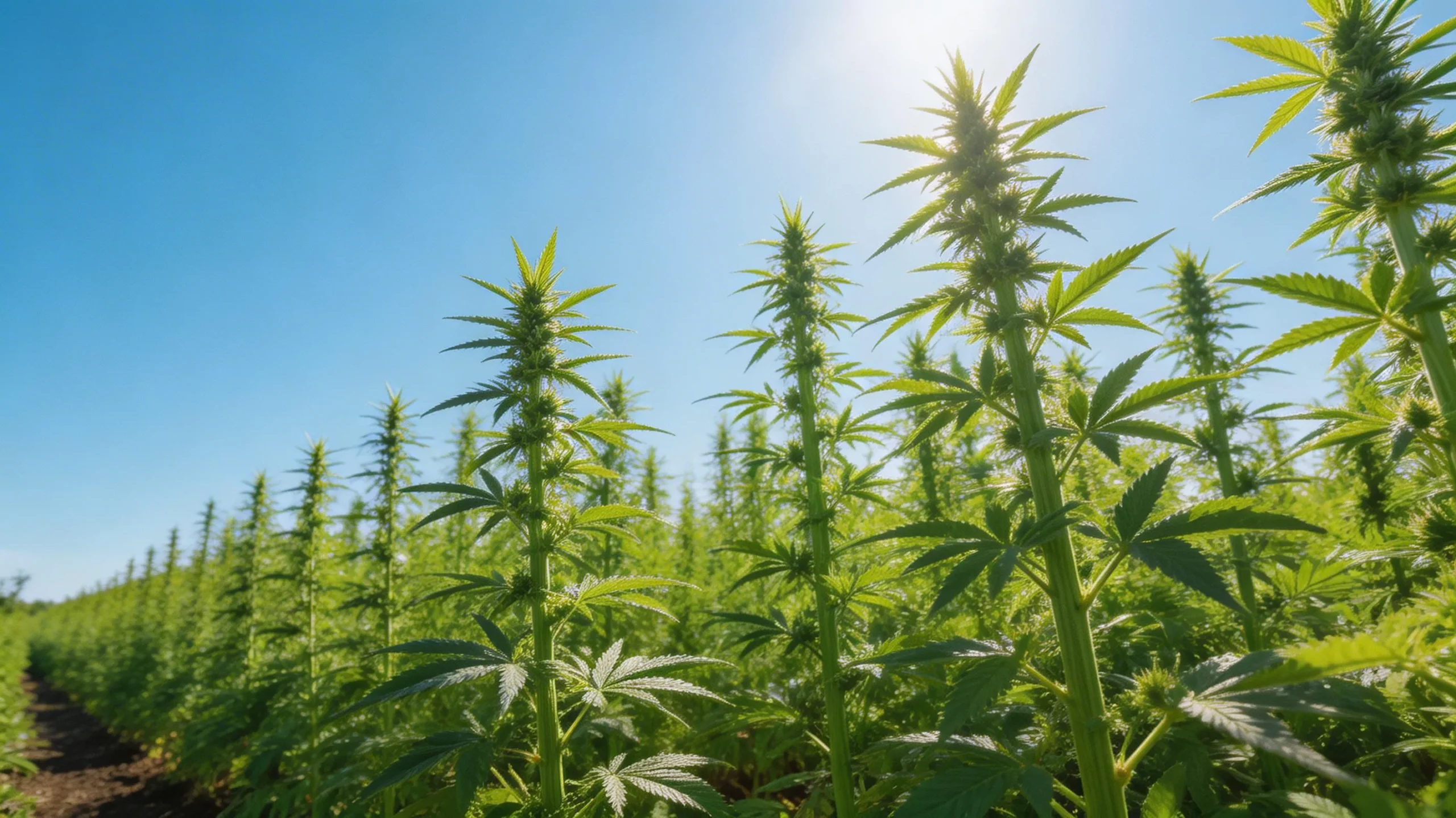
Not every belief comes from facts.
Some come from what we hear, what we assume, and what gets repeated often enough that it starts to feel true. Over time, these ideas become accepted, even if they’re not entirely accurate.
This is exactly what has happened with hemp.
In the UAE, hemp products are often surrounded by questions, hesitation, and a layer of misunderstanding. Not because people are misinformed intentionally, but because the topic itself sits at the intersection of plant science, global trends, and local regulations.
And that’s where the confusion begins.
Understanding hemp product myths UAE is not just about correcting facts; it’s about seeing how perception shapes reality and how clarity can change that.
Myth 1: Hemp Is the Same as Cannabis
This is the most common misconception, and the root of many others.
Hemp and cannabis come from the same plant family, which is why they are often grouped together. But their composition and use are very different.
Cannabis is associated with higher levels of THC, the compound responsible for psychoactive effects.
Hemp, on the other hand, contains very low levels of THC (typically no more than 0.3%) and is used for textiles, food, skincare, and industrial applications.
The confusion comes from the shared origin.
But when you look at how they function, the distinction becomes clear.
Myth 2: All Hemp Products Cause a “High”
This idea comes directly from the association with cannabis.
Many people assume that anything related to hemp must have psychoactive effects. But this is not how hemp works.
Hemp-based products, especially those made from seeds or fibers, do not produce any intoxicating effect.
They are used for completely different purposes: nutrition, clothing, and materials.
This myth persists because of perception, not because of how the products actually behave.
Myth 3: Hemp Is Illegal Everywhere in the UAE
Another common assumption is that hemp, as a whole, is not allowed in the UAE.
In reality, products are evaluated based on their composition and compliance with regulations.
Some hemp-based products, such as textiles, seeds, and certain skincare items, are more easily integrated into the market.
Others, particularly those involving cannabinoids, are subject to stricter evaluation.
This creates a nuanced environment.
It’s not about blanket rules; it’s about how each product fits within the system.
Myth 4: Hemp Products Are Always the Same
The term “hemp” is often used as a blanket label, but it includes a wide range of products.
From clothing and food to oils and industrial materials, hemp is used in many different ways.
Each of these products is different in composition, purpose, and how it is treated within the UAE.
Assuming they are all the same leads to confusion.
Understanding the differences helps create clarity.
Myth 5: If It’s Natural, It’s Automatically Acceptable
There is a common belief that natural or plant-based products are universally acceptable.
While being natural is a positive attribute, it does not determine how a product is evaluated.
In the UAE, products are assessed based on their composition and compliance, not just their origin.
This means that even natural products must align with regulatory frameworks.
This myth highlights the difference between perception and process.
Myth 6: Hemp Is Only About Wellness Trends
Globally, hemp is often associated with wellness, skincare, supplements, and lifestyle products.
While this is one aspect of its use, it is not the whole story.
Hemp is also used in textiles, construction materials, packaging, and more.
In the UAE, many of the more accessible hemp products fall into these non-wellness categories.
This broader perspective helps shift the conversation from trends to functionality.
Myth 7: Low THC Means No Consideration Is Needed
The global definition of hemp often includes the 0.3% THC threshold.
While this provides context, it does not replace local regulations.
In the UAE, products are evaluated based on overall compliance, not just THC percentage.
This means that even low THC products are considered within a broader framework.
Understanding this helps clarify how products are assessed.
Myth 8: Hemp Products Are Widely Available Everywhere
With the rise of global e-commerce, it can feel like hemp products are available everywhere.
But availability in the UAE is shaped by structure.
Products that align with regulations are present in the market. Others may be visible online but not necessarily part of the local retail landscape.
This creates a difference between visibility and accessibility.
Myth 9: Hemp Is a New Concept
Hemp may feel new because it is gaining attention now, but it has been used for centuries.
Historically, it has been used for rope, textiles, paper, and more.
What is new is the way it is being reintroduced into modern markets, with a focus on sustainability and innovation.
In the UAE, this reintroduction is happening gradually, shaped by awareness and regulation.
Myth 10: Confusion Means Risk
Sometimes, the biggest myth is the idea that confusion itself means something is problematic.
In reality, confusion often comes from a lack of familiarity.
When a product category is new or not widely discussed, it naturally raises questions.
But questions are part of the learning process.
As understanding improves, confusion reduces, and clarity takes its place.
Why These Myths Exist in the First Place?
When you look at all these misconceptions together, a pattern emerges.
They are not random.
They come from:
Shared terminology
Visual similarity
Global narratives
Limited local awareness
These factors combine to create a simplified understanding of a complex topic.
And that’s where myths take shape.
The Role of Awareness in Changing Perception
The only way to move beyond myths is through awareness.
When people understand what hemp is, how it differs from cannabis, and how it fits into the UAE context, their perspective changes.
They begin to see products for what they are, not what they are assumed to be.
This shift does not happen instantly.
It happens gradually, through exposure, information, and experience.
The Bigger Picture: Moving from Assumption to Understanding
When you step back, it becomes clear that the conversation around hemp is evolving.
It is moving from:
Assumption → Understanding
Confusion → Clarity
Hesitation → Awareness
This transition is important.
Because it shapes how the market develops, how consumers engage, and how products are perceived.
Conclusion: Myths Fade When Clarity Grows
So, what do these hemp product myths UAE really tell us?
They tell us that understanding is still developing.
They show how perception can shape reality, and how easily assumptions can take hold.
But they also show something else.
That clarity is possible.
And once people begin to understand the differences, the myths start to fade.
Because in the end, it’s not about what hemp is assumed to be, it’s about what it actually is.
Leave a Reply