
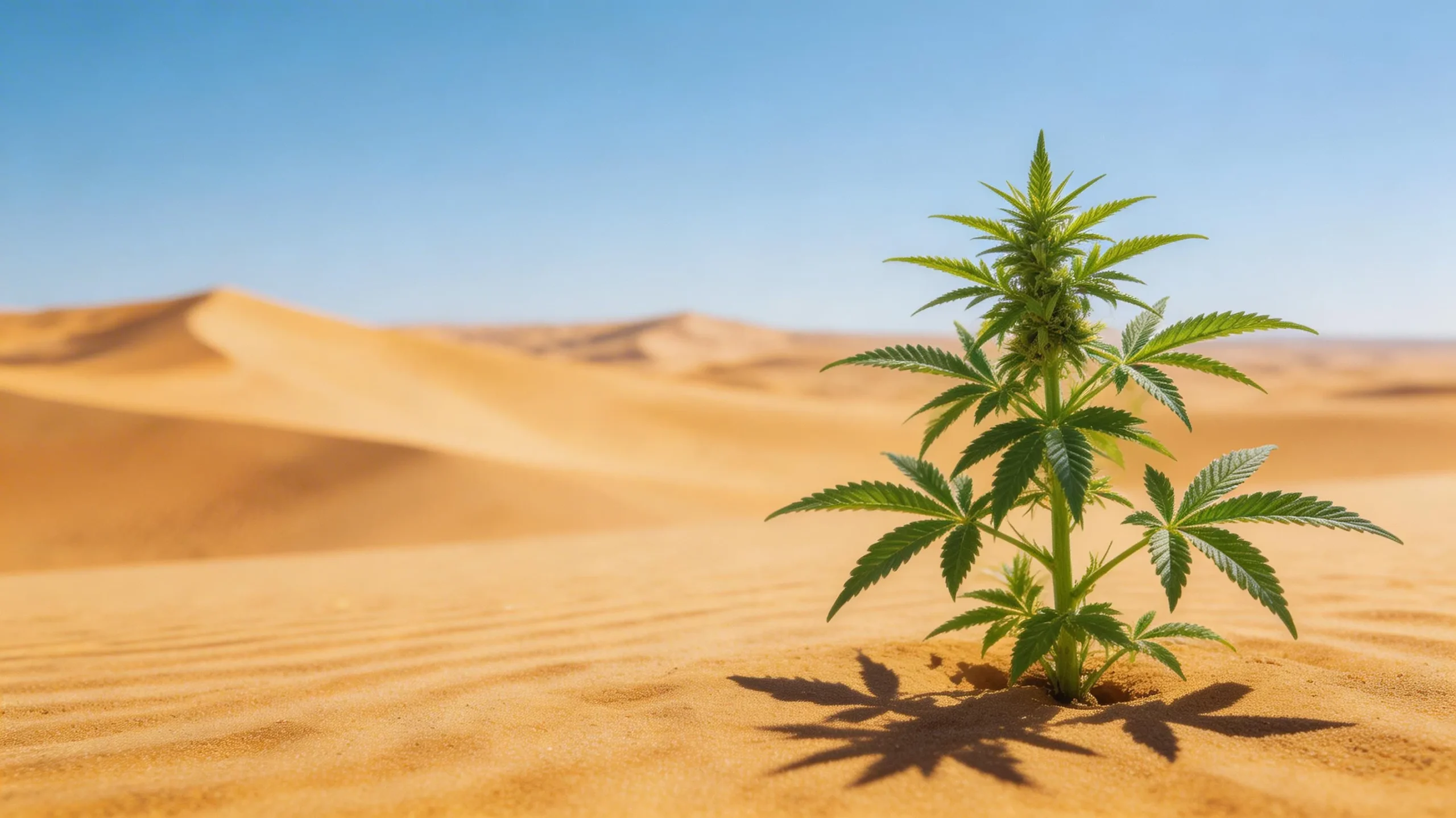
Every product we use begins somewhere.
A fabric, a bottle, a building material, each of these comes from a process that interacts with the environment in some way. For a long time, people didn’t think much about this connection. Materials were chosen based on availability, cost, and function.
But that’s changing.
In the UAE, where development and sustainability now go hand in hand, there is growing awareness about how materials influence the environment. People are beginning to look beyond the surface, beyond design, beyond convenience, and ask deeper questions.
One of those questions is about hemp.
Is it actually good for the environment?
Understanding hemp environment UAE is not about labeling hemp as “good” or “bad.” It’s about understanding how it fits into a complex system where climate, resources, and innovation all play a role.
Understanding Hemp as a Material
Hemp is often described as a versatile plant.
It can be used to create textiles, food products, construction materials, and more. But what makes it relevant in environmental discussions is not just its versatility, it’s how it fits into broader systems of production and use.
Unlike materials that are limited to a single industry, hemp connects multiple sectors.
This means that its environmental impact is not isolated.
It extends across different applications, making it part of a larger conversation.
Why Hemp Is Associated with Environmental Benefits Globally?
Globally, hemp is often discussed in relation to sustainability.
This association comes from how it is perceived as a resource-efficient plant compared to some traditional crops and materials.
It is often included in discussions about:
Alternative textiles
Plant-based materials
Sustainable product design
However, these global perspectives need to be understood within context.
What works in one environment may not translate directly to another.
This is especially true in the UAE.
The UAE Environment: A Unique Context
The UAE’s environment is unlike most other regions.
It is defined by:
High temperatures
Limited natural water resources
Desert landscapes
Rapid urban development
These factors influence how any material interacts with the environment.
This means that evaluating hemp in the UAE requires a different perspective.
It is not just about global narratives.
It is about local conditions.
Water Use: The Most Important Environmental Factor
In the UAE, water is one of the most critical resources.
Any material or crop introduced into the system must be considered in terms of water efficiency.
Hemp is often discussed as a plant that can be relatively efficient in water use compared to certain other crops.
However, in a desert environment, all agriculture requires controlled irrigation.
This means that hemp’s environmental role depends on how efficiently it can be integrated into these systems.
It is not about eliminating water use.
It is about optimizing it.
Material Efficiency and Versatility
One of hemp’s strongest environmental advantages is its versatility.
Because it can be used in multiple industries, it reduces the need for separate materials in certain applications.
For example, hemp fibers can be used in textiles, while other parts of the plant can be used in food or industrial products.
This multi-use nature creates efficiency.
Instead of relying on multiple resources, one material can serve different purposes.
Hemp in Textiles: A Different Approach to Fabric
In the textile industry, materials play a significant role in environmental impact.
Hemp fabric offers a different approach.
It is known for its durability, which means products made from hemp can last longer. This reduces the need for frequent replacement, which indirectly affects resource use.
In the UAE, where clothing needs to adapt to climate conditions, durability and breathability become important factors.
Hemp aligns with these needs while contributing to longer product lifecycles.
Hemp in Construction: Expanding Possibilities
Hemp is also being explored in construction globally.
It is used in certain materials that focus on insulation and structural support.
In the UAE, construction is a major part of development.
Introducing alternative materials into this space requires careful evaluation.
Hemp-based materials, if aligned with building standards, could become part of this conversation.
Again, not as replacements, but as alternatives.
Comparing Hemp with Conventional Materials
To understand hemp’s environmental role, it helps to compare it with conventional materials.
Traditional materials are often resource-intensive and widely used because of their availability and established systems.
Hemp offers a different option.
It introduces variety.
It provides an alternative that can complement existing materials.
This comparison highlights that hemp is not about replacing everything.
It is about expanding choices.
The Role of Innovation in Environmental Impact
Environmental impact is not defined by materials alone.
It is shaped by how those materials are used.
In the UAE, innovation plays a key role in this process.
New technologies, improved systems, and efficient designs all contribute to reducing impact.
Hemp fits into this innovation-driven environment.
Its potential depends on how it is integrated into modern systems.
Challenges That Influence Environmental Impact
While hemp has potential, it also faces challenges in the UAE context.
Water management is one.
Regulatory alignment is another.
Infrastructure and supply chains also play a role.
These challenges do not negate its potential.
They define how it can be used effectively.
The Bigger Picture: Environment as a System
When evaluating whether hemp is good for the environment, it is important to look at the bigger picture.
The environment is not influenced by a single material.
It is shaped by systems.
Production systems
Consumption patterns
Technological integration
Hemp is one part of this system.
Its impact depends on how it fits into the larger framework.
Conclusion: A Material with Context-Dependent Impact
So, is hemp good for the environment in the UAE?
It can be, when understood within context.
Hemp offers versatility, efficiency, and potential as part of a broader system. But its environmental role depends on how it is integrated into local conditions, resources, and industries.
That’s what defines hemp environment UAE.
Not as a simple answer, but as a perspective.
Because in the UAE, sustainability is not about one solution.
It is about how everything works together.
Leave a Reply