
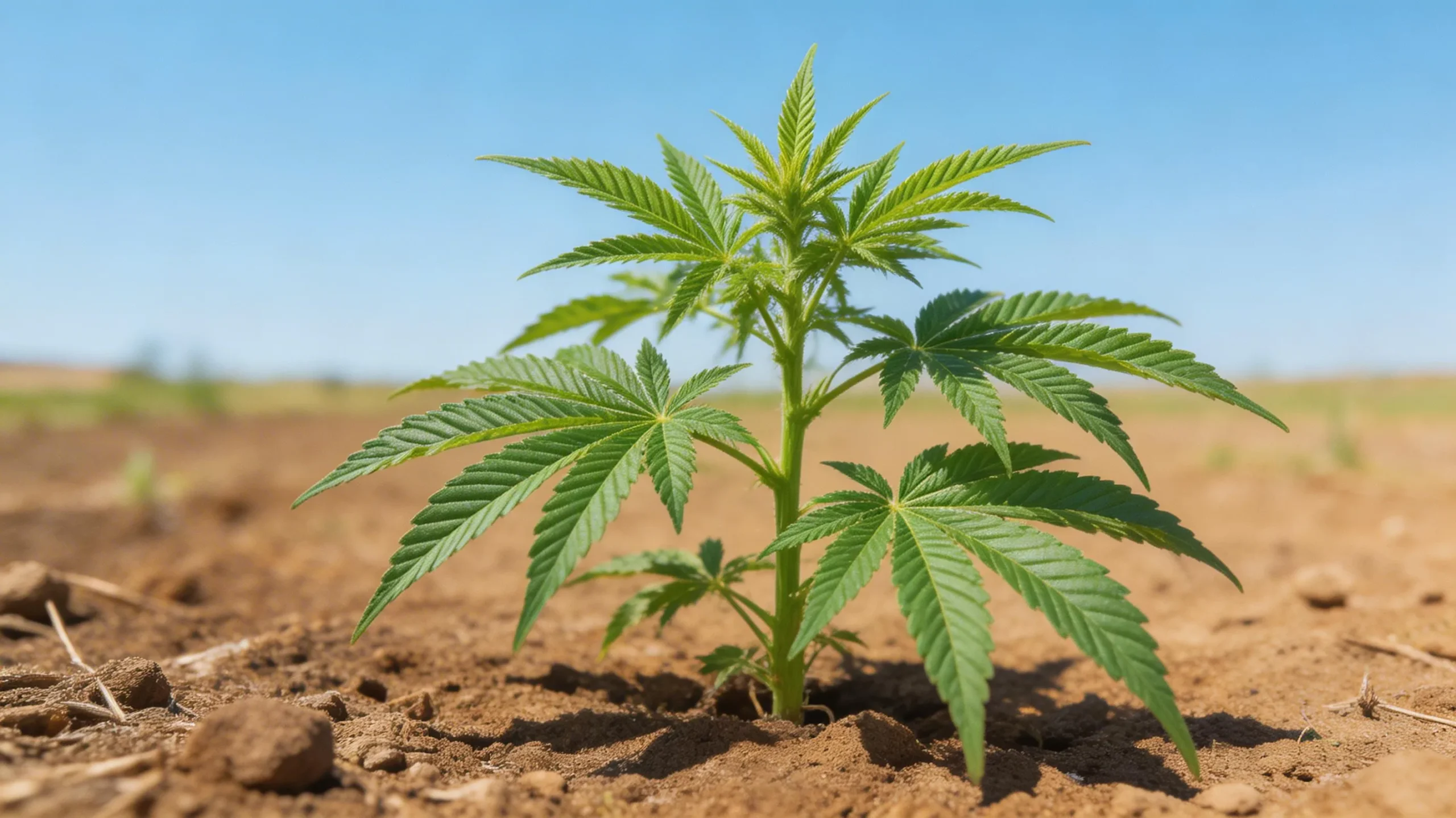
As hemp continues to gain global attention, one question naturally follows in regions like the UAE:
Can it actually be grown here?
At first glance, the question seems straightforward. Hemp is a plant. Plants are grown. But in reality, this is not just an agricultural question, it is a regulatory one.
In many parts of the world, hemp cultivation is expanding. Farmers are exploring it as a crop, industries are building supply chains around it, and governments are creating frameworks to support it.
In the UAE, however, the conversation takes a different shape.
Understanding grow hemp UAE rules is not about comparing global practices. It is about understanding how cultivation is viewed within a structured system where classification, composition, and control all play a role.
What Does It Mean to Grow Hemp?
Growing hemp is not the same as growing a typical crop.
Hemp belongs to the cannabis plant family, which immediately places it within a category that is carefully regulated in many countries, including the UAE.
Even though industrial hemp is associated with low THC levels and non-psychoactive use, it is still connected to a broader classification.
This connection is what makes cultivation more complex than it might initially seem.
It is not just about soil, water, and climate.
It is about how the plant itself is defined within the system.
The UAE’s Approach to Plant Cultivation
In the UAE, agriculture is already a carefully managed activity.
Given the environmental conditions, desert climate, limited water resources, and controlled farming systems, crop cultivation is structured and monitored.
This means that introducing a new crop involves multiple considerations.
It must align with environmental conditions.
It must fit within agricultural systems.
And importantly, it must comply with regulatory frameworks.
For hemp, this last factor becomes the most significant.
Why Hemp Cultivation Is a Regulatory Question First?
Unlike many crops, hemp is not evaluated purely as an agricultural product.
It is evaluated as part of a broader category connected to cannabis.
This means that its cultivation is not determined by farming potential alone.
It is determined by how it is classified.
This classification is influenced by:
THC content
Plant type
Intended use
Because of these factors, growing hemp is not simply a matter of planting seeds.
The Role of THC in Defining Cultivation Rules
THC is the key factor in how hemp is viewed.
Industrial hemp is typically defined by very low levels of THC. However, even with this distinction, the presence of THC remains a critical consideration.
In the UAE, substances connected to cannabis are carefully regulated.
This means that the cultivation of any plant within this category is subject to strict evaluation.
The focus is not just on how the plant is used, but on what it contains.
Why Global Farming Practices Don’t Apply Directly?
In countries where hemp farming is established, there are clear guidelines that allow cultivation under specific conditions.
Farmers may grow hemp for textiles, food, or industrial use, with regulations focusing on THC limits and licensing.
However, these practices do not automatically apply in the UAE.
Each country defines its own framework.
In the UAE, the approach is structured and cautious.
This means that global practices cannot be directly translated into local reality.
Environmental Considerations in UAE Farming
Even if regulatory factors are set aside, growing hemp in the UAE involves environmental challenges.
The desert climate requires controlled farming systems.
Water use must be optimized.
Soil conditions often need to be enhanced.
These factors mean that any crop introduced into the UAE must be evaluated for its compatibility with local conditions.
Hemp, while adaptable, would still require these systems to be in place.
Controlled Agriculture: The UAE Approach
Farming in the UAE often relies on controlled environments.
Greenhouses, hydroponics, and precision irrigation are commonly used to create suitable conditions for crops.
If hemp were to be considered within this system, it would likely be approached in a similar way.
This highlights an important point:
Cultivation is not just about permission.
It is about infrastructure.
Why Hemp Farming Is Not Yet Mainstream?
As of now, hemp farming is not a mainstream agricultural activity in the UAE.
This is not due to lack of interest.
It is due to the combination of regulatory and environmental factors.
Introducing a new crop requires alignment across multiple systems.
This alignment takes time.
Potential for Future Exploration
While hemp cultivation is not currently a common practice, the idea is not entirely outside the realm of possibility.
As global industries evolve and materials like hemp gain attention, discussions around cultivation may continue.
However, any future development would follow a structured path.
It would involve:
Regulatory clarity
Controlled implementation
Alignment with environmental systems
This means that growth, if it happens, will be gradual.
The Bigger Picture: Farming Within a System
In the UAE, farming is not just about growing crops.
It is about operating within a system.
This system ensures that agriculture aligns with environmental conditions, resource management, and regulatory frameworks.
Hemp, as a crop, would need to fit into this system.
It is not an exception.
Conclusion: Understanding Before Expecting
So, can you grow hemp in the UAE?
The answer is shaped by rules, not just possibility.
Hemp cultivation is influenced by how the plant is classified, how it fits within regulatory frameworks, and how it aligns with environmental conditions.
This is what defines grow hemp UAE rules.
Not as a simple yes or no.
But as a structured understanding.
Because in the UAE, every activity, especially one connected to regulated categories, is defined by clarity.
Leave a Reply