
When you pick up a product, whether it’s a piece of clothing, a skincare item, or a packaged food, it’s easy to focus only on the final form.
But behind that product is a journey.
A journey that begins far away, moves through multiple stages, crosses borders, and finally reaches the consumer. This journey is what we call the supply chain.
For hemp, this journey is even more complex.
Because hemp is not just a single-industry material. It connects agriculture, manufacturing, trade, and retail across multiple regions. And in the Middle East, where markets are highly structured and interconnected, the supply chain becomes a defining factor in how the industry grows. Understanding the hemp supply chain Middle East is not just about logistics. It is about understanding how an entire ecosystem functions.
What Is a Hemp Supply Chain? A Simple Breakdown
At its core, a supply chain is the path a product takes from its origin to the end user.
For hemp, this path includes several stages:
Cultivation of the plant
Processing into usable materials
Manufacturing into finished products
Import and regulatory clearance
Distribution across markets
Retail and consumer access
Each stage adds value.
And each stage is influenced by geography, regulation, and market demand.
Why the Middle East Supply Chain Is Different
The Middle East is not a major cultivation region for hemp.
Instead, it acts as a hub.
A hub for trade, distribution, and market integration.
Countries like the UAE play a central role in this system. They connect global production with regional demand, creating a supply chain that is less about farming and more about movement.
This makes the region unique.
The focus is not on growing hemp locally.
It is on how efficiently it moves.
Stage 1: Global Cultivation and Sourcing
The hemp supply chain in the Middle East begins outside the region.
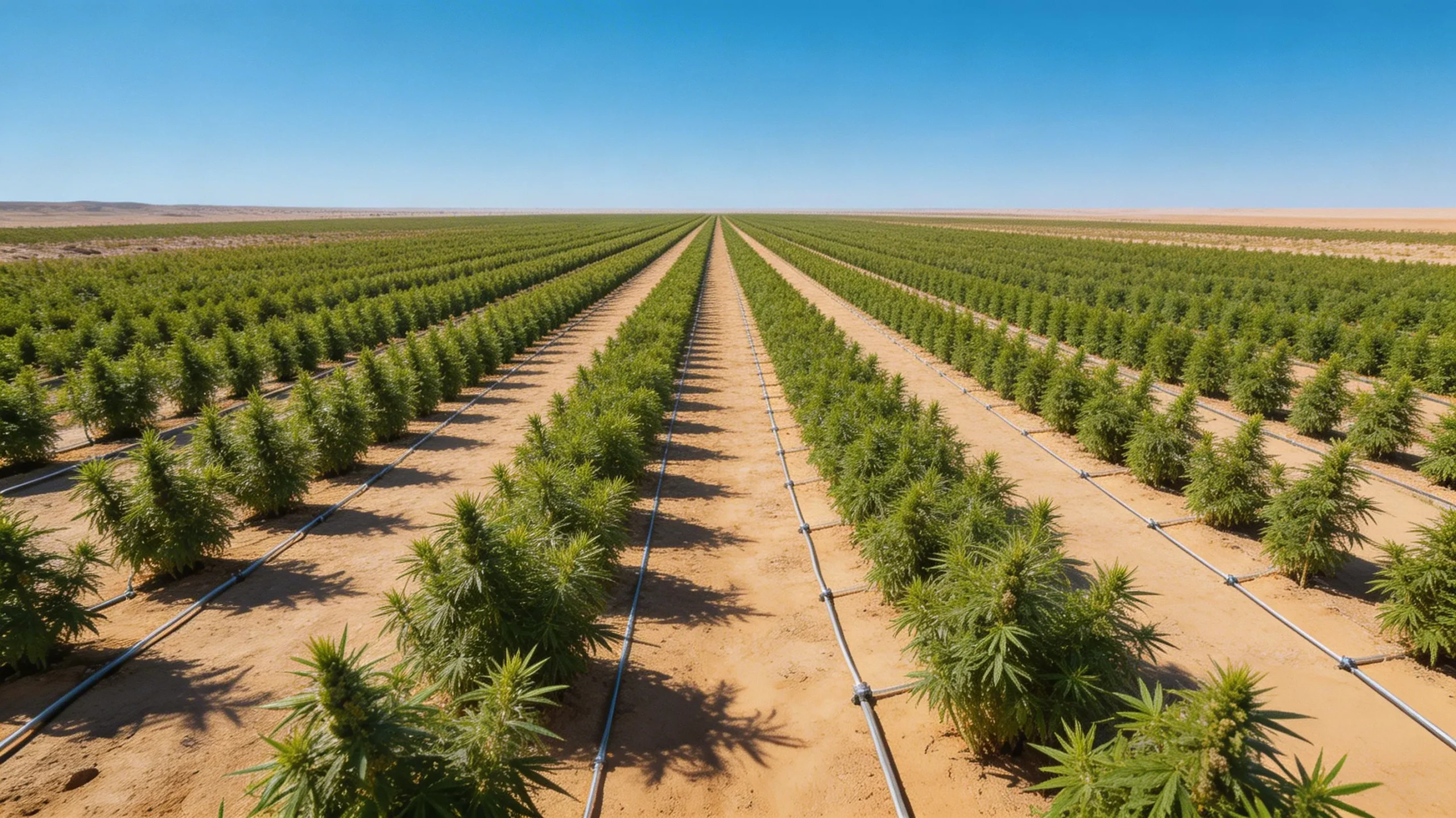
Hemp is cultivated in countries where farming is established and regulated. These regions supply raw materials and processed inputs to global markets.
The materials sourced include:
Hemp fibers for textiles
Hemp seeds and oils for food and skincare
Industrial hemp inputs for manufacturing
This global sourcing is the foundation of the entire supply chain.
Without it, the rest of the system cannot function.
Stage 2: Processing and Material Transformation
Once harvested, hemp does not move directly to retail.
It must first be processed.
Processing transforms raw hemp into usable materials. Fibers are extracted, seeds are refined, and plant components are converted into forms suitable for manufacturing.
This stage may happen in the country of origin or in specialized processing hubs.
It is a critical step.
Because the quality of processing determines the quality of the final product.
Stage 3: Manufacturing into Finished Products
After processing, hemp materials are used to create finished products.
These include:
Clothing and textiles
Skincare and personal care products
Food and lifestyle items
Industrial materials
Manufacturing often takes place in regions with established production infrastructure.
These finished products are then prepared for export.
Stage 4: Import into the Middle East
Import is one of the most important stages in the supply chain.
Products entering the Middle East must align with local regulatory frameworks.
This means that:
Products are evaluated based on composition
Documentation is reviewed
Classification is verified
Only products that meet these requirements are allowed into the market.
This stage ensures that the supply chain operates within defined boundaries.
Stage 5: Distribution Across the Region
Once products enter the Middle East, they move through distribution networks.
The UAE plays a significant role in this stage.
It acts as a central hub, allowing products to be distributed to other countries in the region.
Distribution networks connect importers with:
Retailers
Businesses
E-commerce platforms
This stage ensures that products reach the right markets efficiently.
Stage 6: Retail and Consumer Access
The final stage of the supply chain is retail.
This is where consumers interact with hemp products.
In the Middle East, hemp products are typically available in:
Specialized stores
Online platforms
Niche retail environments
This selective availability reflects the early stage of the market.
As awareness grows, this stage is likely to expand.
Why Regulation Shapes the Entire Supply Chain?
Unlike many other industries, the hemp supply chain is heavily influenced by regulation.
Every stage, from import to retail, is affected by how products are classified.
This means that the supply chain is not just about movement.
It is about compliance.
This structured approach ensures consistency across the region.
Challenges in the Hemp Supply Chain
The hemp supply chain in the Middle East faces several challenges.
Dependence on global sourcing can create variability.
Regulatory alignment requires careful planning.
Supply chains need to be transparent and well-documented.
These challenges do not prevent growth.
They shape how the industry develops.
The Role of Technology in Supply Chain Management
Technology plays a crucial role in modern supply chains.
In the Middle East, advanced logistics systems are used to ensure efficiency.
Tracking systems, digital platforms, and integrated networks help manage the movement of goods.
For hemp, this means that supply chains can be monitored and optimized.
This improves reliability and consistency.
Opportunities Within the Supply Chain
As the hemp market grows, opportunities within the supply chain will expand.
These include:
Import and distribution businesses
Logistics and supply chain management
Product manufacturing and branding
Retail and e-commerce platforms
Each of these areas contributes to the overall ecosystem.
The Future of Hemp Supply Chains in the Middle East
Looking ahead, the hemp supply chain in the Middle East is likely to evolve.
As awareness increases and demand grows, supply chains will become more refined.
New distribution routes may emerge.
Regional integration may improve.
And the overall system may become more efficient.
This growth will be gradual and structured.
The Bigger Picture: A Network That Connects Everything
The hemp supply chain is not a single path.
It is a network.
A system that connects global production with regional markets.
In the Middle East, this system is defined by structure, regulation, and connectivity.
Hemp fits into this network as an emerging element.
Conclusion: Movement Defines the Market
So, how does the hemp supply chain work in the Middle East?
It moves, across borders, across industries, and across systems.
This is what defines the hemp supply chain Middle East.
Not as a simple process, but as a dynamic network that supports an evolving market.
Because in a region built on connectivity, the journey of a product is just as important as the product itself.
Leave a Reply