
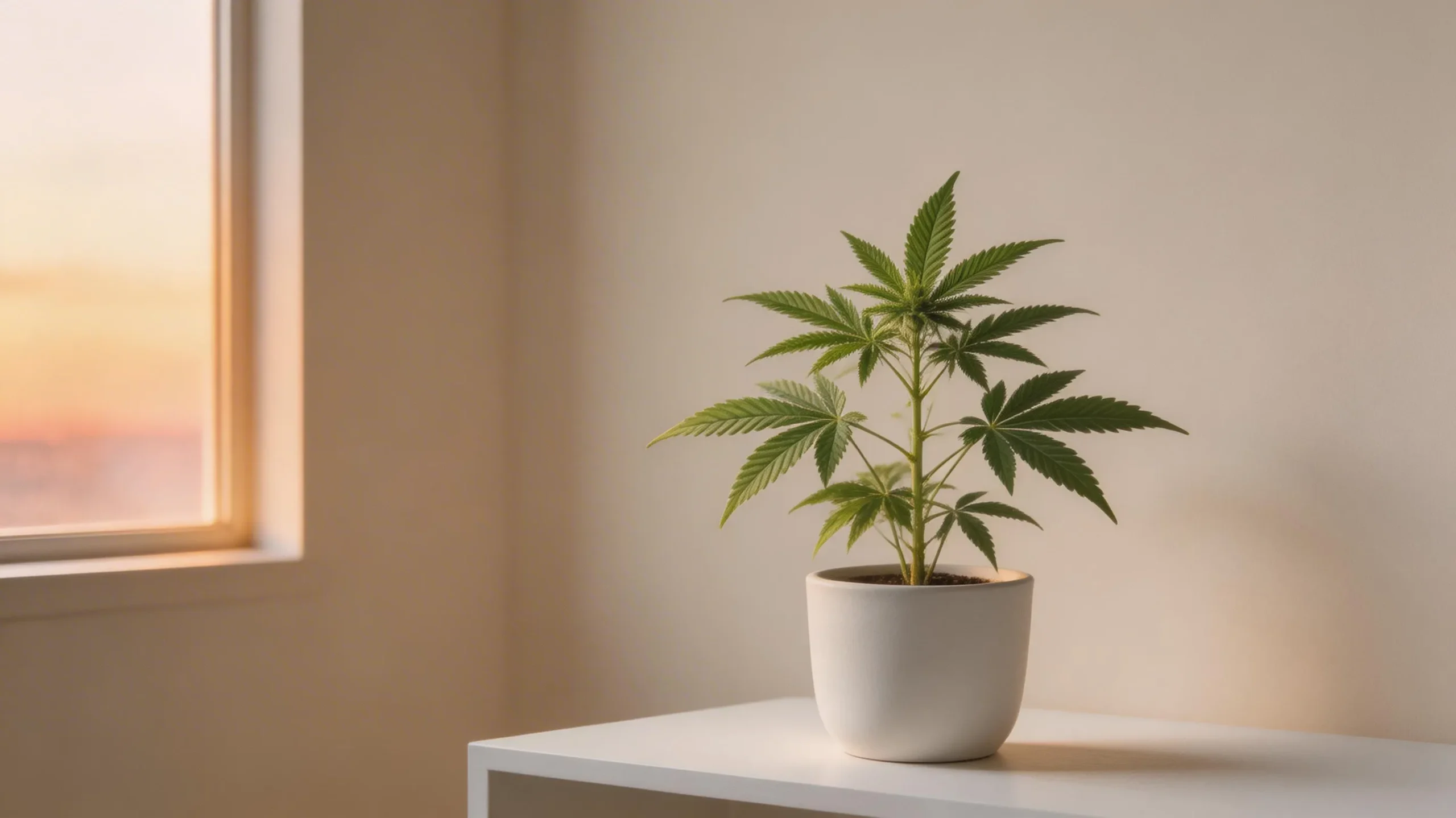
When it comes to hemp products, the question is rarely just about ingredients or trends, especially in the UAE. It becomes something deeper, more personal, and more meaningful:
Is hemp safe for Muslims UAE?
At first glance, hemp might seem like just another plant being used in food, clothing, or skincare. But the moment it gets associated with cannabis, everything changes. Doubt enters the conversation. Questions start forming. And for many Muslims, the concern is not just about health or legality, it’s about faith.
Is it halal?
Does it fall under intoxicants?
Is it something to avoid completely?
These are not casual questions. They come from a place of responsibility, where every choice is measured not just by what is allowed legally, but by what is permissible religiously.
And the truth is, the answer is not as simple as yes or no. It depends on understanding what hemp really is, what it contains, and how it is used.
Understanding Hemp Beyond the Assumptions
One of the biggest reasons this question exists is because hemp is often grouped together with cannabis. The association alone creates hesitation. For many, cannabis immediately connects to intoxication, and in Islamic teachings, anything that intoxicates is clearly prohibited.
But hemp, as a plant, is not defined by intoxication.
Hemp is a variety of the cannabis plant that contains extremely low levels of THC, typically no more than 0.3%. At this level, it does not produce a “high” or alter mental state in any way. It is used across industries for its practical benefits, not for any psychoactive effect.
This is where the conversation begins to shift.
Because when you start separating hemp from the idea of intoxication, it stops being something questionable and starts being something functional. And in Islamic principles, the ruling of a substance depends largely on its effect.
If it intoxicates, it is prohibited.
If it does not, it is evaluated based on its purpose and use.
This distinction is essential when discussing whether hemp safe for Muslims UAE is a valid concern or simply a misunderstanding.
The Role of THC: The Defining Factor
When it comes to determining permissibility, everything eventually comes back to one key element: THC.
THC, or tetrahydrocannabinol, is the compound responsible for intoxication. It is what Islamic rulings focus on when addressing substances related to cannabis. If something contains enough THC to alter the mind or create a state of intoxication, it clearly falls under what is considered haram.
However, hemp products, especially those derived from seeds, fiber, or non-cannabinoid parts of the plant, either contain negligible THC or none at all. They do not affect the mind, do not impair judgment, and do not create dependency.
This creates a clear distinction.
Products that cause intoxication are not permissible.
Products that do not cause intoxication may be permissible.
But the conversation does not end there. It also depends on how the product is used and whether it aligns with both religious and legal frameworks. This is why understanding hemp safe for Muslims UAE requires both spiritual and contextual awareness.
Different Types of Hemp Products and Their Permissibility
Not all hemp products are the same, and this is where clarity becomes even more important. The term “hemp” is often used broadly, but in reality, it includes a wide range of products with different compositions and purposes.
Hemp seeds, for example, are one of the most widely consumed hemp-derived products globally. They are used as food and are valued for their nutritional content, including protein, healthy fats, and essential nutrients. These seeds contain no meaningful THC and have no connection to intoxication. From an Islamic perspective, they function purely as food, making them generally permissible.
Hemp fiber, used in clothing and industrial materials, is another category that is clearly permissible. It is derived from parts of the plant that do not contain cannabinoids, which means there is no association with intoxication at all. Wearing hemp-based clothing or using hemp materials has no religious concern because it is simply a functional use of a natural resource.
The complexity arises with hemp oils and extracts. These products may contain trace amounts of THC depending on how they are processed. While globally they are considered non-psychoactive, their permissibility in an Islamic context depends on whether they have any intoxicating effect and how they are used. This is where caution and understanding are necessary.
CBD products add another layer to the conversation. CBD itself is non-psychoactive and does not cause a high. However, because it is derived from the cannabis plant, it is often approached with caution. In the UAE, CBD is typically restricted to medical contexts, which further shapes how it is viewed both legally and religiously.
Medical Use: When Necessity Changes the Ruling
One of the most important principles in Islam is the concept of necessity, known as darurah. Under this principle, something that is normally restricted may become permissible if it is required for treatment and prescribed by a qualified professional.
In the UAE, cannabis-derived compounds such as THC and CBD are allowed only within a controlled medical framework. This means they are not available for general use but may be prescribed in specific medical situations under strict supervision.
From an Islamic perspective, this aligns with the idea that preserving health and life takes priority. If a treatment is necessary, approved, and prescribed, it may be considered permissible, even if it involves substances that would otherwise be restricted.
This adds an important dimension to the discussion around hemp safe for Muslims UAE, because it shows that permissibility is not rigid, it adapts based on context and necessity.
Legal Compliance and Religious Responsibility
In the UAE, religious and legal considerations often go hand in hand. Even if something is considered permissible in principle, it must also comply with local laws.
This means that using any hemp-related product is not just about asking whether it is halal, it is also about ensuring that it is legally allowed.
If a product does not meet regulatory standards, it should not be used, regardless of its composition. This reinforces the idea that responsibility is not only spiritual but also practical.
Understanding hemp safe for Muslims UAE therefore requires looking at both aspects together. It is not enough to evaluate the product in isolation, it must be considered within the environment in which it is being used.
Why There Is So Much Confusion?
The confusion around hemp and its permissibility comes from association rather than reality. Hemp is linked to cannabis, cannabis is linked to intoxication, and intoxication is clearly prohibited in Islam.
But when you break this chain and look at each element individually, the picture becomes clearer.
Hemp itself is not intoxicating.
Not all hemp products contain THC.
And not all cannabis-derived substances are used for recreational purposes.
The problem is that these distinctions are not always widely understood, especially in regions where the conversation is still developing.
The Real Answer: It Depends on the Product
So, is hemp safe for Muslims UAE?
The most accurate answer is: yes, but it depends.
Hemp products that are non-intoxicating, free from THC, and used for food, clothing, or industrial purposes are generally permissible. They do not conflict with Islamic principles because they do not affect the mind or cause harm.
Products that contain cannabinoids, have unclear composition, or fall into regulated categories require more caution. And in cases where hemp-derived compounds are used medically under supervision, they may be permissible under necessity.
Conclusion: Clarity Changes the Conversation
The question of whether hemp is safe for Muslims in the UAE is not about the plant itself, it is about understanding what the product contains and how it is used.
Islam does not prohibit plants.
It prohibits intoxication and harm.
And once that distinction is clear, the conversation changes.
Hemp is not automatically haram.
It is not automatically permissible either.
It must be evaluated based on effect, purpose, and context.
And in the UAE, that evaluation becomes even more important, because it must align with both religious understanding and legal compliance.
When both are considered together, the answer becomes much clearer.
Leave a Reply