
Sustainability is no longer just a buzzword.
It’s something people are actively thinking about: what they wear, what they consume, what they build with, and how their choices impact the environment. Across the world, industries are shifting toward materials that are not only functional but also environmentally responsible.
And somewhere in the middle of this shift, one material keeps coming up again and again:
Hemp.
From clothing brands to construction innovators, from food products to eco-packaging, hemp is being positioned as one of the most promising sustainable materials of the future.
But here’s the real question, especially from a UAE perspective:
Is hemp a sustainable material in the UAE?
Because sustainability is not just about global trends. It’s about local relevance.
A material that works in one climate, one economy, or one regulatory system may not translate the same way somewhere else.
So while hemp may be sustainable globally, what does that actually mean in the UAE context?
Let’s break it down, clearly, realistically, and without assumptions.
What Makes a Material “Sustainable”?
Before we talk about hemp specifically, it’s important to understand what sustainability actually means.
A sustainable material is not just eco-friendly in one way, it performs well across multiple factors.
It should:
- Use fewer natural resources
- Require less water
- Reduce environmental impact
- Be biodegradable or recyclable
- Support long-term ecological balance
Sustainability is not about perfection.
It’s about impact over time.
And this is where hemp starts to stand out.
Why Hemp Is Considered Sustainable Globally?
Globally, hemp has gained attention because it checks many of the sustainability boxes.
First, hemp grows quickly. Compared to many traditional crops, it has a shorter growth cycle, which allows for more efficient production.
Second, it requires significantly less water than crops like cotton. This is a major advantage in regions where water conservation is critical.
Third, hemp is naturally resistant to many pests, which reduces the need for chemical pesticides. This makes it a cleaner option for both soil and the surrounding ecosystems.
Fourth, almost every part of the hemp plant can be used. From fibers to seeds to oils, very little goes to waste.
And finally, hemp products, especially fibers, are biodegradable. This means they return to the environment naturally, rather than contributing to long-term pollution.
All of this makes hemp one of the most talked-about sustainable materials globally.
But global sustainability does not automatically mean local applicability.
Is Hemp a Sustainable Material in the UAE Context?
Now we come to the key question:
Is hemp a sustainable material in the UAE?
The answer is not a simple yes or no.
Sustainability in the UAE depends on factors beyond the material itself.
It depends on:
- Climate conditions
- Availability of resources
- Import and supply chains
- Regulatory frameworks
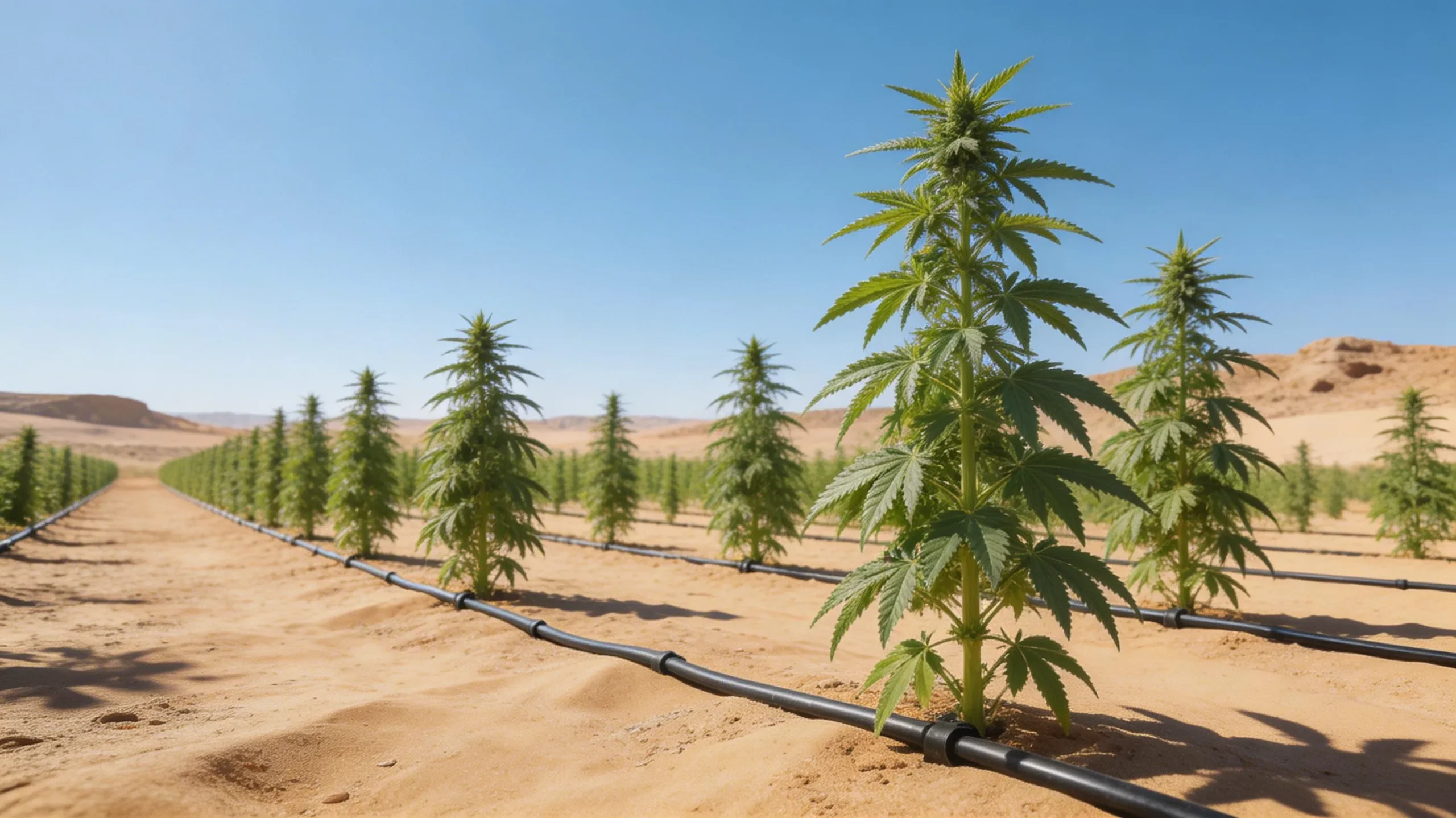
The UAE has a desert climate, which means local cultivation of hemp at scale is limited. This changes the sustainability equation.
Instead of local production, most hemp products in the UAE are imported.
This introduces a new factor:
Transportation and logistics.
While hemp itself may be sustainable, importing it adds layers of environmental impact that need to be considered.
So in the UAE, hemp is not just a material; it is part of a global supply chain.
Hemp vs Traditional Materials: A Practical Comparison
To understand hemp’s relevance, it helps to compare it with commonly used materials.
Take cotton, for example.
Cotton is widely used in textiles but requires large amounts of water and often involves pesticide use.
Hemp, on the other hand:
- Uses less water
- Requires fewer chemicals
- Produces stronger fibers
This makes hemp a more sustainable alternative, at least at the production level.
In construction, hemp-based materials like hempcrete are being explored globally as eco-friendly alternatives.
They offer benefits such as:
- Breathability
- Insulation
- Reduced carbon footprint
However, in the UAE, adoption of such materials is still in early stages due to regulatory and environmental factors.
Uses of Hemp in the UAE Market
Even though the market is still developing, hemp is already present in several industries in the UAE.
In textiles, hemp is used in eco-friendly clothing and fabrics.
In food, hemp seeds and oils are valued for their nutritional profile.
In skincare, hemp-based ingredients are used in formulations focused on natural wellness.
In packaging, hemp is being explored as a sustainable alternative to plastic-based materials.
Each of these uses contributes to the broader conversation around sustainability.
But again, their growth is shaped by regulation and awareness.
The Role of THC and Regulation in Sustainability
One important factor that often gets overlooked in sustainability discussions is regulation.
Hemp is defined globally by containing ≤ 0.3% THC, which makes it non-psychoactive.
But in the UAE, sustainability is not evaluated in isolation.
Products must also comply with:
- Legal requirements
- Safety standards
- Import regulations
This means that even if a product is sustainable, it must still be compliant to be viable in the UAE market.
So, sustainability here is not just environmental; it is also regulatory.
Medical Use and Innovation Potential
Another dimension of hemp’s relevance comes from its connection to medical innovation.
The UAE has introduced controlled pathways for cannabis-derived medications, allowing certain approved products to be used under strict supervision.
While this does not directly relate to sustainability in the traditional sense, it shows that hemp and related compounds are part of a larger evolving conversation.
It highlights the potential for hemp to contribute not just to environmental sustainability but also to health and scientific advancement.
Challenges to Hemp Sustainability in the UAE
Despite its global promise, hemp faces certain challenges in the UAE.
The first is climate.
Hemp cultivation requires conditions that are not naturally suited to desert environments.
The second is supply chain dependence.
Since most hemp products are imported, sustainability is affected by transportation and logistics.
The third is regulatory complexity.
Understanding what is allowed and what is not requires clarity and awareness.
And finally, there is perception.
Hemp is still often associated with cannabis, which can create hesitation among consumers.
These challenges do not eliminate hemp’s potential, but they shape how it develops in the UAE.
The Future of Hemp in the UAE
Looking ahead, the role of hemp in the UAE is likely to evolve.
Not rapidly.
Not loosely.
But steadily.
As awareness increases and global sustainability trends continue to influence local markets, hemp may find a stronger place in:
- Sustainable fashion
- Eco-friendly packaging
- Wellness products
- Innovative materials
At the same time, any growth will remain aligned with the UAE’s structured regulatory approach.
This means that the future of hemp in the UAE will be defined by balance, between innovation and control.
The Bigger Picture: Sustainability Beyond the Material
One of the most important takeaways is this:
Sustainability is not just about what a material is.
It is about how it is produced, transported, used, and regulated.
Hemp performs strongly in many of these areas globally.
In the UAE, its sustainability depends on how well it fits into a broader system.
Conclusion: Sustainable, But Context Matters
So, is hemp a sustainable material in the UAE?
Yes, but with context.
Hemp is inherently sustainable in many ways. It uses fewer resources, creates less waste, and offers versatile applications.
But in the UAE, its sustainability is influenced by:
- Import dependency
- Regulatory frameworks
- Market development
This does not reduce its value.
It simply means that sustainability here is not absolute; it is situational.
And as awareness grows, that situation may continue to evolve.
Because in the end, sustainability is not just about materials.
It’s about how those materials fit into the world around them.
Leave a Reply