
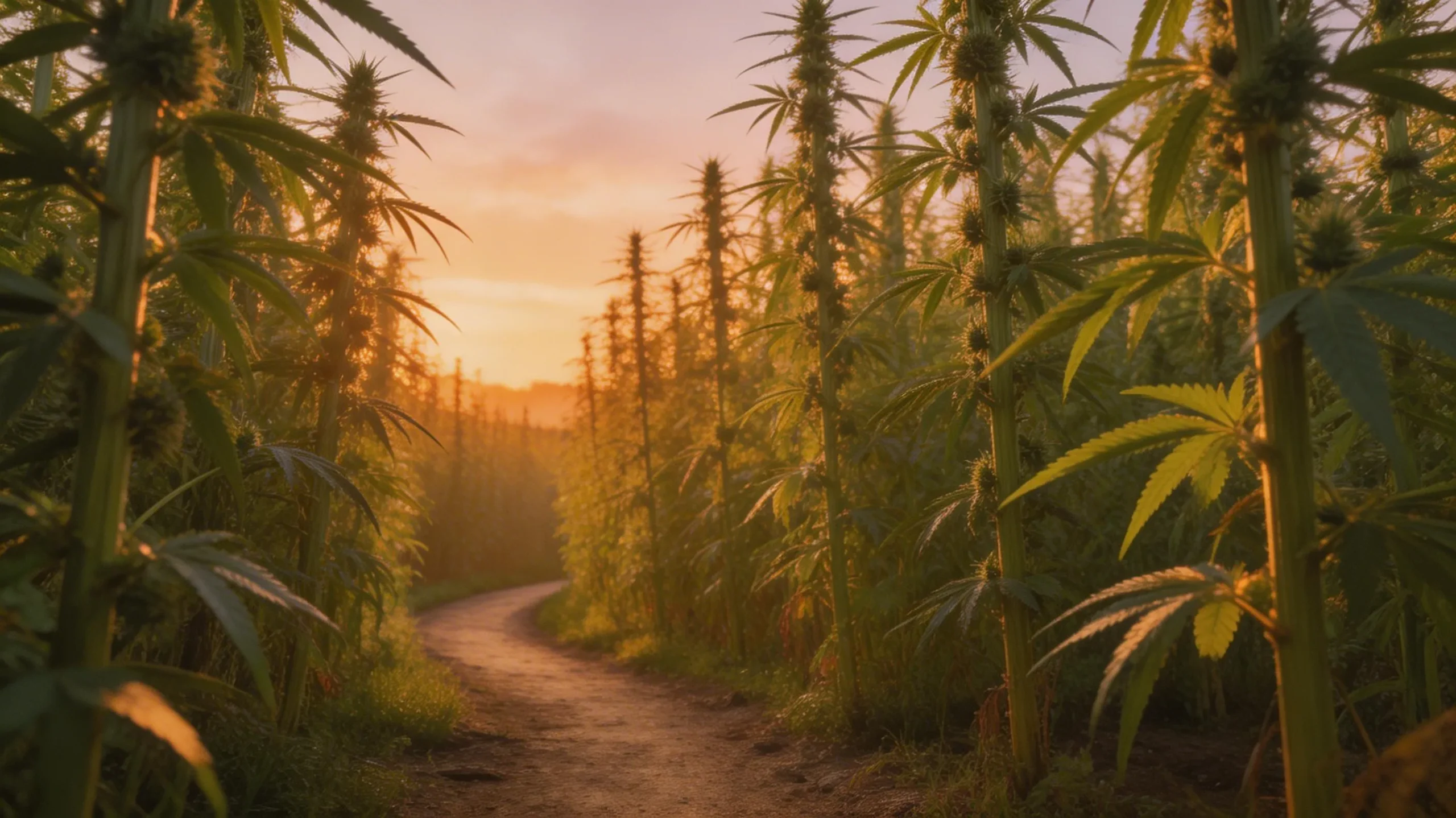
When it comes to hemp products, there’s a question that quietly sits in the background, especially in a place like the UAE, where faith and daily life are closely connected.
“Is it permissible for Muslims to use hemp products?”
At first, it sounds like a straightforward question.
But the moment you start thinking about it, it becomes something much deeper.
Because this isn’t just about ingredients on a label or whether something is legally allowed. It’s not just about what a product contains or how it is marketed.
It’s about faith.
It’s about intention.
And it’s about making choices that align with both belief and understanding.
For many Muslims, the concern goes beyond “Is this safe?” or “Is this legal?”
The real question is:
“Is this halal?”
And that’s where the hesitation begins.
The word “hemp” often comes with an immediate association, cannabis.
And cannabis is commonly linked to intoxication.
And intoxication, in Islam, is clearly prohibited.
So naturally, doubts start to form:
Does hemp fall under intoxicants?
Is it something that should be avoided?
Or is it simply misunderstood because of its association?
This is where perception and reality begin to blur.
Because not everything that is associated with something is defined by it.
And that’s exactly why this conversation needs to be approached carefully, not with assumptions, but with clarity.
To truly understand whether hemp products are permissible, we need to step back, separate facts from associations, and look at the topic through both Islamic principles and practical understanding.
Understanding Hemp in an Islamic Context
At first glance, hemp is often grouped together with cannabis, and that’s what creates immediate hesitation for many people. The association alone is enough to raise concern, especially when viewed through the lens of Islamic teachings, leading many to question, Can Muslims Use Hemp Products in the UAE?
In Islam, the ruling on intoxicants is clear and well-established.
Anything that causes intoxication, anything that alters the mind, impairs judgment, or affects awareness, is considered haram (prohibited). This falls under the concept of khamr, which extends beyond just alcohol to include any substance that produces similar effects.
This principle is not open to interpretation.
It is direct, and it is strict.
And this is exactly why hemp often gets questioned.
Because if it is related to cannabis, and cannabis is associated with intoxication, then where does hemp stand?
This is where the confusion truly begins.
Because hemp, as a plant, is not defined by intoxication.
Hemp contains very low levels of THC, typically at or below 0.3%. At this level, it does not produce a “high,” does not impair thinking, and does not alter mental state in any meaningful way. In fact, many hemp products, such as seeds, fiber, and industrial materials, contain no relevant THC at all.
This means that in its natural and commonly used forms, hemp does not fall into the category of intoxicants.
And this distinction is critical.
Because in Islamic jurisprudence, rulings are not based on association, they are based on effect and purpose.
If a substance causes intoxication → it is prohibited
If it does not cause intoxication → it is evaluated based on its use, intent, and impact
This principle shifts the entire conversation.
It moves the focus away from what hemp is associated with, and toward what it actually does.
And when viewed from that perspective, hemp is no longer automatically placed in a prohibited category.
Instead, it becomes something that needs to be understood in context.
This does not mean that all hemp products are automatically permissible, but it does mean that hemp, as a plant, is not inherently haram.
Its permissibility depends on:
Its composition
Its effect
Its use
And the context in which it is consumed or applied
Once this framework is understood, the confusion starts to clear.
Because the question is no longer:
“Is hemp related to cannabis?”
The question becomes:
“Does this specific product cause intoxication or not?”
And that is the question that truly matters.
The Role of THC: The Defining Factor
When discussing whether hemp products are permissible in Islam, everything ultimately comes back to one central element:
THC.
Not the plant.
Not the label.
Not the association.
But the effect.
THC, or tetrahydrocannabinol, is the compound responsible for intoxication. It is the element within cannabis that can alter perception, affect awareness, and impair judgment. And in Islamic teachings, this is exactly what matters.
Because the prohibition is not on a plant itself, it is on intoxication.
Islamic rulings are very clear on this principle. Anything that affects the mind in a way that reduces clarity, awareness, or control falls under the category of khamr and is considered haram.
This is why THC becomes the defining factor.
If a substance contains enough THC to create intoxication, even in small amounts, it falls into a prohibited category. The ruling is not based on how common it is, how it is marketed, or where it comes from. It is based on what it does to the human mind.
But this is where the distinction becomes important.
Hemp products, especially those derived from seeds, fiber, or carefully processed sources, typically contain negligible or no THC at all. Even when trace amounts are present, they are far below the level required to produce any psychoactive effect.
This means they do not:
Alter perception
Impair thinking
Create a “high”
Or affect awareness in any meaningful way
And this changes everything.
Because in Islamic reasoning, the ruling is directly tied to the effect, not the association.
This leads to a clear and important distinction:
Products that cause intoxication → not permissible
Products that do not cause intoxication → potentially permissible, depending on context
But even this distinction is not the full picture.
Because the conversation is not only about whether THC is present, it is also about how and why the product is being used.
Intent plays a significant role in Islamic understanding.
For example:
Is the product being used for nourishment, like hemp seeds?
Is it being used as a material, like hemp clothing?
Is it being used for treatment under medical supervision?
Or is it being used in a way that seeks altered mental states?
These questions matter.
Because Islam does not only evaluate substances, it evaluates purpose and intention (niyyah).
A non-intoxicating product used for nutrition or daily use is not the same as a substance used with the intention of escape or alteration of consciousness.
This is why THC is not just a chemical component, it is a moral and legal boundary marker.
It defines where permissibility ends and prohibition begins.
But it also highlights something deeper:
The issue is not hemp itself.
The issue is intoxication and intent.
Once this is understood, the confusion surrounding hemp begins to fade.
Because the focus shifts away from fear and assumption, and toward clarity, effect, and understanding.
And in that clarity, the answer becomes much more grounded and meaningful.
Types of Hemp Products and Their Permissibility
One of the most important things to understand in this discussion is that not all hemp products are the same, and neither are their rulings.
The term “hemp” is often used as a blanket label, but in reality, it includes a wide range of products that differ in composition, purpose, and effect. From an Islamic perspective, these differences matter greatly, because permissibility is not determined by the name of the plant, but by what the product contains and what it does, an important point when asking, Can Muslims Use Hemp Products in the UAE?
This is why it is essential to look at hemp products category by category.
Because once you break them down, the confusion starts to clear.
1. Hemp Seeds and Food Products
Hemp seeds are one of the most widely used and accepted forms of hemp globally, particularly in the food and nutrition space.
They are consumed in various forms, raw seeds, oils, protein powders, and as ingredients in health foods. Their value comes from their nutritional profile, as they are rich in protein, essential fatty acids (such as omega-3 and omega-6), vitamins, and minerals.
Most importantly, hemp seeds contain no meaningful THC. This is because they come from parts of the plant that do not produce cannabinoids. As a result, they have no psychoactive properties and no connection to intoxication.
From an Islamic perspective, this makes their ruling relatively clear.
They function purely as food.
They do not alter the mind.
They do not impair judgment.
And therefore, they do not fall under the category of intoxicants.
In Islamic jurisprudence, anything that is pure, beneficial, and non-intoxicating is generally considered permissible unless there is a clear reason to prohibit it.
Based on this understanding, hemp seeds and food products derived from them are generally considered halal and permissible.
2. Hemp Fiber and Clothing
Hemp fiber represents another category that is straightforward in terms of permissibility.
Derived from the stalk of the plant, hemp fiber is used to create textiles, clothing, ropes, paper, and various eco-friendly materials. It is valued for its durability, sustainability, and environmental benefits.
What is important here is that hemp fiber contains no cannabinoids at all, no THC, no CBD, and no compounds associated with intoxication.
It is simply a material.
From an Islamic perspective, there is no issue with using plant-based materials for clothing or industrial purposes, as long as they are clean, lawful, and not associated with harm or prohibited substances.
Since hemp fiber:
Does not affect the mind
Does not contain intoxicants
And is used for practical, everyday purposes
It is clearly considered permissible (halal).
This category exists entirely outside the concerns of intoxication, making it one of the simplest and most unambiguous forms of hemp use.
3. Hemp Oils and Extracts
This is where the conversation becomes more nuanced, and where careful understanding is required.
Hemp-derived oils and extracts are produced from parts of the plant that may contain cannabinoids. Depending on how they are processed, these products can vary significantly in composition.
Some may contain trace amounts of THC, even if they are classified as non-psychoactive. Others may be refined to remove THC entirely or contain only specific compounds.
From a global perspective, many of these products are considered safe, especially when THC levels are very low (typically ≤ 0.3%). However, from an Islamic perspective, the evaluation is not based on global classification, it is based on effect, composition, and purpose.
This creates a category that is not clearly black or white, but rather a grey area.
The permissibility of hemp oils and extracts depends on several factors:
Does the product cause any form of intoxication, even in small amounts?
What exactly does it contain, and how was it processed?
Is the THC truly negligible or completely absent?
What is the intended use of the product?
If a product does not cause intoxication and is used for legitimate purposes, it may be considered permissible. However, if there is uncertainty about its composition or effect, caution is advised.
In Islamic teachings, when there is doubt (shubha), it is often recommended to avoid the matter until clarity is achieved.
This is why hemp oils and extracts require careful evaluation rather than assumption.
4. CBD Products
CBD (cannabidiol) is one of the most widely discussed compounds derived from hemp.
Unlike THC, CBD is non-psychoactive, meaning it does not produce a “high” or alter mental state. Because of this, it is often associated globally with wellness, relaxation, and therapeutic use.
However, its connection to the cannabis plant leads to understandable hesitation.
From an Islamic perspective, the key question remains the same:
Does it cause intoxication?
Since CBD does not have intoxicating effects, it does not fall under the direct prohibition applied to substances like THC. However, its permissibility is still evaluated based on context and purpose.
In the UAE, CBD is not freely available as a general consumer product. It is typically restricted to regulated medical use, where it is part of approved pharmaceutical formulations.
This aligns with an important principle in Islamic teachings:
Medical necessity (darurah) can permit what is otherwise restricted.
If a substance is:
Non-intoxicating
Used for genuine medical purposes
Prescribed by a qualified professional
And necessary for treatment
Then it may be considered permissible under medical need.
However, casual or unregulated use, especially without clarity on composition, remains an area that requires caution.
Medical Use: A Key Exception
In Islamic teachings, there is a well-established principle that brings balance to situations where strict rules may otherwise seem limiting:
Necessity allows exceptions.
This concept, known as ضرورة (darurah), plays a crucial role in understanding how certain substances, otherwise restricted, may become permissible under specific circumstances.
Islam prioritizes the preservation of life, health, and well-being. While intoxicants are clearly prohibited, the religion also recognizes that in some cases, treatment may require substances that would not normally be allowed. In such situations, the ruling is not based on the substance alone, but on the need, context, and intention behind its use.
This is where medical use becomes an important exception.
If a substance is genuinely required for treatment, and there is no suitable alternative available, it may be permitted, but only under strict conditions.
These conditions are not casual or flexible. They are structured and intentional.
The substance must be:
Medically necessary, not optional or recreational
Prescribed by a qualified and licensed medical professional
Used strictly for treatment purposes
And limited to the required amount
This ensures that the exception is not misused or extended beyond its intended purpose.
In the UAE, this principle aligns closely with the legal framework.
Cannabis-derived compounds, including CBD and in some cases THC, are not freely available. However, they may be permitted within controlled medical environments, where their use is carefully regulated.
This includes:
Approved pharmaceutical formulations
Prescription by licensed doctors
Use within regulated healthcare systems
Monitoring and compliance throughout treatment
In this context, THC is no longer viewed as a general intoxicant, but as a controlled medical substance, used only when necessary and under supervision.
This reflects a balance between two important principles:
The prohibition of intoxication
And the allowance of treatment when needed
So when a product is:
Medically approved
Prescribed by a doctor
Used specifically for treatment
It may be considered permissible under necessity (darurah).
However, it is important to understand that this exception does not apply broadly. It is not a general allowance, it is a conditional permission, tied directly to medical need and professional guidance.
Legal Compliance Matters Too
While understanding religious permissibility is essential, in the UAE, there is another equally important layer to consider:
Legal compliance.
In many cases, Islamic principles and UAE laws are closely aligned, particularly when it comes to substances that affect the body and mind. This creates a system where both religious and legal considerations work together, rather than separately.
This means that even if a product is considered permissible from an Islamic perspective, it must still be evaluated within the legal framework of the UAE.
Because permissibility is not just about what is allowed in principle, it is also about what is allowed in practice.
In the UAE:
If a product is not legally allowed → it should not be used
If a product is regulated → it must be used within that framework
If a product requires approval → it must meet those requirements
This ensures that actions remain aligned not only with personal belief, but also with societal rules and responsibilities.
It also reflects an important Islamic principle:
Respect for law and order (when it does not contradict faith).
In this context, following local regulations becomes part of acting responsibly and ethically.
This brings the conversation to a more complete and balanced question.
It is no longer enough to ask:
“Is it halal?”
Because a product may be permissible in theory, but restricted in practice.
The more accurate question becomes:
“Is it halal, and is it allowed here?”
This combined perspective ensures that decisions are not made based on partial understanding.
Instead, they are made with full awareness of:
Religious guidance
Legal requirements
And practical context
And it is this alignment, between faith and law, that ultimately provides clarity, confidence, and peace of mind.
The Real Answer: It Depends on the Product
So, can Muslims use hemp products in the UAE?
The most honest and accurate answer is:
Yes, but it depends.
And not in a vague way, but in a very specific and structured sense.
It depends on what the product is, what it contains, how it is used, and whether it aligns with both Islamic principles and UAE regulations.
This is important, because hemp is not a single product. It is a category that includes everything from food and textiles to extracts and medical formulations. Each of these must be evaluated individually, not collectively.
From an Islamic perspective, the foundation of permissibility is clear:
Anything that does not intoxicate, does not harm, and serves a lawful purpose is generally permissible.
This means that hemp products that are:
Non-intoxicating in nature
Free from THC or contain no meaningful psychoactive compounds
Used as food (like hemp seeds) or materials (like textiles and fiber)
→ are generally considered permissible (halal).
These products exist outside the concerns of intoxication entirely. They do not affect the mind, they do not impair judgment, and they are used for everyday, beneficial purposes. In this context, there is no conflict with Islamic principles.
However, not all hemp products fall into this category.
There are products that:
Contain cannabinoids such as CBD or trace amounts of THC
Have unclear or complex compositions
Are processed in ways that are not fully transparent
Or do not clearly align with regulatory frameworks
→ these require careful consideration and caution.
In such cases, the issue is not necessarily that the product is automatically prohibited, but that there is uncertainty (shubha). And in Islamic teachings, when something is doubtful, it is often الأفضل (better) to avoid it until clarity is achieved.
Then there is a third category, one that operates under a different principle:
Medical use.
If a hemp-derived product is used for genuine medical purposes, prescribed by a qualified professional, and required for treatment, it may be considered permissible under the concept of necessity (darurah).
But even here, the permission is not general, it is conditional and limited.
It applies only when:
There is a real medical need
The product is approved and prescribed
And it is used strictly within that purpose
So the real answer is not simply yes or no.
It is:
Understand the product. Understand its effect. Understand its purpose.
And then make a decision based on clarity, not assumption.
Conclusion: Clarity Over Assumption
The confusion around hemp and its permissibility in Islam does not come from the substance itself.
It comes from association.
Hemp is often linked to cannabis.
Cannabis is often linked to intoxication.
And intoxication is clearly prohibited in Islam.
So the conclusion is often made quickly, without fully understanding the distinctions.
But when you slow down and break it down properly, the picture becomes much clearer.
Islam does not prohibit plants.
It does not prohibit natural substances by default.
What it prohibits is:
Intoxication. Harm. Loss of control.
And once that principle is understood, everything else begins to fall into place.
Hemp, as a plant, is not inherently haram.
Its permissibility is not based on its name, but on its effect, composition, and use.
A product that does not intoxicate, does not harm, and serves a lawful purpose can be permissible.
A product that introduces doubt, unclear composition, or potential harm requires caution.
And a product used under medical necessity may be permitted within specific limits.
In the UAE, this evaluation becomes even more important.
Because here, it is not just about religious understanding, it is also about legal compliance.
A product must align with both:
Islamic principles
And UAE regulations
Only then can it be approached with confidence.
And this is where clarity becomes powerful.
Because once you move away from assumptions and start looking at facts,
once you understand the difference between association and reality,
The uncertainty fades.
The hesitation reduces.
And the answer becomes clear, grounded, and balanced.
Not driven by fear.
Not driven by trends.
But guided by knowledge, intention, and understanding.
Leave a Reply