
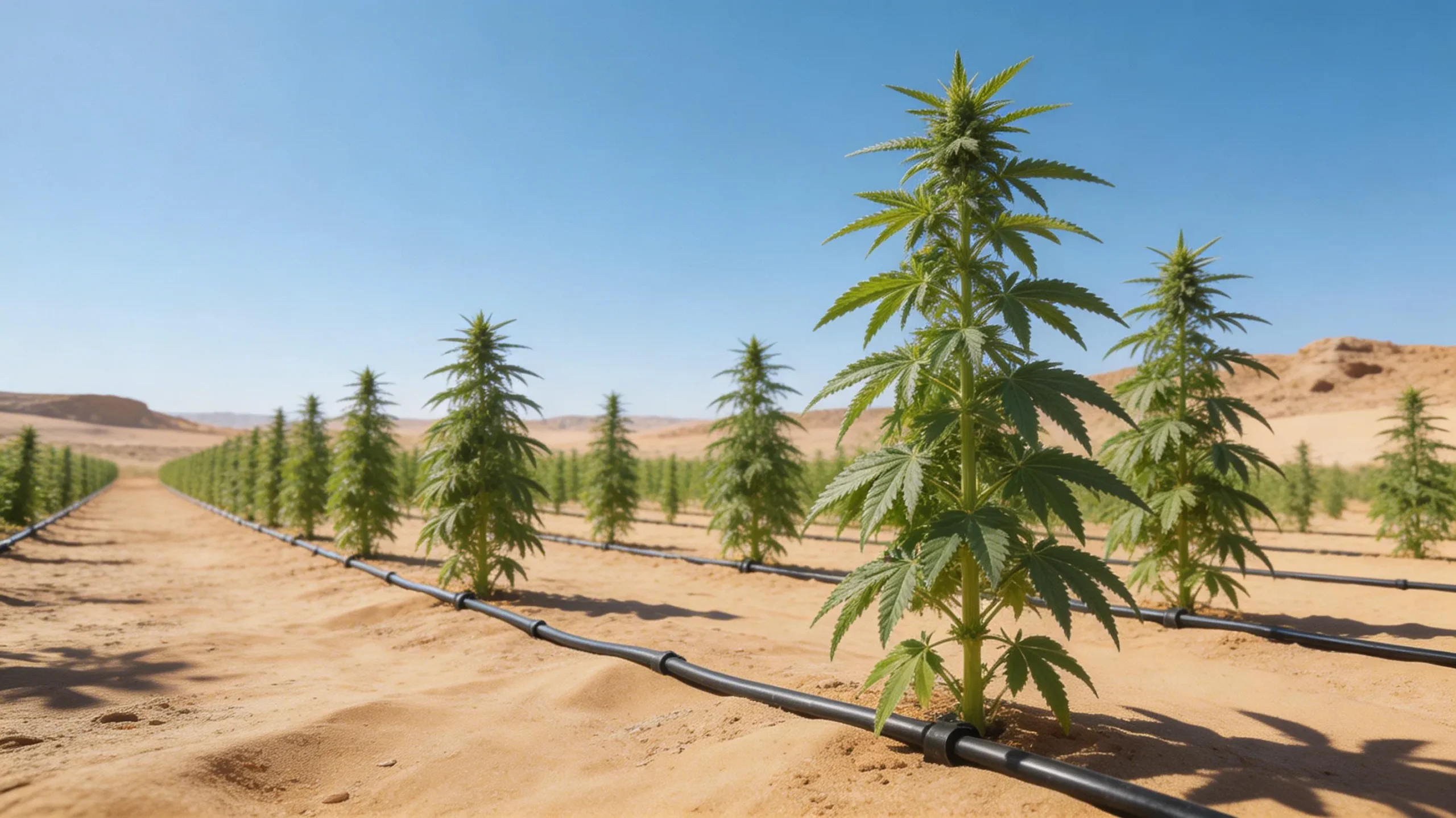
Hemp products are everywhere.
You see them on skincare shelves, in ingredient lists of health supplements, inside protein powders, and even woven into eco-friendly clothing. What was once a niche plant has now quietly become part of a much larger global movement, one centered around sustainability, wellness, and natural alternatives. Across industries, hemp is being positioned as a solution: better for the environment, better for the body, and better aligned with modern consumer values. But this naturally leads many people to ask, Are Hemp Products Safe to Use in the UAE?
And on the surface, it all sounds simple.
Natural. Plant-based. Sustainable.
Safe.
But in the UAE, the conversation doesn’t stop there.
Before anything else, one question always comes up, sometimes spoken, sometimes just thought:
“Is it safe to use?”
And in this context, that question carries far more meaning than it appears to.
Because in the UAE, safety is not just about how a product affects your body. It is also about how that product fits within a legal and regulatory framework that is clear, structured, and strictly enforced. A product may be widely accepted in other parts of the world, openly sold, and commonly used, but that does not automatically make it suitable or compliant within the UAE.
This is where things start to shift.
Globally, hemp products are often approached from a lifestyle perspective. They are associated with wellness trends, clean living, and conscious consumption. But in the UAE, the same products are viewed through a more careful lens, one that considers composition, classification, and compliance alongside usage.
This difference creates a unique dynamic.
A product can be completely safe in a general, global sense, non-toxic, non-psychoactive, and widely used, yet still require caution locally due to regulatory considerations. This is not because the product itself is harmful, but because the context in which it exists changes its evaluation.
And that’s exactly what makes hemp products different in the UAE.
They are not just products, they are products within a system.
A system that prioritizes clarity, safety, and accountability.
So, before assuming that something is safe simply because it is natural or globally accepted, it becomes important to take a step back and understand what safety actually means in this environment.
Because in the UAE, safety is not just about what something is.
It’s about how it fits.
What Do We Mean by “Safe”?
When people ask whether hemp products are safe to use in the UAE, they are often asking a question that has two layers, though they may not always realize it.
On one level, they are asking a health-related question:
Is this product safe for my body? Is it non-toxic? Does it have any harmful effects?
On another level, they are asking a legal and regulatory question:
Is this product allowed in the UAE? Is it compliant with local laws? Can I use it without any issues?
And the truth is, both of these questions matter equally.
From a general, global perspective, many hemp products, especially those derived from seeds or fibers, are widely recognized as safe. Hemp seeds, for example, are consumed as part of a balanced diet in many countries. Hemp fiber is used in clothing and industrial materials without any connection to health concerns. These products are non-psychoactive, nutritionally valuable, and environmentally sustainable.
But in the UAE, the definition of safety goes beyond just physical or biological impact.
Here, safety is also about compliance.
A product is only truly considered “safe” when it aligns with the country’s regulatory standards. This includes meeting legal requirements and ensuring that the product is permitted within the UAE’s framework. It also involves obtaining regulatory approvals, which confirm that the product has been evaluated and accepted by the relevant authorities. In addition, products must meet quality and safety standards, ensuring that they are suitable for use and do not pose any risk to consumers.
This layered definition changes how safety is understood.
A product may be perfectly safe in terms of its ingredients, but if it does not meet regulatory criteria, it cannot be considered safe in the UAE context. Similarly, a product may be compliant legally, but still require evaluation in terms of quality and intended use.
This is why safety in the UAE is not a single dimension; it is a combination of factors working together.
It is about what the product contains.
It is about how it is used.
And it is about whether it is approved and permitted within the system.
Once this perspective is understood, the conversation becomes much clearer.
Instead of asking only whether something is safe, the question becomes more complete:
Is it safe and compliant?
And in the UAE, that distinction makes all the difference.
Types of Hemp Products and Their Safety in the UAE
One of the most important things to understand when discussing hemp product safety in the UAE is that not all hemp products are the same. The term “hemp” is often used broadly, but in reality, it covers a wide range of products that differ significantly in composition, usage, and regulatory treatment.
The safety of a hemp product depends on multiple factors, primarily which part of the plant it comes from, how it is processed, and whether it contains any cannabinoids like THC or CBD. In the UAE, these differences matter even more, because products are not evaluated as a general category, they are assessed based on their specific characteristics and compliance with local laws.
Understanding these distinctions helps remove confusion and allows consumers to approach hemp products with clarity rather than hesitation.
1. Hemp Seeds and Food Products
Hemp seeds are among the most widely accepted and globally recognized hemp-derived products, particularly within the food and nutrition industry. They have been used for years in various cuisines and health-focused diets, valued primarily for their nutritional profile rather than any association with cannabinoids.
These seeds are naturally rich in protein, essential fatty acids such as omega-3 and omega-6, vitamins, and minerals. Because of this, they are often included in products like protein powders, snack bars, oils, and dietary supplements. From a health perspective, they are considered beneficial and are commonly consumed as part of balanced nutrition.
What makes hemp seeds particularly important in the UAE context is their lack of psychoactive compounds. Hemp seeds contain negligible to zero THC, as they are derived from parts of the plant that do not produce cannabinoids in meaningful quantities. This places them completely outside the conversation around psychoactive substances.
From a regulatory and safety standpoint, this makes hemp seed-based products one of the lowest-risk categories of hemp products. When they meet UAE import regulations and food safety standards, such as proper sourcing, labeling, and quality checks, they are generally considered safe for use and consumption.
In many ways, hemp seeds represent the simplest form of hemp usage, nutritional, non-psychoactive, and widely accepted.
2. Hemp Fiber and Clothing
Another major category of hemp products includes those derived from the fibrous stalk of the plant, commonly referred to as hemp fiber. This material has been used for centuries and is now experiencing renewed interest due to its sustainability and durability.
Hemp fiber is used to create textiles, clothing, ropes, paper, and even eco-friendly construction materials. It is often positioned as a sustainable alternative to conventional materials, requiring fewer resources and offering strong environmental benefits.
From a safety perspective, hemp fiber products are among the most straightforward and least controversial. The reason is simple, the part of the plant used for fiber does not contain meaningful levels of THC or other cannabinoids. As a result, these products have no connection to psychoactive substances and are not part of the regulatory concerns typically associated with cannabis-derived compounds.
In the UAE, this makes hemp-based clothing and industrial materials one of the safest and most easily understood categories of hemp products. They are viewed purely as industrial or textile goods, rather than anything related to controlled substances.
This distinction is important because it highlights that not all hemp products are even relevant to the THC or CBD conversation. Some exist entirely outside it.
3. Hemp Oils and Extracts
This is where the conversation becomes more detailed, and where most of the confusion around hemp product safety begins.
Hemp-derived oils and extracts are produced from parts of the plant that may contain cannabinoids, such as the flowers and leaves. As a result, these products can vary significantly in composition depending on how they are extracted and refined.
Some hemp oils are processed in a way that retains a wide range of plant compounds, including trace amounts of THC. These are often referred to as full-spectrum extracts, and while the THC content remains within globally accepted limits (typically below 0.3%), its presence still becomes a point of consideration.
Other products undergo further refinement to remove THC entirely, resulting in formulations that are designed to be THC-free or contain only specific compounds like CBD.
Globally, hemp-derived oils that contain THC below the 0.3% threshold are considered non-psychoactive and are widely used in wellness and personal care products. However, in the UAE, this classification alone is not sufficient to determine safety.
For these products, safety is closely tied to regulatory compliance.
They must meet strict requirements related to import laws, ensuring that they are legally permitted to enter the country. They must adhere to safety and quality standards, confirming that they are suitable for use. They must also be properly labeled and documented, providing transparency about their composition and origin. In many cases, they also require approval from relevant authorities before being made available.
Without meeting these conditions, even a product that is widely accepted internationally may not be considered safe or permissible in the UAE.
This makes hemp oils and extracts one of the most regulated and carefully evaluated categories, where understanding both composition and compliance is essential.
4. CBD-Based Products
CBD-based products are perhaps the most widely discussed, and often misunderstood, category within the hemp space. Derived from the hemp plant, CBD (cannabidiol) is a non-psychoactive compound that has gained global attention for its association with wellness and medical research.
In many countries, CBD products are openly sold and marketed for a variety of uses, from relaxation to general well-being. However, the situation in the UAE is very different.
Despite being non-psychoactive, CBD is still subject to strict regulation. It is not freely available as a general consumer product, and its use is largely confined to approved medical contexts.
In the UAE, CBD is typically only permitted when it forms part of an approved pharmaceutical formulation, prescribed by a licensed medical professional, and used under controlled conditions. This means that CBD products are not treated as everyday wellness items, they are treated as substances that require clinical oversight and regulatory approval.
This distinction is critical.
Not all CBD products that are available globally are considered safe to use in the UAE. Safety, in this case, is not determined by the absence of psychoactive effects alone, it is determined by whether the product is approved, regulated, and used within the appropriate framework.
As a result, CBD products represent one of the most tightly controlled categories, where awareness and understanding are essential for navigating their use responsibly.
Understanding the Bigger Picture
Looking across these categories, a clear pattern begins to emerge.
Some hemp products, like seeds and fiber, are naturally removed from the THC conversation and are widely accepted. Others, like oils, extracts, and CBD formulations, require a deeper level of understanding, as their composition and regulatory status play a much larger role in determining safety.
This is why it is not enough to ask whether hemp products are safe in general.
The more important question is:
What type of hemp product is it, and how does it fit within the UAE’s regulatory framework?
Because in the UAE, safety is not defined by the product alone.
It is defined by context, composition, and compliance working together.
The Role of THC in Safety
When discussing hemp product safety in the UAE, everything eventually comes back to one central factor:
THC.
No matter how a product is marketed, natural, plant-based, sustainable, or wellness-focused, the presence, absence, or trace level of THC is what ultimately shapes how that product is evaluated within the UAE.
THC, or tetrahydrocannabinol, is the compound responsible for the psychoactive effects commonly associated with cannabis. It interacts with the brain in a way that can alter perception, mood, and cognition, influencing how a person feels, thinks, and responds to their surroundings. Because of these effects, THC is not just another ingredient—it is the defining factor that determines how cannabis-related substances are regulated, especially when evaluating questions like Are Hemp Products Safe to Use in the UAE?
Globally, hemp is classified as a low-THC variety of the cannabis plant, typically containing 0.3% THC or less. At this level, it is considered non-psychoactive and is widely used across industries without being associated with intoxication.
However, in the UAE, the conversation does not stop at percentages.
Even though hemp contains very low levels of THC, the presence of THC still matters, not because it causes effects at such low levels, but because of how it is treated within the regulatory framework.
In the UAE:
THC is classified as a controlled substance, meaning its presence is not taken lightly, regardless of quantity.
Its presence must be carefully evaluated, especially in products that are imported, sold, or used within the country.
And most importantly, compliance matters more than just percentage.
This creates an important distinction.
In many parts of the world, the 0.3% THC threshold is often seen as a clear boundary, anything below it is considered acceptable. But in the UAE, this threshold is only one part of a much larger evaluation process.
A product is not considered safe simply because it contains low THC.
It is considered safe when it is approved, documented, and compliant with local regulations.
This means that even trace amounts of THC must be understood in context. Where does the product come from? How is it processed? Has it been approved by relevant authorities? Is it categorized correctly?
These questions matter more than the number alone.
In essence, THC acts as a regulatory trigger.
It determines how closely a product is examined, how it is classified, and whether it falls within acceptable boundaries. This is why understanding THC is not just important; it is essential for understanding the entire conversation around hemp product safety in the UAE.
Because here, safety is not just about what a product does.
It is about how it is interpreted within the system.
Legal Safety vs Product Safety
One of the most common misconceptions surrounding hemp products is the assumption that if something is natural, plant-based, or non-psychoactive, it is automatically safe to use.
At a surface level, this assumption makes sense.
Hemp is often associated with sustainability, nutrition, and wellness. Many hemp products, such as seeds or fibers, are widely consumed and used globally without any issues. This creates a perception that hemp, as a category, is inherently safe.
But in the UAE, safety is not defined by perception.
It is defined by two equally important dimensions:
Product safety and legal safety.
Product safety refers to what the product does to your body. Is it non-toxic? Is it safe for consumption or use? Does it meet quality standards? For many hemp products, especially those without cannabinoids, the answer is often yes.
But that is only half of the equation.
Legal safety refers to whether the product is permitted within the UAE’s regulatory framework. This includes whether it complies with import laws, whether it has been approved by relevant authorities, and whether its composition aligns with what is allowed under local regulations.
And this is where the distinction becomes critical.
A product can be completely safe from a health perspective, free from harmful ingredients, non-psychoactive, and widely used globally, but if it does not meet regulatory requirements, it may still not be considered safe in the UAE.
This creates a situation where safety is not absolute; it is context-dependent.
It depends not just on what the product is, but on where it exists and how it is regulated.
For example, a hemp-derived product that is freely available in international markets may still require careful evaluation in the UAE. Without proper approval, documentation, and compliance, its use may fall outside acceptable boundaries, even if the product itself is harmless.
This is why awareness becomes so important.
Consumers need to move beyond general assumptions and begin to understand the full picture. This includes recognizing the difference between global acceptance and local regulation, between product composition and legal classification, and between what is marketed and what is permitted.
In the UAE, safety is not a single label that can be applied universally.
It is a combination of what the product is, what it contains, and whether it complies with the system in which it exists.
And once this distinction is understood, the confusion begins to fade, replaced by clarity, confidence, and informed decision-making.
How to Approach Hemp Products Safely in the UAE?
When it comes to hemp products in the UAE, the most effective approach is not to look for a simple yes-or-no answer, but to ask the right set of questions.
The question “Is hemp safe?” is too broad to be useful, because hemp is not a single product. It is a category that includes everything from food and textiles to oils and extracts. Each of these exists in a different regulatory and functional context.
A more informed approach begins with understanding.
Start by asking:
What type of hemp product is this?
Is it a food product like hemp seeds? A textile made from hemp fiber? Or is it an extract or oil that may contain cannabinoids? This first step alone helps narrow down the conversation significantly, because different categories are treated very differently in the UAE.
The next important question is:
Does it contain THC or other cannabinoids?
This is where things become more specific. Products that are completely free from cannabinoids, such as hemp fiber or seeds, are generally straightforward. But products derived from the flowers or extracts of the plant may require closer attention, especially if there is any possibility of THC presence.
From there, the focus shifts to compliance:
Is it compliant with UAE regulations?
This is perhaps the most important question of all. It goes beyond the product itself and looks at whether it fits within the UAE’s legal framework. Has it been approved? Does it meet import requirements? Is it properly labeled and documented?
And in cases where the product falls into a medical category:
Is it approved or prescribed if required?
Certain cannabis-derived compounds, such as CBD or formulations that may include THC, are only permitted within a controlled medical environment. This means that their use is tied to professional supervision and cannot be approached casually.
These questions transform the way hemp products are understood.
They shift the conversation from assumption to awareness, from general curiosity to informed evaluation. Instead of relying on how a product is marketed or perceived globally, this approach focuses on what truly matters within the UAE context.
It also empowers consumers.
Because once you begin asking the right questions, you are no longer navigating uncertainty; you are making decisions based on clarity, structure, and understanding.
The Bigger Picture: Awareness Over Assumption
The global hemp industry is expanding at an incredible pace.
Across different countries, hemp is being integrated into wellness products, sustainable materials, nutrition, and even advanced medical research. It is often presented as part of a larger shift toward natural and environmentally conscious living.
But the UAE is not following this expansion in the same way.
Instead, it is evolving within a structured and carefully regulated framework, where growth is not defined by speed, but by precision and control.
This creates an interesting dynamic.
On the one hand, consumers in the UAE are increasingly exposed to global trends. Through social media, online marketplaces, and international branding, hemp products are more visible than ever. People are becoming curious, informed, and interested in what hemp has to offer.
On the other hand, there is still a noticeable gap between global exposure and local understanding.
A product that is widely accepted internationally may not be directly applicable in the UAE. Marketing language may simplify complex realities. And general awareness may not always include the regulatory nuances that define what is actually permitted.
This is where responsible awareness becomes essential.
It is not enough to know what hemp is; it is important to understand how it fits within the UAE’s specific legal and regulatory environment. It is not enough to follow global conversations, it is necessary to interpret them through a local lens.
Because in the UAE, safety is not defined by popularity or trends.
It is defined by clarity and compliance.
This means that the more awareness improves, the more the conversation shifts. Confusion begins to fade. Assumptions are replaced with facts. And hesitation turns into informed confidence.
In many ways, awareness is what will shape the future of hemp in the UAE.
Not rapid expansion.
Not market pressure.
But understanding.
Conclusion: Safe, When You Understand It
So, are hemp products safe to use in the UAE?
The answer is not a simple yes or no, because the question itself is not simple.
Hemp products can be safe, but only when they are understood correctly and approached with the right level of awareness.
Safety, in this context, is not automatic. It is not guaranteed by the word “natural” or by global popularity. It is something that is defined by knowledge, context, and compliance.
A hemp product can be considered safe when:
You understand exactly what the product is, whether it is a food item, a textile, or an extract.
You know what it contains, especially whether it includes THC or other cannabinoids.
And most importantly, you ensure that it complies with UAE regulations and fits within the legal framework.
When these elements come together, the uncertainty begins to disappear.
Because the reality is simple:
Hemp itself is not the issue.
Lack of clarity is.
And once that clarity is in place, everything changes.
The hesitation that often surrounds hemp products begins to fade. The need for guesswork is replaced with informed decision-making. And what once felt uncertain becomes clear, structured, and manageable.
The conversation shifts, from doubt to understanding,
from confusion to awareness,
and from hesitation to confidence.
And in the UAE, that shift is what truly defines safety.
Leave a Reply