
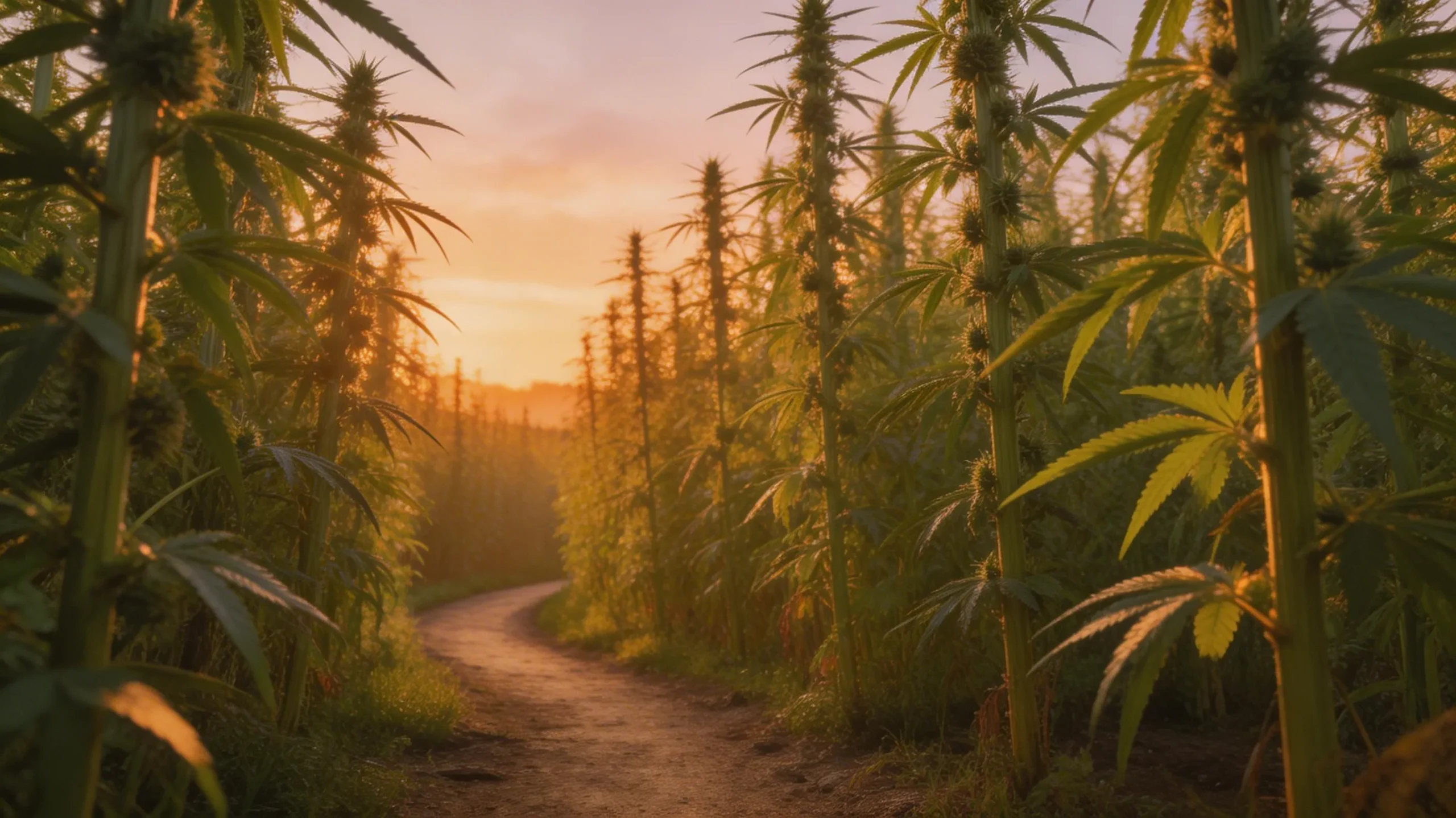
“Does this have THC in it?”
It’s a simple question, but in the context of the UAE, it carries a lot more weight than it seems—especially when people are trying to understand whether hemp products contain THC in the UAE. Whether someone is picking up a hemp-based product for the first time or casually browsing through ingredients online, this question almost always comes up. Not loudly, not always openly, but it’s there, in the background, shaping decisions and influencing how people perceive hemp, CBD, and THC products in the UAE market.
Because when it comes to hemp products in the UAE, people are not just curious, they are cautious.
Whether it’s hemp oil in a wellness store, hemp seeds in a food product, a skincare cream labeled “hemp-infused,” or even a fabric made from hemp fibers, there is always a moment of pause. A second look at the label. A quick mental check. A need to be absolutely sure about what exactly is being used or consumed.
And that hesitation doesn’t come from nowhere.
In many parts of the world, hemp products have become part of everyday life. They are used openly in food, fashion, personal care, and even eco-friendly construction materials. Globally, hemp is often seen as a sustainable, versatile, and increasingly mainstream resource.
But in the UAE, the conversation takes on a very different tone.
Here, it is not just about trends or usage; it is about clarity, compliance, and understanding the exact composition of a product. The regulatory environment is structured, the expectations are precise, and the margin for misunderstanding is very small. This naturally makes people more aware, more careful, and more detail-oriented when it comes to anything associated with cannabis or its derivatives.
And at the center of all this attention sits one word:
THC.
It is the single factor that turns a simple product into a question mark. It is what people are really asking about, even when they don’t say it directly.
Do hemp products contain THC?
If they do, how much is actually present?
Is that amount significant, or negligible?
And most importantly, what does that mean within the UAE’s legal and regulatory framework?
These are not just technical questions, they are practical ones. They influence purchasing decisions, shape perceptions, and determine whether someone feels confident or uncertain about using a product.
The challenge, however, is that the answers are not always straightforward. Different products contain different components. Global standards do not always translate directly into local acceptance. And information, when incomplete or taken out of context, can easily lead to confusion.
This is why it becomes essential to move beyond assumptions and understand the topic properly.
Because once you understand what THC is, how it exists in hemp, and how it is treated in the UAE, the hesitation starts to disappear.
And what replaces it is something much more valuable, clarity.
What Is THC and Why Does It Matter So Much?
To understand why this question matters so much, you first need to understand what THC actually is and why it plays such a central role in the entire hemp and cannabis conversation.
THC, or tetrahydrocannabinol, is one of the primary compounds found in the cannabis plant. It is specifically known for its psychoactive effects, meaning it interacts with the brain in a way that can alter mood, perception, and cognitive function. This is what creates the “high” that people commonly associate with marijuana.
But THC is not just another compound; it is the defining element that determines how cannabis-related substances are viewed, regulated, and controlled across the world.
When THC enters the body, it interacts with receptors in the brain that are part of the endocannabinoid system. These receptors influence how we feel, think, and perceive our surroundings. Because of this interaction, THC can produce noticeable changes in mental state, which is why it is categorized differently from non-psychoactive compounds like CBD.
This distinction is critical.
In many countries, including the UAE, substances that can alter mental perception are treated with a high level of caution. As a result, THC is classified as a controlled substance, and its presence, regardless of quantity, can significantly influence how a product is regulated.
This is why THC becomes the focal point of the entire discussion around hemp products.
It is not the plant itself that raises concern.
It is not even the idea of hemp-based usage.
It is the presence and level of THC that determines everything.
In the UAE, this becomes even more important due to the country’s strict legal framework. Substances that have the potential to affect the mind are subject to clear and enforced regulations, and this applies directly to THC. Even small or trace amounts have historically been taken seriously, which is why awareness around THC content is essential.
Understanding whether a product contains THC is not just a technical detail; it is a key factor in understanding whether that product aligns with regulatory expectations. And if THC is present, knowing the exact quantity becomes equally important, because different levels can lead to entirely different classifications.
This is also why the conversation around hemp products cannot exist without addressing THC. Even though hemp is defined by its low THC content, the presence of THC, no matter how minimal, is still part of the equation.
So when someone asks, “Does this have THC in it?”, what they are really asking is:
- Is this safe within the UAE’s framework?
- Is this compliant with regulations?
- And is this something I can confidently use without uncertainty?
Once you understand THC and its role, these questions become much easier to answer.
Because in the end, THC is not just a compound; it is the reference point that defines how everything else is understood.
Do Hemp Products Actually Contain THC?
The answer to this question is not as straightforward as a simple yes or no. It depends on the type of hemp product, the part of the plant it is derived from, and the way it has been processed—especially when evaluating whether hemp products contain THC in the UAE. This is where most of the confusion begins, because while hemp itself is defined by low THC content, not all hemp products behave the same way when it comes to THC presence, particularly within the regulated UAE hemp market.
By definition, hemp contains very low levels of THC, typically no more than 0.3%. This threshold is recognized globally and is used to classify hemp as non-psychoactive. At this level, THC exists in such minimal quantities that it does not produce any intoxicating or mind-altering effects. In practical terms, this means that hemp, in its raw form, is not associated with the “high” commonly linked to cannabis.
However, this does not automatically mean that every hemp product contains THC, or that it contains it in the same way. The presence of THC varies depending on how the product is made, what part of the plant is used, and how refined the final product is.
Some hemp products may contain trace amounts of THC, often as a natural result of extraction processes that retain multiple compounds from the plant. These trace amounts are typically well below the 0.3% threshold and are considered non-psychoactive on a global scale. At the same time, there are many hemp products that are processed in a way that removes THC entirely, resulting in formulations that are effectively THC-free.
This variation is important because it highlights a key point: hemp is not a single, uniform category. It is a broad plant-based resource, and the products derived from it can differ significantly in composition. Understanding these differences is essential, especially in a regulated environment like the UAE, where even small details can influence how a product is perceived and classified.
Types of Hemp Products and Their THC Content
To truly understand whether hemp products contain THC, it is helpful to look at the different categories of hemp-based products and how they are derived. Each category interacts with THC in a different way, and in many cases, THC is not even part of the equation.
1. Hemp Seeds and Food Products
Hemp seeds are among the most widely used and globally accepted hemp-derived ingredients, particularly in the food industry. When people ask whether hemp products contain THC in the UAE, hemp seeds are one of the clearest examples of products that are naturally free from such concerns. These seeds are valued not for their cannabinoid content, but for their nutritional profile. They are rich in protein, essential fatty acids, vitamins, and minerals, making them a popular choice in health-focused diets.
What makes hemp seeds particularly important in this discussion is that they naturally contain negligible to zero THC. This is because hemp seeds come from parts of the plant that do not produce cannabinoids in meaningful quantities. Unlike the flowers or leaves, which contain compounds like CBD and THC, the seeds are essentially free from these elements.
As a result, hemp seed-based products, such as hemp seed oil used in food, protein powders, or snack ingredients, are not part of the psychoactive conversation at all. They exist entirely outside the scope of THC-related concerns. This is one of the reasons why hemp seeds are considered one of the safest and most universally accepted forms of hemp worldwide.
In the UAE context, this distinction is particularly valuable, as it places hemp seed products in a category that is far removed from regulatory concerns related to psychoactive substances.
2. Hemp Fiber and Industrial Products
Another major category of hemp products includes those derived from the fibrous stalk of the plant. Hemp fiber has been used for centuries in the production of textiles, ropes, paper, and, more recently, eco-friendly construction materials such as hemp-based composites.
From a THC perspective, these products are completely irrelevant to the cannabinoid discussion. The stalk of the hemp plant does not contain meaningful levels of THC or other cannabinoids. This means that hemp-based clothing, fabrics, and industrial materials are entirely non-psychoactive and have no connection to substances that affect the mind.
Because of this, hemp fiber products are often viewed purely through the lens of sustainability and functionality, rather than regulation or compliance. They represent the industrial side of hemp, where the focus is on durability, environmental benefits, and material innovation.
In the UAE, this category of hemp products aligns more closely with broader goals around sustainability and eco-conscious development, rather than any concerns related to THC or controlled substances.
3. Hemp-Derived Oils and Extracts
This is where the conversation becomes more detailed and nuanced.
Hemp-derived oils and extracts are produced from parts of the plant that do contain cannabinoids, such as the flowers and leaves. As a result, these products may carry varying levels of compounds like CBD and, in some cases, trace amounts of THC.
The exact composition of these oils depends heavily on how they are extracted and processed. For example, full-spectrum extracts are designed to retain a wide range of natural compounds from the plant, which may include trace amounts of THC within the globally accepted 0.3% limit. On the other hand, more refined products may undergo additional processing to remove THC entirely, resulting in formulations that contain only specific compounds like CBD.
Globally, hemp-derived oils that contain THC below the 0.3% threshold are considered non-psychoactive and are widely used in wellness and personal care products. However, in the UAE, this global classification is not sufficient on its own.
Regulatory compliance plays a critical role. Products must meet strict standards related to safety, import approval, and documentation. This means that even if a product is considered compliant internationally, it must still align with UAE regulations to be permitted.
This is why hemp-derived oils often sit at the center of the conversation; they bridge the gap between non-psychoactive hemp and regulated cannabinoid content, making understanding their composition especially important.
4. CBD Products
CBD products represent one of the most widely discussed categories within the hemp space. Derived from the hemp plant, these products are formulated around cannabidiol (CBD), a non-psychoactive compound that has gained global attention for its potential role in wellness and medical applications.
When it comes to THC, CBD products can vary significantly. Some are specifically designed to be THC-free, using refined extraction methods that isolate CBD and remove other compounds. Others may include trace amounts of THC, particularly if they are full-spectrum formulations, but still remain within the globally accepted non-psychoactive limit.
However, the UAE takes a highly structured approach to CBD products. Unlike some international markets where CBD is widely available, in the UAE, these products are not freely accessible. Their status depends on strict regulatory oversight, particularly when it comes to ingestible or therapeutic use.
This makes it essential to understand not just whether a CBD product contains THC, but also how it is classified, whether it has regulatory approval, and how it fits within the UAE’s legal framework. Simply knowing that a product is “CBD-based” is not enough; its composition and compliance status must also be clear.
In many ways, CBD products highlight the complexity of the hemp conversation. They sit at the intersection of wellness, regulation, and scientific development, making awareness and clarity more important than ever.
The 0.3% THC Rule: What It Really Means
One of the most commonly referenced concepts in the global hemp industry is the 0.3% THC rule, but despite how frequently it is mentioned, it is often misunderstood. On the surface, it seems simple: if a product contains THC at or below 0.3%, it is classified as hemp and considered non-psychoactive. However, the true significance of this number goes far beyond just a technical definition; it acts as a global benchmark that shapes how hemp is perceived, regulated, and used across industries.
This threshold was established to clearly differentiate hemp from marijuana. At or below 0.3% THC, the concentration of the psychoactive compound is so low that it does not produce any intoxicating effect. In practical terms, this means that products derived from such hemp do not cause a “high,” do not impair cognitive function, and do not alter mental perception. This is the reason hemp has been widely accepted and integrated into sectors like food, textiles, skincare, and industrial manufacturing around the world.
Because of this classification, hemp is often viewed as a safe and functional resource rather than a controlled substance. It allows industries to innovate and create products without the concerns typically associated with psychoactive cannabis. However, while this global standard provides a useful baseline, it does not operate in isolation, especially in countries with strict regulatory frameworks like the UAE.
In the UAE, the 0.3% THC rule is only one part of a much larger system of compliance. Meeting this threshold does not automatically make a product permissible. Instead, it acts as a starting point, which must then be supported by a range of additional requirements. Products must comply with local import regulations, ensuring that they are legally allowed to enter the country. They must meet defined safety and quality standards, which verify that they are suitable for consumer use. They also require approval from relevant authorities, confirming that they align with regulatory expectations. In addition, proper labeling and documentation are essential, providing transparency about the product’s composition, origin, and intended use.
This layered approach reflects the UAE’s broader philosophy, control through structure rather than assumption. It ensures that products are not evaluated based on a single metric, but through a comprehensive process that prioritizes safety, clarity, and accountability.
As a result, even trace amounts of THC must be considered carefully. While they may fall within globally accepted limits, their presence still plays a role in how a product is assessed locally. This is why relying solely on the 0.3% rule can be misleading when viewed outside of its full context.
Ultimately, the 0.3% THC threshold is important, but it is not absolute. It defines hemp globally, but in the UAE, it must work alongside regulatory compliance to determine what is actually acceptable. Understanding this distinction is key to moving from assumption to clarity.
Medical Use and THC in the UAE
Another important dimension in the conversation around THC is its role within medical use, particularly in the UAE’s evolving regulatory landscape. For many years, THC and other cannabis-derived compounds were treated under strict prohibition, with little distinction made between recreational use and potential medical applications. However, as global research advanced and the therapeutic potential of cannabinoids gained attention, the UAE introduced a more structured approach, one that allows for medical use, but within clearly defined boundaries.
Today, the UAE has established a controlled pathway for cannabis-derived medications, marking a significant shift in how these substances are approached. This change does not represent a relaxation of regulations, but rather a refinement of them. It acknowledges that certain compounds, including THC, may have a role in medical treatment when used responsibly, professionally, and under strict supervision.
In this context, THC may be present, but only as part of approved pharmaceutical formulations. These are not general wellness products or consumer goods; they are medications that have undergone evaluation and meet specific regulatory standards. Their use is not optional or self-directed; they must be prescribed by licensed medical professionals, ensuring that they are administered based on clinical need rather than personal preference.
Even after prescription, access remains tightly controlled. The use of such medications is monitored and regulated, maintaining oversight at every stage. This ensures that the system remains focused on patient care while preventing misuse or unauthorized distribution.
It is important to clearly distinguish this medical pathway from the broader consumer market. The presence of THC in approved medications does not mean that THC-containing products are widely available or accessible for general use. This system is designed specifically for targeted medical scenarios, where the potential benefits outweigh the risks, and where usage can be managed within a professional healthcare framework.
This approach reflects the UAE’s balanced stance, recognizing scientific and medical advancements, while maintaining strict control over substances that can affect the mind. It allows room for innovation in healthcare without compromising on safety or regulatory integrity.
For individuals trying to understand THC in the UAE, this distinction is crucial. THC is not entirely absent from the system, but its presence is highly controlled, carefully monitored, and limited to specific medical contexts.
In many ways, this represents a shift from absolute restriction to regulated inclusion, a model that prioritizes both progress and responsibility.
So, Should You Be Concerned About THC in Hemp Products?
This is ultimately the question most people are trying to answer, and the response is not about fear, but about understanding what you are actually using.
The reality is that not all hemp products are the same, and more importantly, not all of them contain THC in a way that is relevant or concerning. Hemp, by definition, is a low-THC plant, but the products derived from it vary widely depending on which part of the plant is used and how the product is processed.
For example, hemp seeds and hemp fiber products have no meaningful connection to THC at all. These products are derived from parts of the plant that do not produce cannabinoids, which means they exist entirely outside the conversation around psychoactive compounds. Whether it is a hemp-based food product or a textile made from hemp fiber, these categories are fundamentally non-psychoactive and are not associated with THC-related concerns.
On the other hand, certain hemp-derived extracts, such as oils or formulations that involve cannabinoids, may contain trace amounts of THC. However, these amounts are typically well within globally accepted non-psychoactive limits, such as the 0.3% threshold used to define hemp. At such low concentrations, THC does not produce any intoxicating effect, and its presence is often a natural result of the plant’s composition rather than an indication of psychoactive use.
In the UAE, however, the key consideration goes beyond just whether THC is present. What matters most is whether the product complies with the country’s regulatory framework. This includes factors such as how the product is classified, whether it meets safety and quality standards, whether it has received necessary approvals, and whether it is supported by proper documentation and labeling.
This is where awareness becomes essential.
Understanding the difference between various types of hemp products allows individuals to approach the topic with clarity rather than hesitation. Knowing how THC functions, where it appears, and in what quantities it becomes relevant helps remove the uncertainty that often surrounds these products. Equally important is recognizing that regulatory compliance plays a central role in determining whether a product is acceptable within the UAE.
When these elements are understood together, the question shifts from “Should I be worried?” to “Do I understand what I’m using?”
And that shift makes all the difference.
Final Thought: It’s Not About Fear, It’s About Understanding
The conversation around hemp and THC often begins with hesitation, and that is completely natural, especially in a region where regulations are clear and expectations are high. But that hesitation does not have to define the entire experience. With the right understanding, it can evolve into something far more constructive: confidence.
When you begin to understand that hemp is naturally low in THC, and that many hemp products in the UAE, such as seeds, fibers, and industrial materials, contain no THC at all, the foundation of the conversation changes. The plant itself starts to make more sense—not as something controversial, but as something functional, compliant, and widely used across industries.
At the same time, recognizing the role of the 0.3% THC threshold helps place things in a global context. It clarifies why hemp is considered non-psychoactive and why it is treated differently from high-THC cannabis. This understanding removes a large part of the confusion that comes from grouping all cannabis-related terms together.
Equally important is understanding how the UAE approaches regulation. The focus here is not just on what a product contains, but on whether it meets defined standards of safety, compliance, and approval. This structured approach ensures that products are evaluated thoroughly, rather than being judged based on assumptions or incomplete information.
When these pieces come together, the bigger picture becomes much clearer.
Hemp products are not inherently confusing; they only seem that way when viewed without context. Once you understand how they are made, what they contain, and how they are regulated, the uncertainty begins to fade. What remains is a clearer, more informed perspective.
And that is the key takeaway.
In the UAE, it is not just about what something is; it is about how it fits within a system. It is about context, compliance, and clarity.
Because in the end, the conversation is not about fear, it is about understanding.
Leave a Reply