
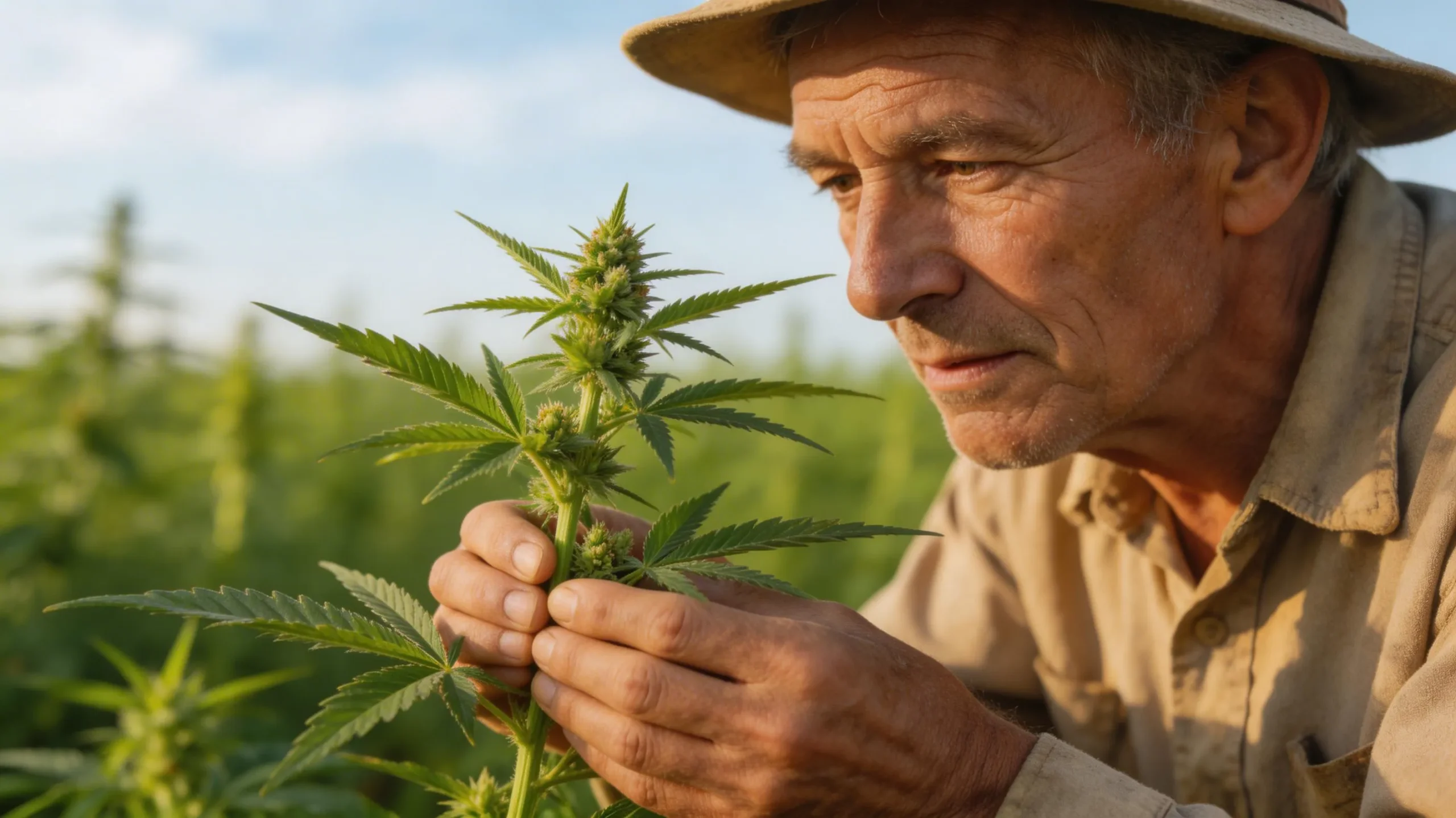
Walk into any conversation about hemp in the UAE today, and you’ll notice something interesting. People are curious, but cautious. There’s intrigue, there’s hesitation, and most importantly, there’s confusion.
Some think it’s illegal.
Some think it’s intoxicating.
Some think it’s just another global trend that doesn’t quite fit into the UAE’s ecosystem.
And yet, quietly, steadily, hemp is finding its way into conversations around wellness, sustainability, and future-forward industries.
Over the last few years, hemp has undergone a global transformation in perception. What was once misunderstood, often misclassified, and sometimes completely overlooked is now being rediscovered as one of the most versatile natural resources available. From eco-friendly textiles to wellness products, from construction materials to nutritional applications, hemp is no longer operating on the fringes. It is moving toward the center of innovation.
In the UAE, this shift is beginning to take shape in a subtle but meaningful way.
You won’t see it everywhere yet, but you’ll notice the signals. Increasing discussions around plant-based wellness. A growing interest in sustainable materials. Businesses are exploring new categories that align with global environmental goals. And most importantly, consumers are beginning to ask better questions.
But here’s where things get interesting.
Despite this growing curiosity, there is still a wide gap between perception and reality. For many people in the UAE, hemp is still directly associated with cannabis in its recreational sense. The assumption is simple: if it comes from the same plant family, it must be the same thing.
That assumption is where most of the confusion begins.
This misunderstanding has created a natural hesitation, not just among consumers, but also among entrepreneurs, retailers, and even professionals who might otherwise explore hemp as an opportunity. The fear of legal uncertainty, the lack of clear information, and the overlap in terminology all contribute to this cautious approach.
But the truth is far more layered and far more interesting.
Hemp is not a new phenomenon waiting to be discovered. It is an ancient resource that has been used for thousands of years across civilizations. Long before modern industries existed, hemp was already being used to make ropes, textiles, paper, food, and even medicinal preparations. It was valued not for its association with intoxication, but for its strength, durability, and versatility.
What has changed today is not the plant itself, but our understanding of it.
Modern science, global regulation, and sustainability-driven innovation have brought hemp back into focus. Countries around the world are now exploring their potential across industries, supported by research, controlled frameworks, and increasing consumer awareness.
And the UAE, known for balancing innovation with regulation, is beginning to engage with this shift in its own structured way.
Understanding hemp in the UAE, however, is not about jumping to conclusions. It requires clarity. It requires separating long-standing myths from factual information. It requires understanding the legal framework, the role of THC limits like 0.3%, and the distinction between industrial use and controlled substances.
Because once you strip away the misconceptions, what remains is a plant with enormous potential, one that fits naturally into conversations around sustainability, modern wellness, and future-ready industries.
This is exactly what we’re exploring here.
Understanding Hemp: What It Really Is
Before diving into regulations, market dynamics, or even common myths, it is essential to start with the most fundamental question: What exactly is hemp?
At its core, hemp is a variety of the Cannabis plant species. And yes, this is where most of the confusion begins.
The word “cannabis” often carries a strong association with recreational use and intoxication. But in reality, cannabis is a broad plant family with multiple varieties, each serving very different purposes. Hemp is one of those varieties, and it is fundamentally different from what most people associate with marijuana.
The difference is not visual. It is chemical.
The key factor that separates hemp from marijuana lies in the concentration of a compound called THC, or tetrahydrocannabinol. THC is the psychoactive component responsible for the “high” that people associate with cannabis.
Industrial hemp, by definition, contains extremely low levels of THC, typically no more than 0.3%.
At this threshold, something important happens.
The plant loses its psychoactive potential.
This means that hemp, even though it comes from the same broader plant family, does not produce any intoxicating effects. It does not alter perception, it does not create a “high,” and it does not function in the way recreational cannabis does.
This 0.3% THC threshold is not random. It is a globally recognized benchmark used by many countries to clearly distinguish industrial hemp from marijuana. It provides a measurable, scientific basis for regulation and classification.
But hemp is not just defined by what it lacks.
It is defined by what it offers.
Instead of being rich in THC, hemp contains other naturally occurring compounds, most notably CBD, or cannabidiol. Unlike THC, CBD is non-psychoactive and has been widely studied for its potential role in supporting general wellness. Globally, it is being explored in areas such as relaxation, sleep support, and overall balance.
Beyond cannabinoids, hemp is valued for its physical and nutritional components.
Its fibers are incredibly strong and durable, making them ideal for textiles, ropes, and even construction materials. Its seeds are rich in protein, healthy fats, and essential nutrients, making them a valuable addition to food products. Its oils are used in skincare and cosmetic formulations due to their moisturizing and nourishing properties.
This is what makes hemp unique.
It is not a single-use plant; it is a multi-dimensional resource.
In many ways, hemp represents a rare intersection of industries. It connects agriculture with sustainability. It connects wellness with science. It connects traditional use with modern innovation.
And when you look at it from this perspective, the narrative begins to shift.
Hemp is no longer a misunderstood offshoot of cannabis. It becomes a functional, practical, and highly adaptable plant that fits into multiple sectors of the modern economy.
In simple terms, hemp is not about intoxication; it is about utility, versatility, and potential.
And understanding this distinction is the first step toward truly understanding its place in the UAE and beyond.
The 0.3% THC Rule: Why It Matters More Than You Think
If there is one concept that sits at the center of hemp awareness globally, and especially in the UAE, it is the 0.3% THC rule.
At first glance, it may sound like just a number. A technical threshold. A regulatory detail.
But in reality, this single figure defines how hemp is understood, classified, regulated, and accepted across the world.
To fully grasp its importance, you need to look beyond the number itself and understand what it represents.
THC, or tetrahydrocannabinol, is the compound responsible for the psychoactive effects commonly associated with cannabis. It is what creates the “high.” When THC levels are high, the plant behaves in a way that affects perception, mood, and cognition.
Now here’s where hemp becomes fundamentally different.
Industrial hemp is legally defined by its extremely low THC content, typically no more than 0.3%. At this level, the plant does not produce any psychoactive effect. It cannot intoxicate. It cannot alter mental state in the way marijuana does.
And that distinction changes everything.
The 0.3% threshold acts as a global line of separation. It tells regulators, businesses, and consumers: this is not about recreational use, this is about industrial, nutritional, and wellness applications.
Across many countries, this benchmark has become the standard for defining hemp. It provides a scientific, measurable, and enforceable way to distinguish between two plants that may look similar but behave very differently.
But when we bring this into the UAE context, the conversation becomes even more layered.
The UAE has historically maintained one of the strictest regulatory environments in the world when it comes to controlled substances. This has shaped public perception as well, where anything associated with cannabis is often viewed with caution or concern.
In such an environment, the 0.3% THC rule is not just a guideline; it becomes a critical filter.
It helps regulators determine what can be considered non-intoxicating. It helps businesses understand what might be acceptable within a controlled framework. And it helps consumers differentiate between perception and reality.
However, and this is where many people get it wrong, the 0.3% rule alone is not enough in the UAE.
Globally, a product with less than 0.3% THC might be widely accepted. But in the UAE, compliance goes far beyond just THC levels. Every product must align with strict regulatory standards that include:
- Controlled import approvals
- Clear and compliant labeling
- Ingredient transparency
- Safety certifications
- Category-specific regulations (cosmetics, food, wellness, etc.)
This means that even if a product meets the 0.3% THC threshold internationally, it does not automatically qualify for acceptance in the UAE market.
This is a crucial distinction.
For consumers, it explains why certain hemp products available abroad may not be accessible locally. It is not just about THC; it is about the entire regulatory ecosystem.
For businesses, this creates both a challenge and an opportunity.
The challenge lies in navigating a highly structured system where compliance is non-negotiable. The opportunity lies in building trust. In a market like the UAE, where regulation is strong, products that meet standards often carry higher credibility and consumer confidence.
Another important layer to understand is perception.
Even though 0.3% THC is scientifically non-psychoactive, public awareness is still catching up. Many people still associate hemp with intoxication simply because of its connection to the cannabis plant family.
This is where education becomes critical.
The more people understand that hemp at 0.3% THC does not produce a high, the more comfortable they become exploring its applications, whether in wellness, nutrition, or sustainability.
In many ways, the 0.3% THC rule is not just a regulatory number. It is a bridge.
A bridge between misunderstanding and clarity.
A bridge between restriction and controlled acceptance.
A bridge between global trends and local adaptation.
And in the UAE, that bridge is still being built, carefully, deliberately, and with a strong emphasis on compliance.
Hemp in Medicine: Emerging Perspectives in the UAE
If there is one area where the conversation around hemp is evolving most significantly, it is medicine.
For decades, cannabis and all its derivatives were viewed through a single lens: strict prohibition. There was little distinction between recreational use, industrial hemp, or medical applications. Everything existed under the same regulatory umbrella.
But globally, that perspective has been changing.
Scientific research, clinical studies, and patient experiences have started to highlight the potential of cannabis-derived compounds, especially CBD, in supporting various aspects of health and well-being.
And slowly, this shift is beginning to reflect in the UAE as well.
The country has taken a cautious yet progressive step by introducing a structured pathway for certain cannabis-derived medications to be used under strict medical supervision. This is not a casual shift; it is a carefully regulated evolution.
It signals something important.
The conversation is no longer just about restriction. It is about controlled, evidence-based use.
Globally, hemp-derived compounds like CBD are being explored for their potential role in areas such as:
- Supporting stress management
- Promoting better sleep cycles
- Helping with inflammation response
- Contributing to overall wellness balance
It is important to note that research is still ongoing in many of these areas. While there is growing interest and promising data, medical use is always approached with caution, clinical validation, and professional oversight.
In the UAE, this cautious approach is even more pronounced.
The introduction of medical pathways does not mean open access. Instead, it creates a tightly controlled system where:
Medical use is highly regulated
Every approved medication goes through strict evaluation processes
Access is limited to specific, approved formulations
Not all products qualify; only those that meet regulatory and medical standards.
Prescription is mandatory
Patients cannot access such medications without authorization from a licensed medical professional.s
Professional supervision is required.
Treatment is monitored within a structured healthcare framework
This framework ensures that any use of cannabis-derived compounds is aligned with patient safety, clinical standards, and legal compliance.
But perhaps the most important clarification is this:
Medical acceptance does not equal market availability.
Just because certain cannabis-derived medications are permitted under prescription does not mean that all hemp or CBD products are freely available for general use.
This distinction is critical and often misunderstood.
The UAE is not opening the door to unregulated access. It is opening a controlled channel for medical use, backed by oversight, documentation, and accountability.
For patients, this creates new possibilities, especially for those who may benefit from alternative or complementary treatment options under medical guidance.
For healthcare professionals, it introduces a new dimension to treatment approaches, one that requires updated knowledge, careful prescription practices, and ongoing monitoring.
For businesses, however, it reinforces the importance of boundaries.
The presence of medical pathways does not automatically translate into commercial freedom. Companies operating in this space must clearly differentiate between:
- Medical-grade, prescription-based products
- General wellness or industrial hemp products
- Non-permissible categories
This is where many markets globally become confusing, but the UAE’s structured approach helps maintain clarity.
What we are witnessing is not a rapid transformation, but a measured evolution.
The UAE is acknowledging the medical potential of cannabis-derived compounds, but doing so within a framework that prioritizes control, safety, and regulation.
And that approach aligns closely with the country’s broader philosophy, embracing innovation, but never at the cost of structure.
In the coming years, as research advances and awareness increases, this space is likely to develop further. But it will continue to do so in a way that is deliberate, compliant, and carefully monitored.
Because in the UAE, progress is not about speed; it is about precision.
And when it comes to hemp in medicine, that precision is exactly what defines its future.
Common Myths About Hemp in the UAE
Even as awareness around hemp begins to grow in the UAE, misinformation continues to shape how people perceive it. And interestingly, most of these myths don’t come from a lack of interest; they come from partial knowledge.
People have heard about hemp. They’ve seen it globally. They know it’s connected to cannabis. But the details in between are often blurred.
This is where myths take over.
To truly understand hemp in the UAE context, it’s important to break these misconceptions down, clearly, calmly, and factually.
Myth 1: Hemp and Marijuana Are the Same
This is by far the most widespread and deeply rooted misconception.
At a surface level, the confusion makes sense. Both hemp and marijuana come from the same plant species, Cannabis. They may even look similar to the untrained eye. But chemically and functionally, they are entirely different.
The defining factor here is THC.
Hemp contains extremely low levels of THC, 0.3% or less. At this level, it does not produce any psychoactive effect. It cannot make a person feel “high,” nor does it alter mental state.
Marijuana, on the other hand, contains significantly higher levels of THC. This is what gives it its intoxicating properties and why it is treated as a controlled substance in many parts of the world, including the UAE.
But the difference goes beyond just THC levels.
Hemp is cultivated for industrial, nutritional, and wellness purposes. It is used to make textiles, ropes, biodegradable materials, food products, skincare items, and more.
Marijuana is cultivated for its psychoactive or specific medical properties under strict regulations.
So while both originate from the same plant family, their purpose, usage, and legal treatment are fundamentally different.
Understanding this distinction is the first step toward clearing up almost every other myth.
Myth 2: All Hemp Products Are Illegal in the UAE
This is where fear often replaces facts.
The UAE does have strict laws regarding controlled substances. That part is true. But the assumption that all hemp-related products are illegal is not entirely accurate.
The reality is more nuanced and much more structured.
Certain hemp-derived products are allowed in the UAE, provided they meet strict regulatory requirements. These typically include products that do not contain controlled substances and fall within approved categories.
Examples may include:
- Hemp seed oil is used in food or cosmetics
- Hemp-based textiles and fabrics
- Skincare products formulated with compliant ingredients
- Industrial hemp materials used in manufacturing
However, the keyword here is compliance.
Products must meet specific standards related to:
- Ingredient composition
- THC content (often expected to be negligible or non-detectable depending on category)
- Import approvals
- Labeling regulations
- Safety certifications
This means that just because a product is labeled “hemp” internationally does not automatically make it acceptable in the UAE.
For consumers, this creates a filtered market, where only compliant products are available.
For businesses, it creates a system that rewards clarity, transparency, and adherence to regulations.
So the truth is not that hemp is entirely illegal; it is that hemp operates within a controlled and selective framework.
Myth 3: Hemp Products Will Cause Intoxication
This myth comes directly from the confusion between hemp and marijuana.
There is a general assumption that anything related to cannabis must have psychoactive effects. But this is not how hemp works.
Hemp-derived products, when sourced from industrial hemp, contain extremely low levels of THC, typically below 0.3%. At this level, there is no intoxicating effect.
You could consume hemp seed oil, wear hemp clothing, or use hemp-based skincare, and none of these would produce a “high.”
This is because most hemp products either contain negligible THC or none at all, especially after processing and compliance with regulatory standards.
In fact, many hemp products focus on entirely different components of the plant.
For example:
- Hemp seeds are used for their nutritional value
- Hemp fibers are used for durability and sustainability.
- Hemp oils (non-psychoactive) are used in cosmetics and personal care.
Even when cannabinoids like CBD are involved (in regulated contexts), they are non-psychoactive.
This makes hemp fundamentally different from recreational cannabis.
So the idea that hemp products can intoxicate is not just incorrect; it overlooks the very definition of industrial hemp.
Myth 4: Hemp Has No Real Use Beyond Wellness
One of the biggest limitations in how people view hemp is reducing it to just a wellness trend.
Yes, hemp has gained visibility in the wellness space. Yes, it is associated with relaxation, balance, and lifestyle products globally. But that is only a small part of the story.
Hemp is one of the most versatile plants known to humanity.
Its applications span across multiple industries, many of which have nothing to do with wellness.
In textiles and fashion, hemp is valued for its strength, breathability, and sustainability. It requires less water than cotton and is more durable, making it an attractive alternative in eco-conscious fashion.
In construction, hemp is used to create materials like hempcrete, a lightweight, insulating, and environmentally friendly building material.
In food and nutrition, hemp seeds are rich in protein, omega fatty acids, and essential nutrients, making them a popular ingredient in health-focused diets.
In skincare and cosmetics, hemp-derived ingredients are used for their moisturizing and skin-supporting properties.
In industrial applications, hemp is used in paper production, biodegradable plastics, automotive components, and more.
When you look at the full picture, hemp is not just a product category; it is an ecosystem.
Reducing it to wellness alone ignores its economic, environmental, and industrial significance.
Myth 5: Hemp Is New to the World
This myth is less about misinformation and more about perception.
Because hemp is trending now, many people assume it is a recent discovery. But in reality, hemp has been part of human civilization for thousands of years.
Ancient cultures used hemp to make ropes, sails, clothing, and paper. It played a role in early trade systems and was valued for its strength and versatility.
In many ways, hemp was once a foundational resource.
What changed over time was not the plant, but its perception and regulation.
Modern restrictions, global policies, and changing narratives pushed hemp into the background for decades. Now, with renewed interest in sustainability and natural resources, it is making a comeback.
So, hemp is not new; it is being rediscovered.
And this rediscovery is backed by science, innovation, and a global shift toward more sustainable and conscious consumption.
Market Reality: Where the UAE Stands Today
Once the myths are cleared, the next step is understanding the actual market landscape.
And this is where things get both exciting and realistic.
The hemp industry in the UAE is not yet fully developed, but it is far from non-existent. It is in a transitional phase. A phase where awareness is growing, interest is building, and frameworks are taking shape.
Growing Interest: A Shift in Consumer Mindset
The UAE has always been a market that quickly adapts to global trends, especially in wellness, sustainability, and innovation.
Over the past few years, there has been a noticeable shift in consumer behavior.
People are becoming more conscious about:
- What they consume
- How products are made
- The environmental impact of materials
- The role of plant-based alternatives
This shift naturally creates space for hemp.
Hemp aligns with multiple modern preferences; it is sustainable, versatile, and globally recognized. As consumers in the UAE become more informed, curiosity around hemp-based products is increasing.
But this interest is still in its early stages. It is exploratory, not yet fully mainstream.
Limited Availability: A Controlled Market
Despite growing interest, hemp products are not widely available across the UAE.
And this is not due to lack of demand; it is due to structure.
The UAE operates on a compliance-first model. Products do not enter the market unless they meet strict regulatory standards. This includes approvals, certifications, and clear documentation.
For businesses, this creates a complex entry process.
They must navigate:
- Import regulations
- Product classification rules
- Testing and certification requirements
- Labeling standards
- Ongoing compliance checks
This naturally limits the number of products available in the market, but it also ensures that what is available meets high standards.
From a long-term perspective, this builds trust.
Strong Regulatory Framework: Stability Over Speed
Unlike some global markets that experience rapid and sometimes chaotic growth, the UAE takes a more measured approach.
Regulation here is not a barrier; it is a foundation.
By maintaining strict control over what enters the market, the UAE ensures:
- Consumer safety
- Product quality
- Market credibility
- Legal clarity
While this may slow down the pace of expansion, it creates a more stable and sustainable environment for growth.
For businesses that are willing to invest in compliance, this can be a significant advantage.
Emerging Opportunities: Where Growth Can Happen
Even at this early stage, certain sectors show strong potential for hemp-related growth in the UAE.
Sustainable textiles and fashion stand out as a natural fit. With increasing focus on eco-friendly materials, hemp fabrics could attract both designers and conscious consumers.
Hemp-based construction materials also present an interesting opportunity, especially in a region that continues to invest heavily in infrastructure and sustainable development.
Wellness and personal care products, particularly those aligned with regulatory frameworks, may continue to gain traction as consumer awareness increases.
Medical applications, under strict supervision and regulation, represent another area of long-term potential. As frameworks evolve and research progresses, this segment could see gradual expansion.
What’s important to understand is that growth in the UAE will not be explosive; it will be structured.
It will be driven by awareness, supported by regulation, and shaped by consumer trust.
The Reality: Early Stage, High Potential
If you zoom out and look at the bigger picture, one thing becomes clear.
The UAE hemp market is still in its early stages.
Awareness is growing, but not yet widespread.
Demand is emerging, but not yet fully defined.
Availability exists, but not at scale.
And this combination creates something rare.
An opportunity to build the market the right way, from the ground up, with clarity, compliance, and credibility.
For consumers, this means a learning curve.
For businesses, this means a strategic advantage.
And for the industry as a whole, this means a future that is not rushed, but thoughtfully developed.
Because in the UAE, growth is not just about expansion.
It is about getting it right.
The Role of Education in Hemp Awareness
If there is one force that will quietly determine the future of hemp in the UAE, it is not just regulation, supply chains, or even market demand; it is education.
Because right now, the biggest barrier is not availability. It is understanding.
You’ll find that most people in the UAE have heard of hemp. They’ve come across it in global conversations, seen it in international products, or read about it online. But when it comes to clarity, there are still gaps.
And those gaps matter.
Many consumers are still unfamiliar with some of the most fundamental aspects of hemp:
- The difference between hemp and marijuana
- The significance of THC levels like 0.3%
- The actual legal status of hemp-derived products in the UAE
- The wide range of applications beyond just wellness
This lack of clarity often leads to hesitation. People avoid exploring hemp not because they are uninterested, but because they are unsure.
And in a market like the UAE, where legal awareness and compliance are taken seriously, uncertainty naturally leads to caution.
But here’s where things get interesting.
This challenge is also one of the biggest opportunities.
Education has the power to completely reshape perception.
When consumers understand that hemp is non-psychoactive at regulated THC levels, the fear of intoxication disappears. When they learn that certain hemp products are legally permitted under compliance frameworks, hesitation reduces. When they discover that hemp is used in textiles, construction, and nutrition, not just wellness, their perspective expands.
And once perspective changes, behavior follows.
This is where businesses, platforms, and content creators play a critical role.
Education in the hemp space is not about aggressive promotion; it is about clarity and trust.
Brands that communicate transparently about:
- What their products contain
- How they comply with UAE regulations
- What hemp actually is (and isn’t)
- How their products are used
…are far more likely to build long-term credibility.
In fact, in a market like the UAE, trust is often more valuable than visibility.
Consumers here do not just buy products; they evaluate them. They look for legitimacy, compliance, and clarity. And when it comes to something like hemp, where perception is still evolving, education becomes the foundation of that trust.
Another important aspect is responsible communication.
Because hemp exists in a regulated space, the way it is presented matters. Overpromising benefits, making unverified claims, or blurring the line between wellness and medical use can create confusion and even legal complications.
Clear, fact-based, and balanced communication is what moves the industry forward.
Education also empowers consumers to make informed decisions.
Instead of relying on assumptions or hearsay, they begin to:
- Understand product labels
- Recognize compliant products
- Ask better questions
- Make choices based on facts rather than fear.
And this shift, from uncertainty to informed awareness, is what transforms a niche category into a stable market.
Over time, as more content becomes available, as more conversations happen, and as more brands adopt transparent communication, hemp awareness in the UAE will naturally mature.
It won’t happen overnight.
But it will happen steadily.
Because in a market built on structure and trust, education is not just helpful, it is essential.
Challenges Facing Hemp Awareness in the UAE
While the future of hemp in the UAE holds strong potential, it is equally important to understand the challenges that shape its growth.
Because this is not a market that evolves randomly, it evolves within boundaries.
And those boundaries, while necessary, create certain complexities that influence how quickly and effectively hemp awareness can expand.
Regulatory Complexity: Navigating a Structured System
The UAE is known for its well-defined and strict regulatory environment. This is one of its biggest strengths, but it also introduces complexity, especially for emerging industries like hemp.
Unlike more mature markets where hemp regulations are widely established and standardized, the UAE operates with a highly controlled and evolving framework.
For businesses, this means that entering the hemp space is not straightforward.
It involves:
- Understanding category-specific regulations (food, cosmetics, industrial materials, etc.)
- Ensuring THC compliance within acceptable limits
- Securing import approvals and clearances
- Meeting labeling and documentation requirements
- Staying updated with evolving policies
For new entrants, this can feel overwhelming.
Even small errors in compliance can lead to delays, rejections, or legal complications. As a result, many businesses approach the hemp market cautiously or choose to wait until there is more clarity.
But this complexity also serves a purpose.
It ensures that the market develops in a controlled, credible, and safe manner.
Still, from an awareness perspective, regulatory complexity can slow down momentum. When businesses take longer to enter the market, consumer exposure remains limited.
Perception Issues: The Shadow of Cannabis
Even with increasing awareness, perception remains one of the biggest challenges.
The association between hemp and cannabis is deeply ingrained, and not just in the UAE, but globally.
For many people, the distinction between hemp (non-psychoactive) and marijuana (psychoactive) is not immediately clear. The shared plant origin often leads to assumptions that they behave the same way.
This creates hesitation at multiple levels:
- Consumers may avoid hemp products due to fear of intoxication or legal concerns
- Retailers may hesitate to stock such products.
- Businesses may be cautious about branding and messaging.
In a region where compliance and legal clarity are highly valued, even a small perception gap can have a significant impact.
Changing this perception is not about aggressive marketing; it is about consistent education over time.
And as discussed earlier, this is where clear communication becomes critical.
Limited Local Production: Dependence on Imports
Another structural challenge is the lack of local hemp cultivation.
The UAE’s climate is not naturally suited for large-scale hemp farming. Hemp typically requires specific environmental conditions, including soil quality, temperature ranges, and water availability, which are not easily aligned with the region’s natural ecosystem.
This means that most hemp raw materials and finished products must be imported.
And with imports come additional layers of complexity:
- International sourcing and supplier verification
- Shipping and logistics management
- Customs approvals and inspections
- Compliance with both exporting and importing country regulations
This dependence on external supply chains can impact availability, pricing, and consistency.
It also means that the UAE market is influenced by global production trends, rather than local agricultural development.
Market Uncertainty: An Industry Still Finding Its Shape
Perhaps the most defining challenge is that the hemp industry in the UAE is still in its early stages.
And early-stage markets come with uncertainty.
There is no fully established roadmap yet. No dominant product category. No widespread consumer behavior pattern.
Instead, the market is in a phase of exploration.
Questions still exist around:
- Which product categories will gain traction first
- How regulations will evolve over time
- What level of consumer demand will emerge
- How businesses will position themselves within the space
This uncertainty can make it difficult for companies to make long-term investments.
At the same time, it also creates space for innovation.
Early-stage markets are where new ideas take shape, where brands define categories, and where consumer behavior is still being formed.
But until that formation becomes clearer, growth will remain gradual.
A Balanced Perspective: Challenges That Shape Growth
It is important to understand that these challenges are not barriers; they are filters.
They ensure that the hemp industry in the UAE does not grow uncontrollably, but instead develops with structure, compliance, and credibility.
Regulation ensures safety.
Perception challenges encourage education.
Import dependence demands quality control.
Market uncertainty creates room for innovation.
Together, these factors shape a market that is not driven by hype, but by stability.
And in the long run, that kind of growth is far more sustainable.
Because in the UAE, industries are not just built to grow, they are built to last.
The Future of Hemp in the UAE
If you look at the trajectory of hemp globally and then zoom into the UAE, one thing becomes very clear: the future is not explosive, but it is undeniably promising.
The UAE does not adopt trends impulsively. It studies them, regulates them, and then integrates them in a way that aligns with its broader vision of innovation, safety, and long-term sustainability.
And hemp fits into that vision, but in a very specific way.
The future of hemp in the UAE is not about rapid expansion or overnight mainstream adoption. It is about structured growth. It is about building an ecosystem that is informed, compliant, and sustainable.
This is why the outlook can best be described as cautiously optimistic.
Globally, the hemp industry is expanding across multiple sectors, including wellness, construction, textiles, nutrition, and even automotive materials. Research is evolving, consumer demand is rising, and new applications are being discovered continuously.
The UAE is observing all of this.
But instead of rushing in, it is taking a calibrated approach, one that balances opportunity with control.
And that balance is exactly what will define the future.
Increased Awareness and Consumer Education
The most immediate and impactful shift will come from awareness.
As more information becomes accessible, as more conversations happen, and as more brands communicate transparently, consumer understanding will improve.
Right now, awareness exists, but it is fragmented.
Some people know about hemp, but not the difference between hemp and marijuana. Others are aware of CBD but unsure about its legality. Many have heard of the 0.3% THC rule, but don’t fully understand what it means in practical terms.
Over time, this confusion will reduce.
Consumers will become more informed, more confident, and more open to exploring hemp-based products within legal and compliant boundaries.
And this shift in awareness is not just beneficial, it is necessary.
Because in a market like the UAE, demand does not grow without understanding.
Expansion of Regulated Medical Use
One of the most significant areas to watch is the medical space.
The UAE has already taken initial steps toward allowing certain cannabis-derived medications under strict supervision. This indicates a willingness to explore the therapeutic potential of such compounds, but within a controlled and evidence-based framework.
In the future, this pathway may expand.
Not in a way that opens the floodgates, but in a way that becomes more refined, more defined, and more accessible within medical systems.
As global research continues to evolve, and as clinical data becomes more robust, there may be:
- Broader acceptance of specific formulations
- More structured prescription frameworks
- Increased awareness among healthcare professionals
- Better integration into treatment plans under supervision
This will not be driven by trends; it will be driven by science and regulation.
And in the UAE, that combination carries significant weight.
Growth in Sustainable Materials and Textiles
If there is one area where hemp aligns perfectly with the UAE’s long-term vision, it is sustainability.
The UAE has been actively investing in sustainable development, eco-friendly materials, and environmentally conscious innovation. Hemp, as a resource, naturally fits into this narrative.
Its advantages are well-documented:
- Requires less water compared to traditional crops like cotton
- Produces durable and long-lasting fibers
- Can be used to create biodegradable materials
- Has applications in construction and insulation
As sustainability becomes more central to industries like fashion, construction, and manufacturing, hemp-based materials could gradually find their place.
This may not happen overnight, but it will happen where it makes sense.
Designers may begin experimenting with hemp fabrics. Builders may explore hemp-based materials for specific use cases. Brands may adopt hemp as part of their sustainability story.
And as these small shifts accumulate, they will create a larger impact.
More Clarity in Product Regulations
One of the defining features of emerging industries is regulatory ambiguity.
But over time, this ambiguity tends to reduce.
As the UAE continues to observe global trends and internal market behavior, it is likely that regulations around hemp products will become more defined.
This could include:
- Clearer classification of product categories
- More detailed guidelines for import and compliance
- Standardized testing and certification processes
- Greater transparency around what is permitted and what is not
For businesses, this clarity will reduce uncertainty.
For consumers, it will build confidence.
And for the industry as a whole, it will create a more stable environment for growth.
A Market That Grows with Intention
What makes the UAE unique is not just its openness to innovation, but its insistence on structure.
This means that the hemp market will not grow randomly. It will grow intentionally.
There will be checkpoints. There will be controls. There will be evaluations.
And while this may slow down the pace, it strengthens the foundation.
The result is a market that is not driven by hype, but by credibility.
Conclusion: Bridging the Gap Between Perception and Reality
At its core, the story of hemp in the UAE is not just about a plant; it is about perception.
Right now, there is a visible gap between what people believe and what is actually true.
On one side, there are myths. Assumptions. Associations with cannabis that create hesitation and confusion.
On the other side, there are facts. Scientific distinctions. Regulatory frameworks. Real-world applications that tell a very different story.
And the journey of hemp awareness in the UAE is about bridging that gap.
It is about moving from uncertainty to understanding.
From fear to informed decision-making.
From assumptions to clarity.
Understanding key elements like the 0.3% THC threshold, the role of hemp in regulated medical use, and the actual structure of the UAE market is essential for anyone engaging with this space.
Because without this understanding, perception will always overpower reality.
But once that clarity is established, something shifts.
Consumers become more confident.
Businesses become more strategic.
The industry becomes more credible.
The UAE offers a unique environment for this transformation.
It is a market that values regulation, but also embraces innovation. It is cautious, but not closed. Structured, but not stagnant.
And within this balance lies both the challenge and the opportunity.
As awareness continues to grow, the conversation around hemp will evolve.
It will move away from confusion and toward clarity.
Away from hesitation and toward curiosity.
Away from myths and toward informed understanding.
And in that shift, the true potential of hemp in the UAE begins to take shape, not as a trend, but as a thoughtfully integrated part of a modern, regulated, and forward-looking ecosystem.
Leave a Reply