
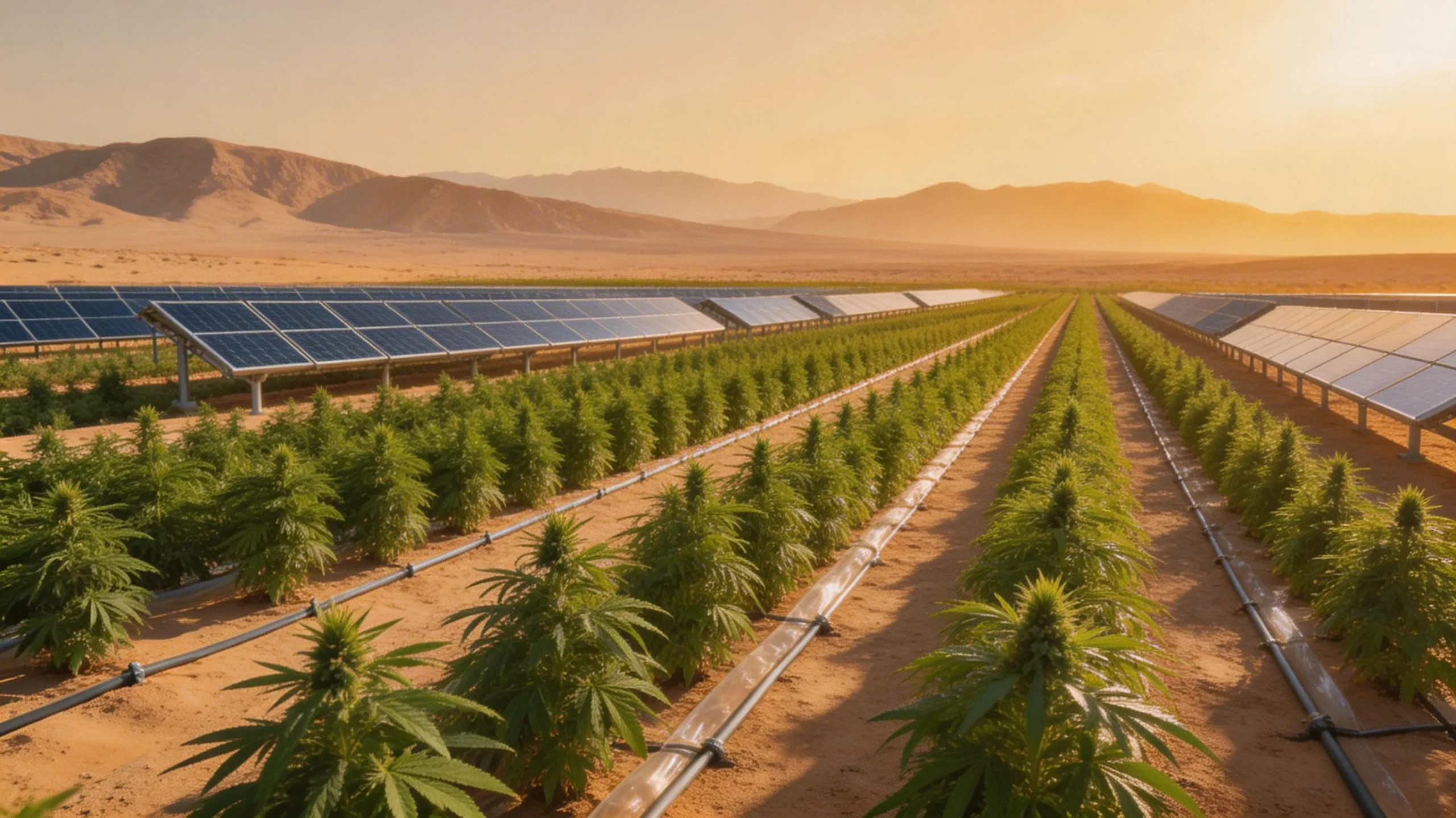
A Quiet Industry That Is Starting to Speak
If you look at the UAE today, you’ll notice something interesting about how different industries grow. Some expand loudly and visibly—real estate projects dominate skylines, tourism campaigns are everywhere, and luxury retail constantly reinvents itself. These industries are hard to miss because they are designed to be seen. But alongside them, there are other sectors that evolve more quietly. They don’t announce themselves in obvious ways, yet over time, they begin to influence conversations, shape business decisions, and slowly build their presence. The hemp industry in the UAE falls into this second category.
At the moment, hemp is not something you encounter in your daily routine. It’s not sitting on store shelves in mainstream outlets, and it’s not yet part of common consumer habits. But despite this low visibility, it continues to appear in subtle but meaningful ways. It shows up in sustainability discussions, in conversations around alternative materials, in research initiatives, and increasingly in business exploration. Entrepreneurs are looking at it, investors are asking questions, and consumers are searching for information. This quiet presence is what signals that something is beginning to take shape.
What makes this stage particularly interesting is the nature of the attention hemp is receiving. It is not being driven by hype or short-term trends. Instead, it is driven by curiosity—people are trying to understand what hemp actually is, how it differs from common assumptions, and where it fits within the UAE’s economic and regulatory environment. This type of curiosity tends to be more sustainable than hype because it leads to deeper understanding rather than temporary interest.
In many ways, the hemp industry in the UAE is currently in a transitional phase. Awareness is increasing, but it has not yet translated into widespread adoption. Conversations are happening, but the structure that supports large-scale growth is still being built. This creates a unique moment where the industry is neither unknown nor fully established—it exists somewhere in between.
And that is precisely what makes it worth paying attention to. Industries that grow quietly often have stronger foundations because they are built carefully, with intention and clarity. By the time they become visible, much of the groundwork has already been laid. The hemp industry in the UAE appears to be following this path—developing steadily, gaining relevance, and gradually finding its place within a broader economic and sustainability-driven narrative.
Understanding the Foundation of the Hemp Industry in the UAE
To truly understand the current state of the hemp industry in the UAE, it is essential to look beyond surface-level trends and focus on how the industry is actually structured. Unlike many global markets where hemp has been rapidly commercialized and integrated into consumer products, the UAE has taken a much more measured and regulated approach. This approach is not about limiting the industry—it is about defining it clearly from the beginning.
The introduction of Federal Decree-Law No. 24 of 2025 marked a significant step in this direction. For the first time, hemp was formally recognized within a legal framework in the UAE. However, this recognition came with specific boundaries. Hemp is permitted, but only within controlled environments such as industrial use, pharmaceutical applications, and scientific research. Within these areas, strict conditions apply, including maintaining THC levels below 0.3% and ensuring that all activities are carried out by licensed and authorized entities.
This legal structure plays a crucial role in shaping the entire industry. It determines not only what is allowed, but also how businesses must operate. Unlike markets where hemp is driven by consumer demand for products like oils, supplements, or edibles, the UAE’s framework shifts the focus toward materials, manufacturing, and regulated systems. This creates a fundamentally different kind of industry—one that is less about retail consumption and more about structured applications.
Because of this, businesses entering the hemp space in the UAE need to think differently. Success is not based on following global trends or replicating existing models from other countries. Instead, it requires understanding how hemp fits within the local system and identifying opportunities that align with that structure. This might involve working within supply chains, exploring industrial applications, or focusing on material-based products that comply with regulations.
At the same time, this foundation also influences how demand develops. Since the industry is not consumer-driven in the traditional sense, demand grows through awareness, research, and gradual adoption rather than immediate market expansion. This creates a slower but more stable growth pattern, where each stage builds upon the previous one.
In many ways, the UAE has chosen to build the hemp industry from the ground up—starting with clear rules, defined use cases, and controlled integration. While this may limit rapid expansion in the short term, it also creates a stronger and more sustainable framework for the future. Understanding this foundation is essential for anyone looking to engage with the hemp industry in the UAE, whether as a business, investor, or observer.
Market Trends: How the Industry Is Evolving
The hemp industry in the UAE may not be expanding in a loud or immediately visible way, but it is evolving steadily beneath the surface in ways that are both meaningful and strategic. Unlike industries that rely on rapid consumer adoption, hemp in the UAE is following a slower, more deliberate path—one that is shaped by regulation, long-term planning, and alignment with broader economic goals. This makes its evolution less obvious, but no less important.
One of the most defining trends is the clear shift toward material-based applications. Instead of focusing on hemp as a consumable or lifestyle-driven product, businesses and industries are increasingly viewing it as a functional resource. This includes applications in textiles, sustainable materials, packaging alternatives, and industrial inputs. These areas not only align with the UAE’s regulatory framework but also reflect the country’s broader focus on sustainability and innovation. Hemp, in this context, is not being introduced as a trend—it is being evaluated as a practical material that can support long-term development goals.
This shift is also part of a larger global movement where hemp is being reintroduced as a multi-purpose industrial material rather than just a niche product category. Around the world, industries are rediscovering its potential in areas like eco-friendly construction, durable fabrics, and biodegradable materials. The UAE, being highly connected to global markets, is naturally influenced by these developments. However, instead of adopting them rapidly, it is integrating them carefully, ensuring that each step aligns with its structured approach.
Another noticeable trend is the rise of niche and specialized businesses. Since the market is not yet driven by mass demand, growth is happening through smaller, focused ventures that are exploring specific use cases. These businesses are not trying to scale aggressively or dominate the market overnight. Instead, they are building within defined boundaries, experimenting with products, and gradually establishing their presence. This creates a more stable ecosystem where innovation happens in controlled environments rather than through rapid expansion.
In addition to this, there is a growing emphasis on education and awareness. As curiosity around hemp increases, so does the need for clear and reliable information. People are no longer satisfied with surface-level knowledge—they want to understand how hemp works, where it is used, and how it fits into the UAE context. This has led to the emergence of content platforms, research initiatives, and informational resources that aim to bridge the gap between curiosity and clarity. These platforms play a crucial role in shaping how the market evolves, as they influence both consumer perception and business direction.
What ties all these trends together is a sense of intentional growth. The hemp industry in the UAE is not expanding randomly—it is developing in a way that is aligned with regulation, sustainability, and long-term relevance. This makes it different from many other markets, but also positions it as a space with strong foundational potential.
Demand: A Market Driven by Curiosity, Not Consumption
One of the most fascinating aspects of the hemp industry in the UAE is the way demand is formed. Unlike traditional markets, where demand is driven by immediate consumption and visible purchasing behavior, the UAE hemp market operates on a different dynamic. Here, demand is shaped more by curiosity, research, and exploration than by direct buying patterns.
This curiosity-driven demand is visible in how people interact with the topic of hemp. Instead of walking into stores and making purchases, they are searching online, reading articles, asking questions, and trying to understand what hemp actually is. They are exploring its uses, its legality, and its relevance to their own lives. This creates a form of demand that is not always reflected in sales data but is clearly present in behavior and interest levels.
The sources of this demand are also diverse. A significant portion comes from consumers who are already familiar with hemp through global exposure. Many residents in the UAE have lived in or traveled to countries where hemp products are widely available, which naturally shapes their expectations and curiosity. They are not discovering hemp for the first time—they are trying to understand how it fits into a different regulatory environment.
At the same time, businesses are contributing to this demand in their own way. Companies exploring sustainability are actively looking for alternative materials that align with environmental goals. Hemp, with its versatility and global reputation, becomes a material worth considering. This creates a B2B-driven layer of demand, where interest is not about immediate consumption but about long-term application.
Investors also play a role in shaping demand. Emerging industries often attract attention from those looking for future opportunities, and hemp is no exception. While the market may not yet be large in terms of volume, its potential makes it an area of interest for those who think in terms of long-term growth.
What makes this demand unique is that it is still in the process of forming. It is not yet fully defined, predictable, or consistent. Instead, it is evolving alongside awareness, regulation, and availability. This creates a market that feels uncertain on the surface but is actually building momentum in a gradual and structured way.
In many ways, this type of demand is more sustainable than immediate consumption-driven markets. It is based on understanding rather than impulse, and it grows as knowledge increases. As awareness continues to expand and the market becomes more accessible, this curiosity-driven demand has the potential to transition into more defined and active participation.
For now, the UAE hemp market is not driven by how much people are buying—it is driven by how much they are trying to learn. And that, in itself, is a strong indicator of where the industry is heading.
The Role of Sustainability in Driving the Industry
Sustainability has become one of the most powerful forces shaping industries across the world, and in the UAE, this shift is not just visible—it is strategic. Over the past few years, the country has taken significant steps toward building a more environmentally responsible future, focusing on areas such as green infrastructure, sustainable urban planning, and reduced environmental impact. Within this broader movement, materials like hemp are naturally beginning to gain attention, not as a trend, but as part of a larger conversation about long-term solutions.
What makes hemp particularly relevant in this context is its versatility as a material. Unlike single-use or limited-purpose resources, hemp can be adapted across multiple industries. It can be used in textiles as a durable and breathable fabric, in packaging as a more eco-conscious alternative to conventional materials, and in construction as part of innovative building solutions. This wide range of applications allows hemp to move beyond being just another product—it becomes a material that can support sustainability across different sectors simultaneously.
In the UAE, this alignment carries even more significance. The country is not simply reacting to global sustainability trends; it is actively incorporating them into its long-term vision. From national strategies to industry-level initiatives, there is a clear effort to build systems that are efficient, forward-thinking, and environmentally responsible. In such an environment, materials like hemp are not evaluated in isolation—they are considered as part of a larger ecosystem of solutions.
Another important aspect is the gradual shift in how businesses and consumers think about materials. There is increasing awareness around the impact of traditional resources, which has led to a growing openness toward alternatives. While this shift is still developing, it creates space for materials like hemp to be explored more seriously. Instead of being seen as unfamiliar or experimental, hemp begins to position itself as a practical option that aligns with evolving priorities.
However, this transition is not immediate. The UAE’s approach to sustainability is structured and carefully implemented, which means that materials like hemp will likely be integrated step by step rather than adopted rapidly. This creates a steady pathway for growth, where each application is tested, understood, and aligned with regulatory frameworks.
In many ways, sustainability acts as a bridge between global trends and local adoption. It provides a context in which hemp can be introduced in a meaningful and relevant way. As industries continue to evolve and environmental considerations become more central, hemp’s role is likely to expand—not as a replacement for everything, but as a valuable addition to a more sustainable material landscape.
Business Opportunities Within the Hemp Industry
Even though the hemp industry in the UAE is still in its early stages, it offers a range of business opportunities for those who are willing to understand its structure and work within its boundaries. The key to identifying these opportunities lies in shifting perspective. This is not a market driven by immediate consumer demand—it is a market that is gradually building its foundation. As a result, the most promising opportunities are often found in areas that support the ecosystem rather than rely solely on direct retail.
One of the most significant opportunities exists in B2B supply and distribution. Since large-scale hemp production is not currently established within the UAE, there is a clear need for businesses that can connect global suppliers with local industries. This includes sourcing hemp fabrics for designers, supplying raw materials to manufacturers, and providing specialized inputs for niche applications. These businesses operate behind the scenes, but they play a critical role in enabling the industry to function and grow. Over time, as demand increases, these supply networks become even more valuable.
Another important area of opportunity lies in design-led and lifestyle-focused brands. In a market where hemp is still relatively unfamiliar, the way products are introduced becomes crucial. Instead of emphasizing hemp as the primary selling point, successful brands focus on quality, design, and usability. Hemp becomes part of the product’s value rather than its entire identity. This approach allows businesses to integrate hemp naturally into the market, making it more accessible to consumers who may not yet be familiar with the material. It also aligns well with the UAE’s preference for premium, well-designed products that fit seamlessly into modern lifestyles.
There is also growing potential in knowledge-driven and content-based platforms. As awareness around hemp continues to develop, the demand for accurate, reliable information becomes increasingly important. Many people are curious but lack clarity, which creates an opportunity for platforms that can provide insights, research, and educational content. These platforms do more than just inform—they shape how the market understands hemp. Over time, they can become trusted sources of information, influencing both consumer behavior and business decisions.
What makes these opportunities particularly interesting is that they are interconnected. Supply chains support product development, content platforms build awareness, and lifestyle brands create visibility. Together, they form an ecosystem that allows the industry to grow in a structured and sustainable way.
At this stage, success in the UAE hemp market is not about rapid expansion or mass adoption. It is about positioning, understanding, and timing. Businesses that recognize this and build accordingly are more likely to establish a strong presence as the market continues to evolve.
Challenges That Influence Growth
Like any emerging industry, the hemp industry in the UAE faces a set of challenges that directly influence how quickly and effectively it can grow. These challenges are not always obvious at first glance, but they become clearer as you begin to understand how the market operates. Rather than acting as barriers, they function more like structural forces that shape the direction and pace of development.
One of the most significant factors is regulation. While the UAE has taken an important step by introducing a legal framework for hemp, the structure remains highly controlled and specific. This provides clarity, but it also limits the types of business models that can operate within the system. Companies cannot simply replicate what works in other countries; they must carefully design their offerings to align with local regulations. This often requires a deeper level of planning, legal awareness, and adaptability. Instead of building freely, businesses are building within defined boundaries, which naturally slows down expansion but ensures compliance and long-term stability.
Awareness presents another layer of complexity. While interest in hemp is clearly growing, understanding is still developing. Many people are familiar with the term but are not fully aware of its applications, differences, or relevance within the UAE context. This creates a situation where businesses must go beyond traditional marketing and actively invest in education. They need to explain not just what their product is, but also why it matters and how it fits into everyday life. Building this level of understanding takes time, consistency, and trust, making it a gradual process rather than an immediate outcome.
Supply chain challenges also play a crucial role. Since the UAE does not yet have large-scale local production of hemp, most materials need to be sourced from international markets. This introduces complexities related to logistics, import regulations, quality control, and cost management. Unlike local supply chains, where adjustments can be made quickly, international sourcing requires careful coordination and long-term planning. Any disruption—whether in shipping, pricing, or availability—can impact the entire business operation.
Perception is another factor that continues to influence the market. Despite the clear distinction between hemp and cannabis in terms of usage and regulation, the association between the two still exists in many people’s minds. This can create hesitation, especially among consumers who are not fully informed. Businesses must therefore approach communication carefully, presenting their products in a way that feels familiar, safe, and relevant, rather than technical or misunderstood.
Together, these challenges create a market that grows more slowly than others, but also more deliberately. Each step forward is shaped by understanding, alignment, and adaptation. While this may limit rapid expansion, it also builds a stronger and more resilient foundation for the future.
Why the UAE Hemp Industry Is Still in Its Early Stages
When you take all these factors into account, it becomes clear that the hemp industry in the UAE is still in its early stages of development. This is not a market that has already reached maturity or widespread adoption. Instead, it is one that is actively forming its identity, influenced by a combination of regulation, awareness, and evolving demand.
Awareness is increasing, but it is not yet fully established. People are beginning to recognize hemp as a concept, but many are still in the process of understanding its applications and relevance. This creates a situation where curiosity exists, but clarity is still developing. The more people learn, the more the market begins to take shape.
Demand, while present, is also not fully defined. It does not yet operate in the traditional sense of consistent purchasing behavior. Instead, it is driven by exploration—people researching, businesses evaluating, and investors observing. This type of demand is less visible but highly significant, as it lays the groundwork for future growth.
Availability is another indicator of the market’s early stage. Hemp products exist, but they are not widely accessible or integrated into everyday retail environments. This limited presence reinforces the idea that the market is still developing, rather than fully established.
All of these elements come together to create a market that is in transition. It is moving from being unknown to being understood, from being limited to becoming more accessible. This transitional phase is where the foundation of the industry is built.
For businesses, this represents an opportunity to explore, experiment, and position themselves early. There is room to shape how the market evolves, rather than simply competing within an already crowded space. For consumers, it means there is still a journey of discovery ahead—learning what hemp is, how it is used, and how it fits into their lives.
Future Scope: Where the Industry Is Headed
Looking ahead, the future of the hemp industry in the UAE is expected to unfold gradually rather than suddenly. This is consistent with how the country approaches new industries—through structured planning, controlled integration, and long-term vision rather than rapid, unregulated expansion.
As sustainability continues to become a central focus, hemp is likely to find a stronger place within various industries. Its potential applications in textiles, construction, packaging, and manufacturing align closely with the UAE’s broader goals of reducing environmental impact and exploring alternative materials. Over time, this alignment may lead to increased adoption in specific sectors where hemp offers practical advantages.
At the same time, awareness is expected to grow as more information becomes available and more businesses begin to explore the space. As consumers become more familiar with hemp and its uses, the market will gradually shift from curiosity-driven interest to more defined participation. This transition will not happen overnight, but it will build steadily over time.
However, growth will continue to remain aligned with regulation. The UAE’s approach is rooted in structure and control, ensuring that industries develop in a stable and compliant manner. This means that while the hemp industry may expand, it will do so within clearly defined boundaries. The focus will be on sustainable growth rather than rapid scale.
This creates a future that is not explosive, but meaningful. The industry may not become mainstream immediately, but it will continue to evolve in a way that is consistent, reliable, and aligned with long-term goals.
Final Thoughts
The hemp industry in the UAE is not yet a fully developed market—but it is far from insignificant. It exists in a space that is both complex and promising, shaped by a balance between awareness and regulation, curiosity and structure.
For those willing to understand this balance, the industry offers a unique opportunity. It is not about following global trends blindly, but about adapting them to a local context that requires clarity and precision. Success in this space comes from understanding how the system works and building within it thoughtfully.
At its core, this is a market that is still evolving. It is being shaped by conversations, experiments, and gradual shifts in perception. And in markets like this, timing matters—but understanding matters even more.
Because sometimes, being early is not just an advantage—it is the opportunity to help define what comes next.
Leave a Reply